
Cremnorrhinini
Reuter, 1883
Genus Guides
10Cremnorrhinini is a tribe of plant bugs in the Miridae, Phylinae, containing approximately 50 . The tribe is divided into two subtribes: Cremnorrhinina (with about 45 genera) and an unnamed subtribe containing the remaining five genera. Members are phytophagous and exhibit strong plant associations, particularly with plant families in their respective regions.

Pronunciation
How to pronounce Cremnorrhinini: //krɛm.noˈrɪ.nɪ.naɪ//
These audio files are automatically generated. While they are not always 100% accurate, they are a good starting point.
Identification
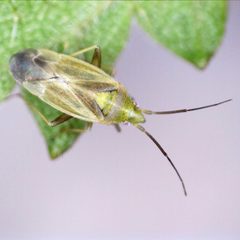
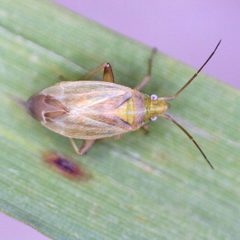
Diagnostic features include long free on the , a projecting , and distinctive male genitalia structure. The subtribe Cremnorrhinina is characterized by specific morphological traits that distinguish it from other Phylinae tribes. Coloration is highly variable within , ranging from reddish or brownish to yellow-green or combinations thereof.
Images
Habitat
include fynbos vegetation in South Africa, from sea level to approximately 650 m elevation, encompassing Namaqualand, Little Karoo, and coastal areas. Australian occupy diverse habitats across the continent, though specific habitat details for Australian are not detailed in available sources.
Distribution
Documented from South Africa (Western Cape province, from near Clanwilliam to the Cape Peninsula and east to near Mossel Bay) and Australia. The tribe has substantial diversity in both regions, with 82 new described from Australia alone in recent taxonomic revisions.
Diet
Phytophagous; feeds on vascular plants. Specific documented include Pelargonium (Geraniaceae) in South Africa. Host relationships have been analyzed for Australian species, though specific host plant records were not provided in available sources.
Host Associations
- Pelargonium cucullatum × betulinum - Geraniaceae; South Africa
- Pelargonium radens - Geraniaceae; South Africa
- Pelargonium scabrum - Geraniaceae; South Africa
- Pelargonium cucullatum subsp. tabulare - Geraniaceae; South Africa
- Pelargonium sp. - Geraniaceae; South Africa
Behavior
Specimens have been collected on plants in flower. Exhibits substantial intraspecific color variation, with individuals ranging from completely reddish or brownish to yellow-green and reddish combinations to completely yellow-green.
Ecological Role
Phytophagous herbivore; documented as feeding on South African Geraniaceae. Likely plays a role in herbivore pressure on plants, though specific impacts are not quantified in available sources.
Similar Taxa
- Other Phylinae tribesCremnorrhinini is distinguished by long free , projecting , and distinctive male genitalia structure; other Phylinae tribes lack this combination of features.
- Macrotylus (Northern Hemisphere species)Southern African Cremnorrhinina such as Macrotylus henryi are morphologically similar to Northern Hemisphere Macrotylus but differ in coloration variability and male genitalia structure.
More Details
Taxonomic composition
The tribe comprises approximately 50 , with 45 genera placed in the subtribe Cremnorrhinina and five genera in an unnamed subtribe.
Recent taxonomic activity
Substantial undescribed diversity exists, particularly in Australia, where 19 new and 82 new of Cremnorrhinina were described in a single 2018 revision.
Host plant fidelity
South African Cremnorrhinina show strong specialization on Pelargonium (Geraniaceae), an southern African .
Sources and further reading
- BugGuide
- Wikipedia
- NCBI Taxonomy
- Macrotylus henryi, a new species of Pelargonium-feeding Cremnorrhinina from South Africa (Hemiptera, Miridae, Phylinae, Cremnorrhinini)
- Nineteen New Genera and 82 New Species of Cremnorrhinina from Australia, Including Analyses of Host Relationships and Distributions (Insecta: Hemiptera: Miridae: Phylinae: Cremnorrhinini)
- Supplemental Material for 'Nineteen new genera and 82 new species of Cremnorrhinina from Australia, including analyses of host relationships and distributions (Insecta, Hemiptera, Miridae, Phylinae, Cremnorrhinini). (Bulletin of the American Museum of Natural History, no. 401)'