
Pilophorini
Douglas & Scott, 1876
Genus Guides
2- Alepidiella
- Pilophorus(Matchstick Lichens)
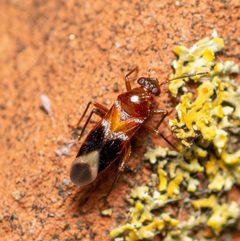
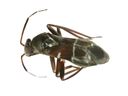
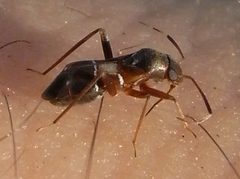
Pilophorini is a tribe of plant bugs (Miridae: Phylinae) comprising approximately 15 distributed across tropical and temperate regions. The group exhibits pronounced -mimicry (myrmecomorphy) in many , particularly within the type genus Pilophorus. Phylogenetic analysis indicates a tropical Gondwanan origin with subsequent radiation into the temperate Northern Hemisphere. Members of this tribe show diverse feeding strategies, including herbivory on mistletoes (Loranthaceae, Santalales) and predatory .
Pronunciation
How to pronounce Pilophorini: /ˌpaɪloʊˈfɔːrənaɪ/
These audio files are automatically generated. While they are not always 100% accurate, they are a good starting point.
Identification
Pilophorini can be distinguished from other Phylinae tribes by a combination of morphological features including modified and pronotal structures associated with -mimicry in many . The tribe includes both myrmecomorphic forms with constricted waists and enlarged appendages resembling ants, and non-mimetic with more conventional mirid body plans. Generic-level identification requires examination of male genitalia, pretarsal structures, and body proportions. Keys to genera are available for regional faunas including Japan and Thailand.
Images
Habitat
occur in diverse terrestrial ranging from tropical forests to temperate shrublands. Many species are associated with plants including Loranthaceae mistletoes, Rubus shrubs, and various flowering plants. The type Pilophorus is frequently found on vegetation where -mimicry provides protective advantage.
Distribution
Circumtropical and temperate distribution with centers of diversity in the Paleotropics, Africa, and Orient. occur in: Africa (Aloea, Ethatractus, Neoambonea, Parambonea, Pseudambonea), Australia and Oceania (Dilatops, Hypseloecus), Eastern Nearctic (Alepidiella), Eastern Palearctic (Pherolepis), Holarctic and Orient (Pilophorus), Neotropics (Randallophorus), and circumtropical regions (Sthenaridea).
Diet
Feeding habits vary by and . Hypseloecus species are associated with Loranthaceae mistletoes (Santalales), feeding on inflorescences and fruits. Some Pilophorus species are assumed to be . Specific dietary details for most genera remain undocumented.
Host Associations
- Loranthaceae - herbivoryHypseloecus feed on mistletoes including Taxillus yadoriki, T. nigrans, and Scurrula spp.
- Rubus sieboldii - Pilophorus reoi found on raspberry shrub, assumed predatory
Behavior
Myrmecomorphy (-mimicry) is a prominent behavioral and morphological feature of many Pilophorus and some related . This mimicry involves body shape modification, constriction of the to simulate a petiole, and ant-like locomotion. The mimicry is considered protective, reducing by visually hunting .
Ecological Role
Members of this tribe function as herbivores on parasitic mistletoes and potentially as in some lineages. Their association with Santalales plants represents a specialized feeding within the Miridae.
Similar Taxa
- Other Phylinae tribesPilophorini distinguished by -mimicry in many members and characteristic pretarsal and genitalic structures; phylogenetic analysis places the tribe as a distinct lineage within Phylinae
More Details
Phylogenetic history
Schuh's 1991 cladistic analysis supports a tropical Gondwanan origin for Pilophorini, with subsequent and diversification in the temperate Northern Hemisphere. This biogeographic pattern explains the current disjunct distribution across southern continents and northern temperate regions.
Taxonomic stability
The tribal classification has been stable following Schuh's 1991 revision, though generic boundaries continue to be refined with new descriptions from under-sampled regions including Indochina and the Neotropics.
Sources and further reading
- BugGuide
- Wikipedia
- iNaturalist taxon
- NCBI Taxonomy
- PHYLOGENETIC, HOST AND BIOGEOGRAPHIC ANALYSES OF THE PILOPHORINI (HETEROPTERA: MIRIDAE: PHYLINAE)
- Three new species of the plant bug tribe Pilophorini from Japan (Hemiptera: Heteroptera: Miridae: Phylinae)
- Additional records and descriptions of the ant-mimetic plant bug genus Pilophorus from Thailand (Hemiptera: Heteroptera: Miridae: Phylinae: Pilophorini)
- Three new species of the ant-mimetic plant bug genus Pilophorus from Japan (Hemiptera: Heteroptera: Miridae: Phylinae: Pilophorini)
- First Indochinese records of the plant bug genus Hypseloecus Reuter (Hemiptera: Heteroptera: Miridae: Phylinae: Pilophorini), with descriptions of eight new species from Thailand
- Reclassification of the plant bug genus Pilophorus in Japan and key to the genera and species of Japanese Pilophorini (Hemiptera: Heteroptera: Miridae: Phylinae)
- Santalalean-feeding plant bugs: ten new species in the genus Hypseloecus Reuter from Australia and South Africa (Heteroptera: Miridae: Phylinae): their hosts and placement in the Pilophorini
- Cladispa B aly: revision, biology and reassignment of the genus to the tribe S pilophorini ( C oleoptera: C hrysomelidae: C assidinae)