
Leptodictya plana
Heidemann, 1913
Grass Lacebug
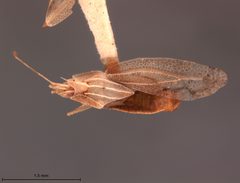
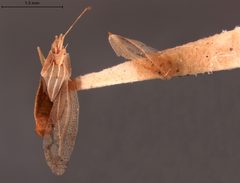
Leptodictya plana is a grass-feeding lace bug (Hemiptera: Tingidae) first described in 1913. It has been documented as an emerging pest on ornamental grasses in the southern United States, with Pennisetum showing particular susceptibility to feeding damage and serving as oviposition . The species remains seldom collected despite its economic relevance to horticulture.

Pronunciation
How to pronounce Leptodictya plana: //ˌlɛptoʊˈdɪktiə ˈpleɪnə//
These audio files are automatically generated. While they are not always 100% accurate, they are a good starting point.
Identification
Lace bugs in the Leptodictya can be distinguished from other tingids by their association with grasses rather than woody plants. Specific diagnostic characters for L. plana relative to require examination of pronotal and hemelytral reticulation patterns. The is rarely encountered in collections, suggesting either genuine rarity or undercollection due to preferences.
Images
Habitat
Associated with grass-dominated environments including ornamental plantings and natural grasslands. Greenhouse studies indicate establishment on potted ornamental grasses.
Distribution
Documented from Central America and North America. GBIF records indicate presence in Alabama, Arizona, Florida, and Kansas. Specific new distribution records were reported in a 2007 study, though exact localities were not detailed in available excerpts.
Diet
Phloem feeder on grasses. No-choice feeding studies demonstrated that Pennisetum sustained the highest damage levels and were the only supporting oviposition. Acorus, Cordyline, and Panicum species exhibited comparatively lower damage susceptibility.
Host Associations
- Pennisetum purpureum - primary - supports feeding damage and ovipositionhighest susceptibility among tested grasses
- Pennisetum spp. - primary - supports feeding damage and ovipositiononly supporting oviposition in greenhouse trials
- Acorus spp. - secondary - low susceptibilityminimal damage in feeding trials
- Cordyline spp. - secondary - low susceptibilityminimal damage in feeding trials
- Panicum spp. - secondary - low susceptibilityminimal damage in feeding trials
Human Relevance
Emerging pest in southern U.S. horticulture, particularly affecting ornamental grass production. Damage manifests as characteristic stippling from phloem feeding. No plants tested showed complete resistance, complicating management recommendations.
Similar Taxa
- Other Leptodictya speciescongeneric lace bugs share general grass-feeding habit but differ in specific associations and geographic distribution; precise identification requires examination of reticulation patterns
- Stephanitis and Corythucha lace bugscommon ornamental pests but associated with woody plants rather than grasses; differ in plant
Sources and further reading
- BugGuide
- Wikipedia
- GBIF taxonomy match
- iNaturalist taxon
- The Buzz About Bees: UC Davis Apiculturist in 'Science Friday' Program May 24 | Bug Squad
- For Termites, Home is Where the Molt Is
- Hammer time in the DMV: Hammerhead worms, Bipalium spp. — Bug of the Week
- Bichos Argentinos #10 – Friday Formicine | Beetles In The Bush
- Bait-Stricken Termites Still Heed Call to Molt in Their Central Nest
- So, You Want to Study Termite Control? Step 1: Raise a Few Million Termites
- Host Plant Relationships of Leptodictya plana (Hemiptera: Tingidae)
- Leptodictya Plana Heidemann (Hemiptera: Tingidae): First Specific Host-Plant and New Distribution Records for a Seldom-Collected, Grass-Feeding Lace Bug