
Leptodictya
Stål, 1873
Species Guides
3- Leptodictya nicholi
- Leptodictya plana(Grass Lacebug)
- Leptodictya simulans
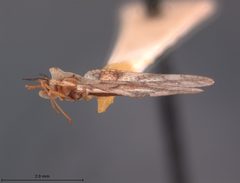
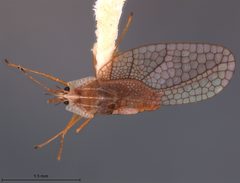
Leptodictya is a of lace bugs ( Tingidae) comprising at least 60 described . Species in this genus are phytophagous, with documented associations to grasses (Poaceae) including sugarcane, bamboo, and ornamental grasses. Several species are recognized as agricultural or horticultural pests, notably Leptodictya tabida on sugarcane and Leptodictya plana on ornamental grasses in the southern United States. The genus exhibits specificity at the species level, with some species restricted to particular grass genera.

Pronunciation
How to pronounce Leptodictya: /lɛptoʊˈdɪktiə/
These audio files are automatically generated. While they are not always 100% accurate, they are a good starting point.
Identification
Members of Leptodictya can be distinguished from other lace bug by their placement in the Tingidae, characterized by the reticulated, lace-like pattern of the pronotum and forewings. -level identification requires examination of specific morphological features not detailed in available sources. The genus is distinguished from related lace bug genera by genitalic and wing venation characteristics, though these require taxonomic knowledge.
Images
Habitat
Grasses and grass-dominated environments, including sugarcane fields, ornamental grass plantings, and natural stands of bamboo (Guadua). Specific associations vary by .
Distribution
documented in North America (Florida, Hawaii), Central America ( Rica, Panama), South America (Venezuela, Brazil, Bolivia), and the southern United States. The likely has broader Neotropical distribution given its grass-feeding .
Diet
Phytophagous; feeds on grasses (Poaceae). Documented include sugarcane (Saccharum spp.), Pennisetum spp., Guadua weberbaueri bamboo, and various ornamental grasses including Miscanthus, Panicum, and Cortaderia.
Host Associations
- Saccharum spp. (sugarcane) - Leptodictya tabida
- Pennisetum spp. - L. plana; only supporting oviposition in study
- Guadua weberbaueri - Leptodictya (Hanuala) leinahoni
- Miscanthus sinensis - L. plana
- Panicum virgatum - L. plana; sustained least damage
- Cortaderia selloana - L. plana
- Acorus spp. - L. plana; sustained least damage
- Cordyline spp. - L. plana; sustained least damage
- Andropogon virginicus - L. plana
- Calamagrostis acutiflora - L. plana
- Carex comans - L. plana
- Eragrostis spectabilis - L. plana
- Festuca glauca - L. plana
- Muhlenbergia capillaris - L. plana
- Phalaris arundinacea - L. plana
- Schizachyrium scoparium - L. plana
- Sorghastrum nutans - L. plana
Life Cycle
Hemimetabolous development with , nymph, and stages observed. Eggs and nymphs have been documented on plants for multiple .
Behavior
Feeding and oviposition preferences vary by . Leptodictya plana exhibits differential damage levels across , with highest feeding damage and exclusive oviposition on Pennisetum spp. No-choice feeding studies indicate all tested grass genera sustain some damage.
Ecological Role
Herbivore on grasses; some function as agricultural pests in cultivated systems. Natural enemies have been identified for at least one species (L. tabida), though introduction attempts have been unsuccessful.
Human Relevance
Several are economically significant pests. Leptodictya tabida damages sugarcane in Florida and Hawaii. Leptodictya plana is an emerging pest on ornamental grasses in the southern United States, affecting nursery and landscape industries. Management research is ongoing.
Similar Taxa
- Other Tingidae generaAll lace bugs share the diagnostic reticulated pronotum and forewings; Leptodictya distinguished by association with grasses and specific morphological features requiring identification.
More Details
Taxonomic subdivision
The subgenus Hanuala has been recognized within Leptodictya, with Leptodictya (Hanuala) leinahoni documented from bamboo in Bolivia.
Research needs
Source documents emphasize need for further research on duration, effective management strategies, and potential for pest in this .
Sources and further reading
- BugGuide
- Wikipedia
- GBIF taxonomy match
- iNaturalist taxon
- Catalogue of Life
- Sugarcane Lace Bug, Leptodictya tabida
- Host Plant Relationships of Leptodictya plana (Hemiptera: Tingidae)
- First host-plant record for Leptodictya (Hanuala) leinahoni (Kirkaldy, 1905) (Hemiptera: Heteroptera: Tingidae)
- Leptodictya Plana Heidemann (Hemiptera: Tingidae): First Specific Host-Plant and New Distribution Records for a Seldom-Collected, Grass-Feeding Lace Bug