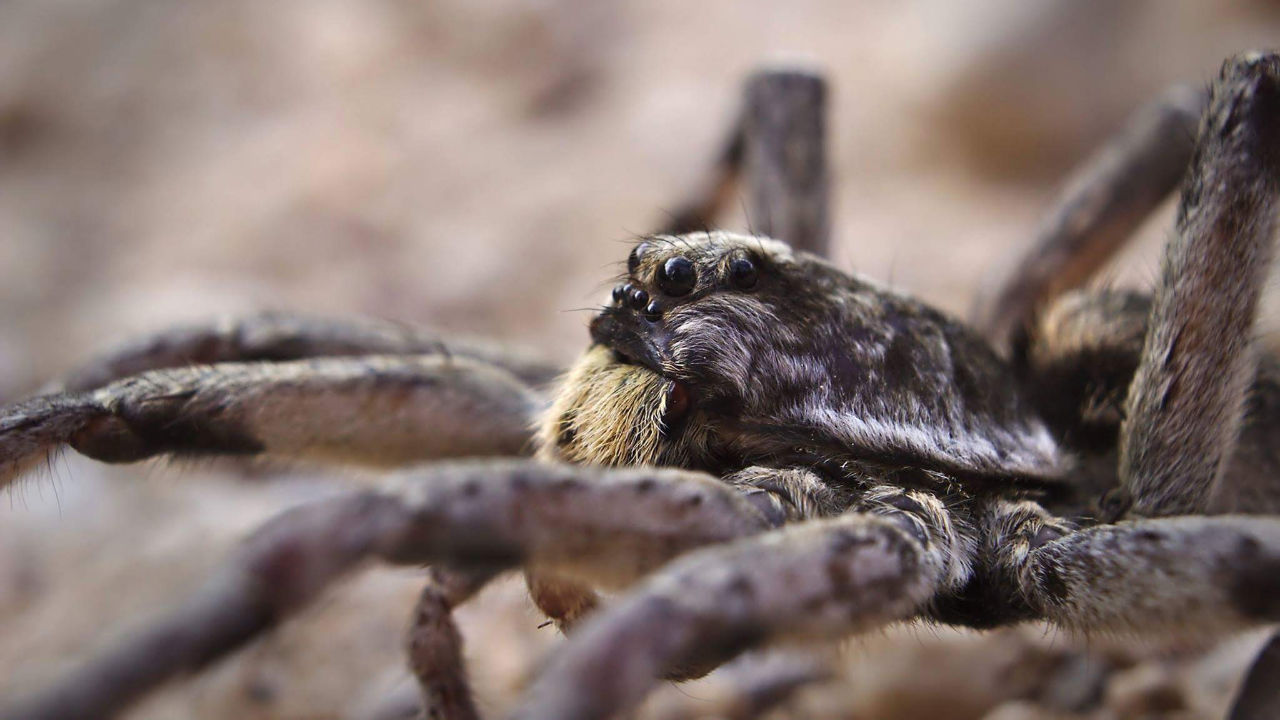
A ground-dwelling spider species in the family Gnaphosidae, first described by L. Koch in 1866. The first cytogenetic analysis of this species was conducted on specimens from Turkey, revealing a diploid chromosome number of 2n♂=22 with an X1X20 sex chromosome system. All chromosomes are telocentric, with X1 being the largest and X2 the smallest chromosome in the karyotype. Sex chromosomes exhibit positive heteropycnosis during prophase I of meiosis. The species has a broad native distribution across the Mediterranean to Caucasus region and has been introduced to the USA.
Maro is a genus of dwarf spiders in the family Linyphiidae (sheet-web weavers), first described by Octavius Pickard-Cambridge in 1907. These small arachnids belong to the diverse group of linyphiid spiders, which are among the most species-rich spider families globally. The genus is known from limited records in northern Europe.
Marpissa formosa is a species of jumping spider in the family Salticidae. It is known from the eastern United States. Like other members of the genus, it exhibits the characteristic jumping ability and visual acuity typical of salticid spiders.
Marpissa robusta is a species of jumping spider in the family Salticidae. It was first described by Nathan Banks in 1906, originally under the genus Hyctia. The species is found in the western United States. Like other members of the genus Marpissa, it possesses the characteristic large anterior median eyes and jumping ability typical of salticid spiders.
whip scorpion, vinegaroon
Mastigoproctus is a genus of large whip scorpions (vinegaroons) in the family Thelyphonidae. These arachnids are characterized by their elongated antenniform front legs, robust pedipalps, and ability to spray defensive acetic acid. The genus includes approximately 25 accepted species distributed across the Americas, from the southwestern United States through Mexico, Central America, the Caribbean, and into northern South America. Despite their intimidating appearance, they are not venomous and lack venom glands entirely.
Mastigoproctus cinteotl is a species of vinegaroon (whip scorpion) in the family Thelyphonidae, described in 2018. It belongs to a genus of large, primarily nocturnal arachnids found in the Americas. Like other vinegaroons, it possesses a pair of elongated, whip-like front legs used as sensory appendages, and can discharge a defensive spray of acetic acid from glands at the base of the tail. The species is part of a group often kept in captivity for educational purposes due to their docile nature and distinctive appearance.
Florida vinegaroon
Mastigoproctus floridanus, commonly known as the Florida vinegaroon, is a species of whip scorpion (order Uropygi) in the family Thelyphonidae. It is native to Florida and represents one of several vinegaroon species found in North America. Like other vinegaroons, it possesses a pair of large pedipalps modified into pincers and a long, whip-like flagellum used for sensory detection. The species is primarily nocturnal and, when disturbed, can spray a defensive secretion containing acetic acid from glands at the base of the flagellum, producing a vinegar-like odor.
giant whip scorpion, giant vinegaroon, grampus, Texas giant vinegaroon
Mastigoproctus giganteus is a large arachnid in the order Uropygi, commonly known as the giant whip scorpion or vinegaroon. It is the only member of family Thelyphonidae found in the United States, occurring from the southern U.S. through Mexico. The species is nocturnal and occupies humid microhabitats in arid and semi-arid environments. It is notable for its ability to spray a defensive secretion containing 85% acetic acid, which produces a strong vinegar-like odor. The species is long-lived, with females producing a single brood of approximately 40 offspring that receive extended maternal care.
Tohono whipscorpion, Tohono vinegaroon
Mastigoproctus tohono is a species of whip scorpion (order Uropygi) described in 2018 from populations previously attributed to Mastigoproctus giganteus. It is distinguished by specific setal patterns and epistoma positioning. The species produces acetic acid spray as a chemical defense, creating a vinegar-like odor. It inhabits arid regions of the southwestern United States and northern Mexico.
Mecaphesa deserti is a species of crab spider in the family Thomisidae. It was described by Schick in 1965. The species occurs in arid regions of the southwestern United States and Mexico, consistent with its specific epithet referencing desert habitats. As a member of the genus Mecaphesa, it belongs to a group of spiders characterized by laterigrade leg orientation and ambush predation behavior.
Megisthanus floridanus is a mite species in the family Megisthanidae, order Mesostigmata. It is known from limited records, with 22 observations documented on iNaturalist. The species has been subject to taxonomic redescription, though detailed biological information remains sparse in accessible literature.
Meriola californica is a species of true spider in the family Trachelidae, first described by Banks in 1904. The species is known to occur in the United States and Mexico. As a member of Trachelidae, it belongs to a family of ground-dwelling spiders commonly known as sac spiders. Published information on the specific biology and ecology of this species remains limited.
Mermessus index is a species of sheet-web weaving spider in the family Linyphiidae, first described by Emerton in 1914. It belongs to a genus of small spiders commonly known as dwarf spiders or money spiders. The species is native to North America and has been recorded in both the United States and Canada. Like other members of Linyphiidae, it constructs horizontal sheet webs to capture prey.
dwarf spider
Mermessus maculatus is a dwarf spider in the family Linyphiidae, first described by Banks in 1892. The species exhibits a broad Nearctic distribution spanning from Canada to Guatemala, with additional records from the Commander Islands in Russia. As a member of the sheet-web weaving spiders, it belongs to a large family of small-bodied arachnids characterized by their distinctive web architecture.
Messua is a genus of jumping spiders (Salticidae) established by G. W. Peckham and E. G. Peckham in 1896. Species in this genus have been documented as hosts for parasitoid wasps, specifically the polysphinctine ichneumonid Inbioia pivai. The genus is moderately well-represented in citizen science observations, with over 3,000 records on iNaturalist.
Messua limbata is a species of jumping spider in the family Salticidae. It is known from the southern United States and Mexico. As a member of the jumping spider family, it possesses the characteristic large anterior median eyes and salticid hunting behavior. The species was described by Banks in 1898.
Metacyrba taeniola taeniola is a subspecies of jumping spider (Salticidae) found in the southern United States and Mexico. As a member of the genus Metacyrba, it exhibits the characteristic jumping ability and acute vision typical of salticids. The subspecies designation indicates geographic variation within the broader species M. taeniola. It is moderately documented with 171 iNaturalist observations, suggesting it is encountered with some regularity by naturalists.
Metaphidippus manni is a species of jumping spider in the family Salticidae, originally described by G. W. Peckham and E. G. Peckham in 1901. The species is found in North America, primarily in the United States. As a member of the jumping spider family, it possesses the characteristic large anterior median eyes and saltatory hunting behavior typical of Salticidae.
Miagrammopes mexicanus is a species of cribellate orb-weaving spider in the family Uloboridae. It was described by O. Pickard-Cambridge in 1893. The species is known from the United States and Mexico. Like other members of its genus, it possesses a cribellum—a silk-producing organ that generates extremely fine, dry silk used in prey capture.
white micrathena
Micrathena mitrata is a small orb-weaving spider in the family Araneidae, commonly known as the white micrathena. Females range from 4 to 9 mm in body length, while males are smaller at 3 to 4 mm. The species is characterized by a shiny black abdomen and spiky, yellowish-brown legs. It constructs circular orb webs to capture flying insects and is found from the United States south to Brazil. Despite its spiny appearance, it poses no danger to humans.
Microbisium is a genus of pseudoscorpions in the family Neobisiidae, established by J. C. Chamberlin in 1930. The genus contains approximately 12 described species. These small arachnids are found in northern Europe, with confirmed records from Denmark, Norway, and Sweden. Like other pseudoscorpions, they are predatory and typically inhabit moist, sheltered microhabitats.
Microdipoena guttata is a species of minute true spider in the family Mysmenidae, first described by Banks in 1895. It possesses a broad native distribution spanning from the United States through Central America to Paraguay. The species has been introduced to several African localities including Ivory Coast, DR Congo, and the Comoros. As a member of the Mysmenidae, it belongs to one of the smallest families of spiders, whose members are typically found in leaf litter, moss, and other humid microhabitats.
Common Pirate Spider, Pirate Spider
Mimetus puritanus is a small araneophagous spider in the family Mimetidae, commonly known as the Common Pirate Spider. It is the most frequently encountered pirate spider species in the eastern United States. Unlike web-building spiders, M. puritanus infiltrates the webs of other spiders—particularly cobweb weavers and orb weavers—to prey upon them. The species exhibits specialized predatory adaptations including fused jaws that restrict gape width, leading it to attack prey spiders by biting their legs sequentially. Adults measure 3–7 mm in body length and are primarily nocturnal.
Mimetus syllepsicus is a species of pirate spider in the family Mimetidae, first described by Hentz in 1832. Like other members of its genus, it is an araneophagic predator that specializes in hunting other spiders rather than building webs to catch prey. The species occurs in North and Middle America, with records from the United States and Mexico. As a mimetid, it exhibits the characteristic predatory behavior of infiltrating the webs of other spiders to ambush and consume them.
Mitopus is a genus of harvestmen (Opiliones) in the family Phalangiidae, established by Thorell in 1876. The genus contains nine described species distributed across northern regions including Europe, Asia, and North America. Mitopus morio, the type species, has been subject to detailed anatomical studies including ultrastructural analysis of its photoreceptors.
Modysticus modestus is a species of crab spider in the family Thomisidae. The species was described by Scheffer in 1904 and is known to occur in the United States. As a member of the crab spider family, it likely exhibits the characteristic crab-like posture with legs extended laterally, though specific morphological details for this species are not well documented in available sources.
Murricia uva is a species of hersiliid spider described by Foord in 2008. It belongs to the family Hersiliidae, commonly known as tree trunk spiders, recognized for their elongated spinnerets and cryptic bark-dwelling habits. The species is documented from Central Africa, with confirmed records spanning Cameroon to Uganda. Like other hersiliids, it likely exhibits the family's characteristic morphology and behavior, though species-specific details remain limited.
Comstock's Wafer Trapdoor Spider
Myrmekiaphila comstocki is a trapdoor spider in the family Euctenizidae, commonly known as the wafer-lid trapdoor spiders. It belongs to the infraorder Mygalomorphae, a group of ancient spiders that includes tarantulas and funnel-web spiders. The species constructs silk-lined burrows with hinged, wafer-like trapdoors. Its distribution spans the United States and Mexico.
Mythoplastoides exiguus is a dwarf spider species in the family Linyphiidae, first described by Nathan Banks in 1892. It is known from the United States. As a member of the sheet-web weaving spiders, it belongs to one of the most species-rich spider families globally, though specific information about this particular species remains limited.
Nanorchestes is a genus of mites in the family Nanorchestidae, order Sarcoptiformes. These small arachnids are part of the Endeostigmata, a group of primitive mites. The genus was established by Topsent and Trouessart in 1890. Records indicate presence in northern European regions including the British Isles, Denmark, Norway, and Sweden.
Naphrys acerba is a jumping spider species in the family Salticidae, distributed across the United States and Mexico. It was first described by the Peckhams in 1909 and represents one of the more southerly distributed members of the genus Naphrys. The species has been documented with precise locality records in northeastern Mexican states including Nuevo León and Tamaulipas, extending the known range of the genus beyond the Nearctic region.
harvestman
Nemastoma is a genus of small harvestmen (Opiliones) in the family Nemastomatidae, first described by C.L. Koch in 1836. Species in this genus are litter-dwelling arachnids found primarily in Eurasia, with some introduced populations in North America. The genus includes species complexes with notable morphological diversity, such as the N. bidentatum complex, which exhibits extensive subspecific differentiation and parapatric distribution patterns in Slovenia. Several species have been documented as introduced to North America, including N. bimaculatum, which has established populations in Canada.
Neoanagraphis chamberlini is a species of liocranid sac spider in the family Liocranidae. It was described by Gertsch & Mulaik in 1936. The species is found in the United States and Mexico. It belongs to a genus of spiders that was revised by Vetter in 2001, with this species being one of the taxa included in that revision. Very little is known about the biology or ecology of this particular species.
Thick-hooked Comb-tailed Spider
Neoantistea magna is a species of true spider in the family Hahniidae, a group commonly known as the sheet-web weaving spiders. It is found in the United States and Canada, with records from Alberta, British Columbia, and Manitoba. The species belongs to the marronoid clade, a genetically defined group of spiders that includes diverse ecologies and behaviors. The common name "Thick-hooked Comb-tailed Spider" refers to characteristic structures on the posterior abdomen.
neobisiid pseudoscorpions
Neobisiidae is a family of pseudoscorpions comprising approximately 550-750 species across 32-34 genera, distributed across Africa, the Americas, and Eurasia. Members are small arachnids ranging from 1 to 5 mm in body length, with body colors varying from reddish or dark brown through olive green to yellow or creamy white. The family includes both surface-dwelling and cave-dwelling species, with troglobitic species often exhibiting eye reduction or loss. Several genera, notably Stenohya, exhibit pronounced sexual dimorphism in pedipalp morphology.
Neozimiris pubescens is a species of spider in the family Prodidomidae, first described by Nathan Banks in 1898. It belongs to a family of ground-dwelling spiders known for their cylindrical abdomen and active hunting behavior. The species has been recorded from Mexico and the United States, with distribution spanning parts of Middle America and North America.
Neriene digna is a sheetweb spider in the family Linyphiidae, a large group commonly known as money spiders or sheetweb weavers. The species was originally described as Linyphia digna by Keyserling in 1886. It is recorded from the United States and Canada, though specific details about its biology and ecology remain poorly documented in the scientific literature. Like other members of the genus Neriene, it constructs flat sheet webs with a dome-shaped retreat.
Filmy Dome Spider
Neriene radiata, commonly known as the filmy dome spider, is a sheet-weaving spider in the family Linyphiidae with a Holarctic distribution spanning North America, Europe, and Asia. It constructs a distinctive dome-shaped web of fine silk, hanging upside-down beneath it to capture prey. The species is notable for its delicate web architecture and has been frequently observed in natural history studies.
Neriene variabilis is a species of sheetweb spider in the family Linyphiidae, first described by Nathan Banks in 1892. It is known from the United States. As a member of the Linyphiidae, it constructs sheet webs—flat or dome-shaped silk structures used for prey capture. The genus Neriene includes multiple species distributed across North America and Eurasia.
Nodocion rufithoracicus is a ground spider in the family Gnaphosidae, described by Worley in 1928. The specific epithet 'rufithoracicus' refers to the reddish coloration of the cephalothorax. It belongs to a genus of relatively small, inconspicuous spiders that inhabit leaf litter and soil surfaces. Very few observations of this species have been documented, with only one record in iNaturalist as of the knowledge cutoff.
crested pygmy grasshopper, crested grouse locust, northern crested grouse locust
Nomotettix cristatus is a small pygmy grasshopper in the family Tetrigidae, commonly known as the crested pygmy grasshopper or crested grouse locust. It is one of approximately 35 Nearctic species of Tetrigidae. The species exhibits three recognized subspecies with distinct geographic distributions across North America. Like other members of its family, it is characterized by an elongated pronotum that extends over the abdomen, a trait distinguishing pygmy grasshoppers from typical grasshoppers in Acrididae.
Novalena intermedia is a funnel-web spider in the family Agelenidae, described by Chamberlin & Gertsch in 1930. This species belongs to a genus of spiders known for constructing flat sheet webs with a funnel-shaped retreat at one end. It occurs in North America, with records from the United States and Canada.
Nycteola is a genus of spiders in the family Nucteniidae. These spiders are nocturnal orb-weavers that construct webs under eaves and near artificial light sources. They are typically found in association with human structures and buildings.
Ocrepeira georgia is an orb-weaving spider in the family Araneidae, described by Levi in 1976. It is one of approximately 50 species in the genus Ocrepeira, which is characterized by distinctive abdominal projections and complex stabilimentum patterns in their webs. The species is known from the United States, though specific details about its biology and ecology remain poorly documented.
Painted Harvestman
Odiellus pictus is a species of harvestman in the family Phalangiidae, commonly known as the Painted Harvestman. It is native to North America, with documented occurrences in the northeastern United States including Vermont and Maine. The species was first described by Wood in 1868. As a member of the Phalangiidae family, it belongs to a group of long-legged arachnids that are often mistaken for spiders but are distinct in their fused body structure and single pair of eyes.
Opilio is a genus of harvestmen (order Opiliones, family Phalangiidae) containing over 60 described species. The genus name derives from Latin "opilio," meaning shepherd or sheep-master. These arachnids are characterized by long legs and a compact, oval body, with species distributed across the Holarctic region. The type species, Phalangium opilio, is a widespread synanthropic predator that has been introduced to North America and other regions.
mite harvestmen, opilioacarid mites
Opilioacaroidea is a small superfamily of arachnids comprising the single family Opilioacaridae, with approximately 25 described species. These organisms represent a phylogenetically significant group, often considered the most primitive living mites due to their retention of ancestral chelicerate characteristics. They occupy an intermediate position between mites and harvestmen (Opiliones), exhibiting morphological features of both groups. Their restricted distribution and specialized habitat requirements make them among the least studied arachnids.
harvestmen, harvesters, daddy longlegs, granddaddy longlegs, shepherd spiders
Opiliones is an ancient order of arachnids comprising over 6,650 described species, with estimates suggesting more than 10,000 extant species worldwide. The order includes five suborders: Cyphophthalmi, Eupnoi, Dyspnoi, Laniatores, and Tetrophthalmi. Fossil evidence from 410 million-year-old Devonian deposits demonstrates that harvestmen have remained morphologically conservative since their early evolution. Despite superficial resemblance to spiders, Opiliones represent a distinct arachnid lineage with unique anatomical and behavioral characteristics.
Orchestina quasimodo is a species of goblin spider (family Oonopidae) described from the United States in 2017. The species epithet references Quasimodo, the hunchbacked bell-ringer of Notre-Dame, presumably alluding to some morphological feature of the species. Oonopidae are among the most diverse spider families, characterized by their small size and reduced eye complements. Most members of the genus Orchestina are found in leaf litter and soil habitats.
A genus of dwarf spiders (family Linyphiidae) established in 1894, comprising approximately 30 species distributed across cold-temperate and Arctic regions of the Northern Hemisphere. Most species inhabit high-latitude or high-altitude environments. The genus was revised extensively by Saaristo & Marusik in 2004, resulting in numerous new species descriptions.