Mastigoproctus floridanus
Lönnberg, 1897
Florida vinegaroon
Mastigoproctus floridanus, commonly known as the Florida vinegaroon, is a of whip scorpion (order Uropygi) in the Thelyphonidae. It is native to Florida and represents one of several vinegaroon species found in North America. Like other vinegaroons, it possesses a pair of large modified into pincers and a long, whip-like used for sensory detection. The species is primarily and, when disturbed, can spray a defensive secretion containing acetic acid from glands at the base of the flagellum, producing a vinegar-like odor.
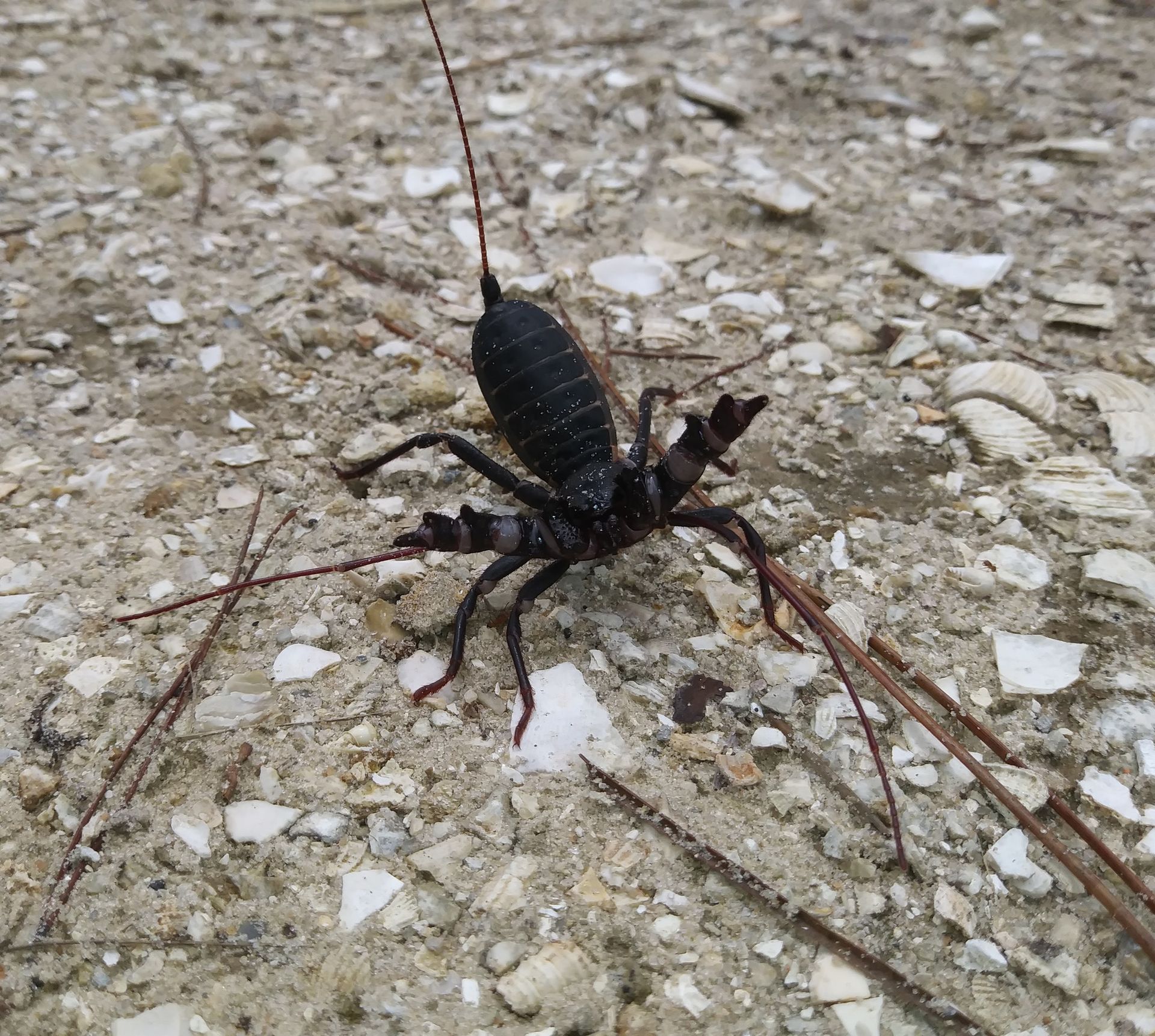
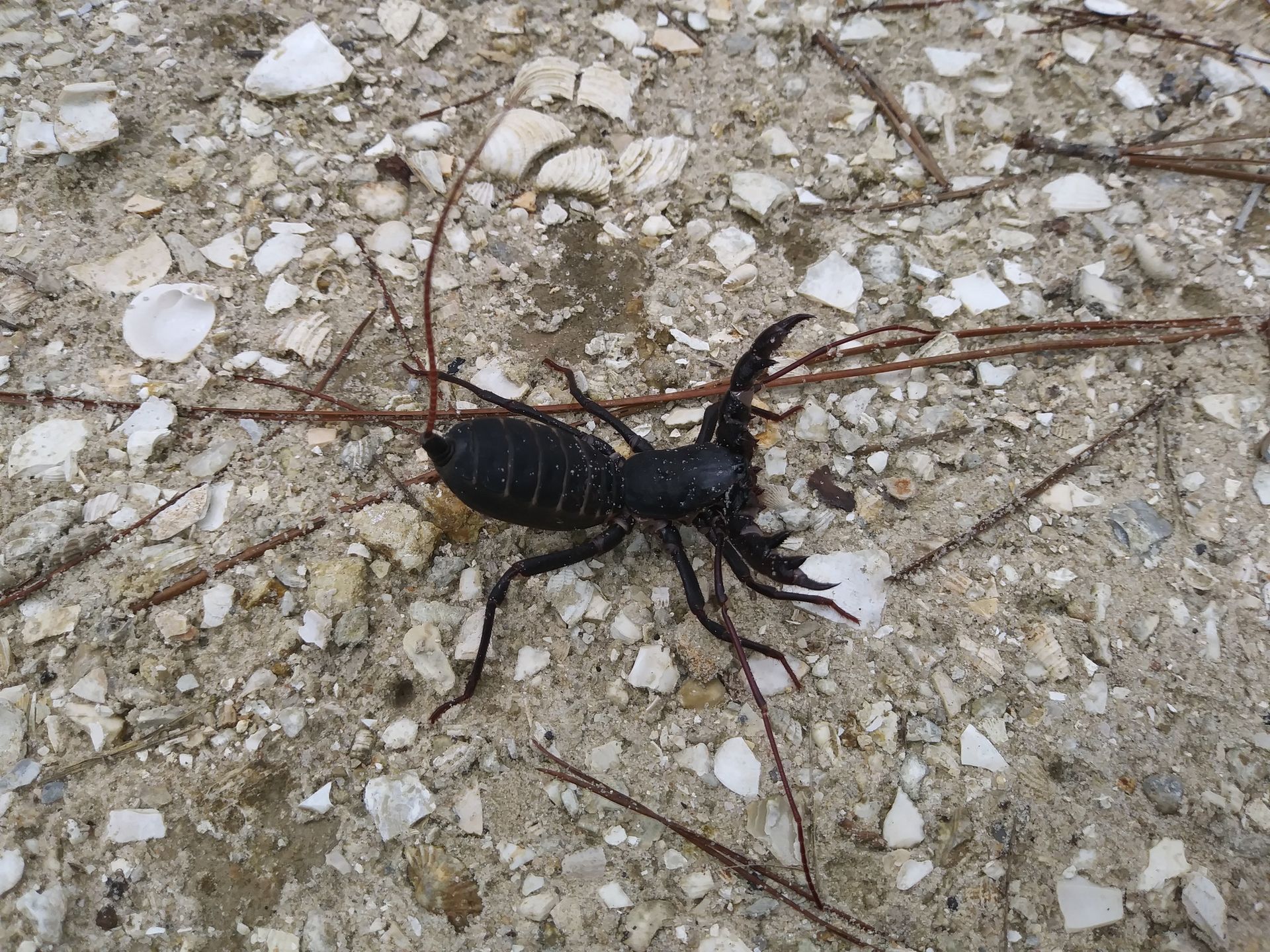
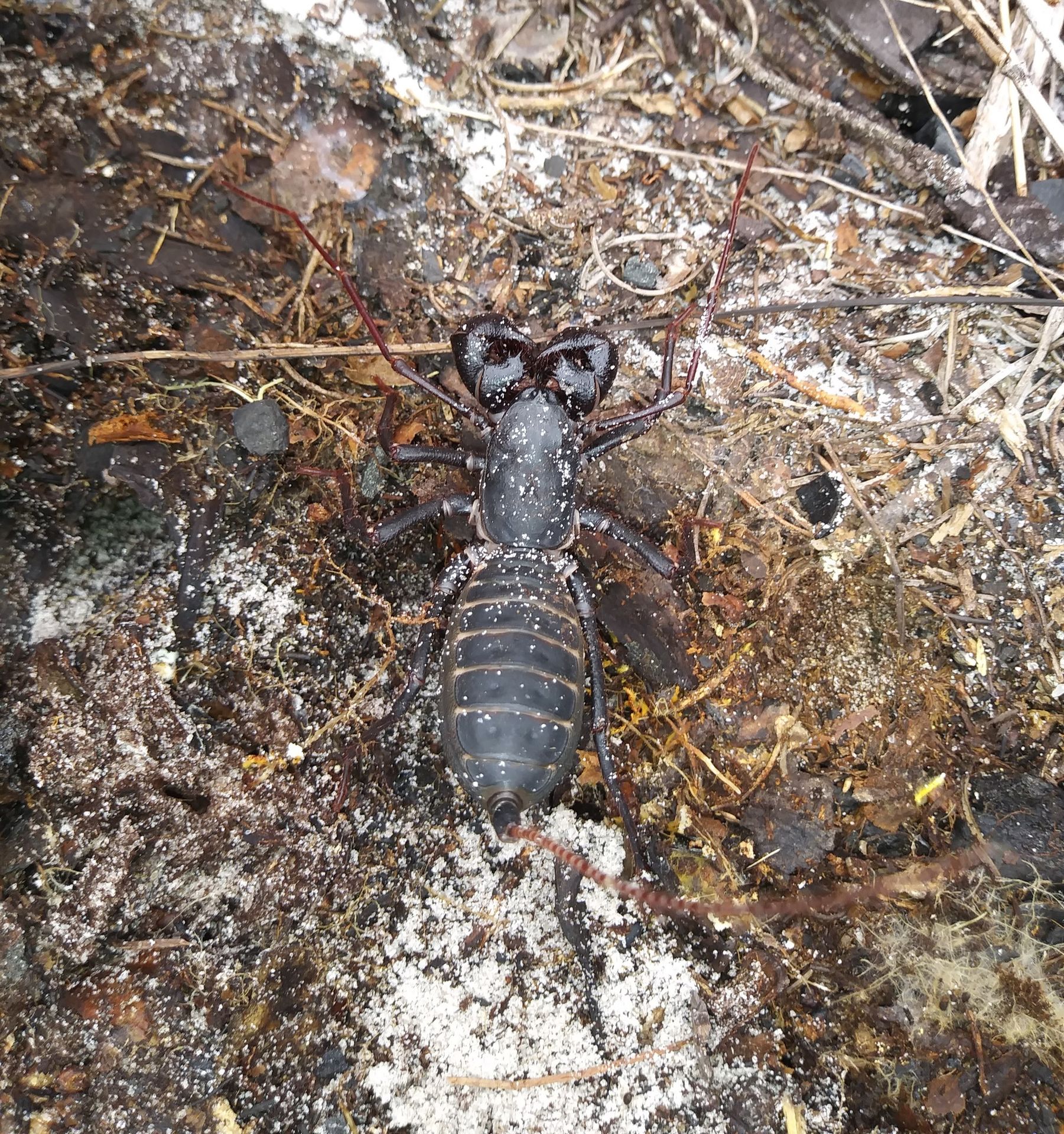
Pronunciation
How to pronounce Mastigoproctus floridanus: //ˌmæs.tɪ.ɡoʊˈprɒk.təs ˌflɔr.ɪˈdeɪ.nəs//
These audio files are automatically generated. While they are not always 100% accurate, they are a good starting point.
Images
Habitat
Native to Florida. Specific microhabitat preferences are not well documented in the provided sources, though related in the Mastigoproctus are typically found in humid, sheltered environments such as under rocks, logs, or in burrows.
Distribution
Florida, United States. The is to this region and has not been documented expanding northward in response to climate change, unlike some other Florida arthropods.
Behavior
. When threatened, sprays a defensive secretion containing acetic acid from pygidial glands, producing a characteristic vinegar-like odor.
Similar Taxa
- Mastigoproctus giganteusLarger, more widespread found in the southwestern United States and Mexico; distinguished by greater body size and different geographic range
- Mastigoproctus tohono found in the southwestern United States (Arizona region); distinguished by geographic separation and potentially subtle morphological differences
More Details
Taxonomic note
The was described by Lönnberg in 1897 and is classified in the Mastigoproctinae within Thelyphonidae.
Sources and further reading
- BugGuide
- GBIF taxonomy match
- iNaturalist taxon
- Catalogue of Life
- An Arachnid Kind of Day | Bug Squad
- Bugs in Orange and Black, Part II: A spooky southern predator heads north in a warming world – Florida predatory stink bug, Euthyrhynchus floridanus — Bug of the Week
- Northern hospitality for the Florida predatory stink bug, Euthyrhynchus floridanus, and wax scales, Ceroplastes spp. — Bug of the Week
- Amped-Up Ants: Caterpillars' Sugary Treats Earn Carpenter Ant Care
- Bug Eric: New Mexico Dragonfly Blitz - Day 1
- Bug Eric: Spider Sunday: Funnel-web Wolf Spiders