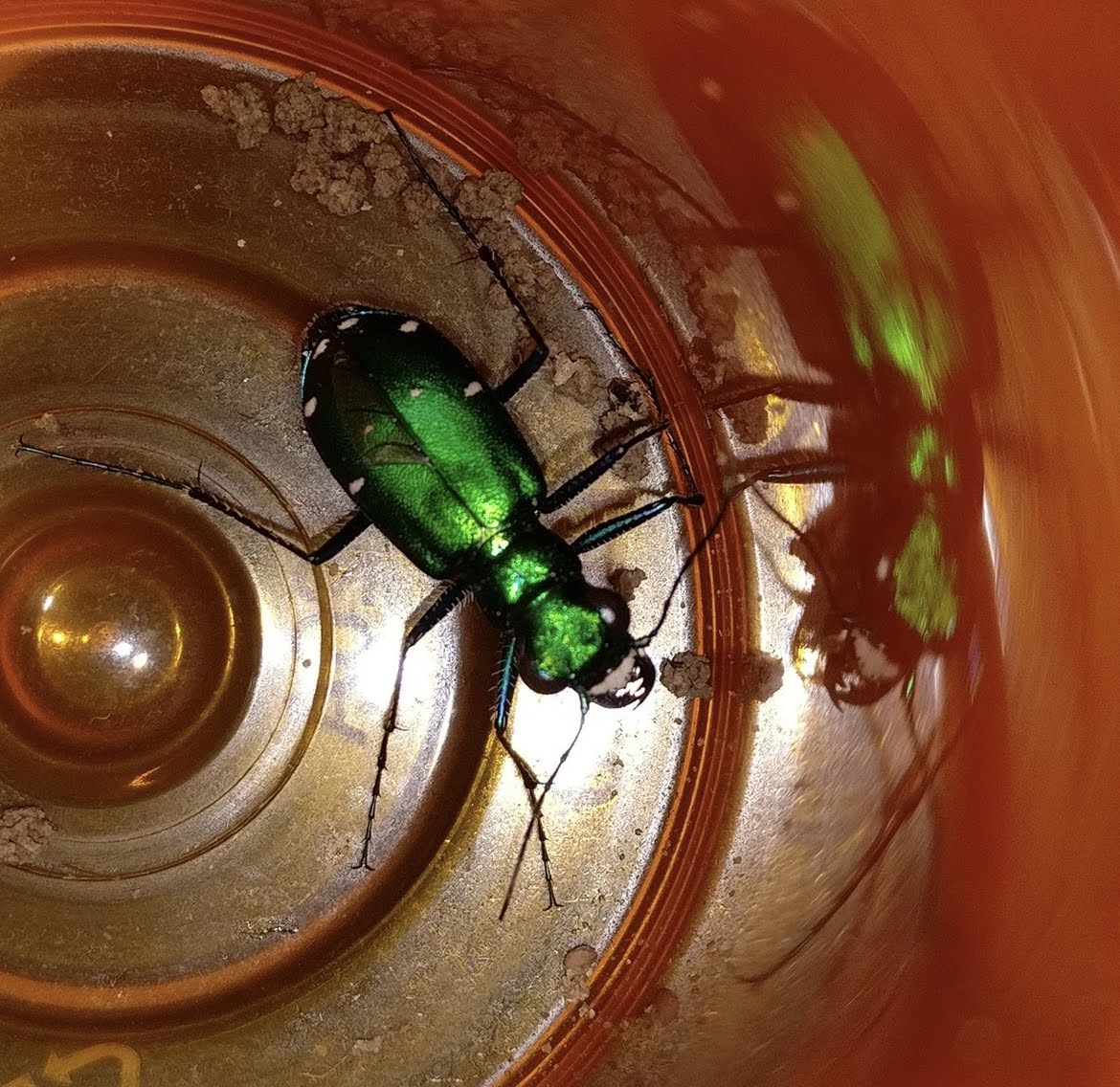
Predator
- Tiger beetles are some of the most charismatic insects on Earth: metallic, sharp-eyed, absurdly fast, and every bit as predatory as their name suggests. Come learn how they hunt, why their larvae live like tiny trapdoor monsters in the soil, and what their decline says about the fragile open habitats many other species need too.
Guides
Condylostylus connectans
Condylostylus connectans is a species of long-legged fly in the family Dolichopodidae, described by Curran in 1942. As a member of this diverse family, it belongs to a group of small, often metallic predatory flies commonly found in gardens, forest edges, and sunny vegetation. The genus Condylostylus is among the more frequently encountered dolichopodids in North American gardens and similar habitats.
Condylostylus longicornis
long-legged fly
Condylostylus longicornis is a predatory long-legged fly in the family Dolichopodidae, native to the Neotropics and southern United States. It has been introduced to multiple regions across the Pacific and Asia, including Hawaii, French Polynesia, Australia, and several South and Southeast Asian countries. The species exhibits distinctive morphological traits including an iridescent green exoskeleton, elongated legs, and a characteristic resting posture with wings held diagonally. It functions as an active predator in agricultural and natural ecosystems.
Condylostylus melampus
long-legged fly
Condylostylus melampus is a species of long-legged fly in the family Dolichopodidae, first described by Loew in 1862. As a member of the large and diverse genus Condylostylus, it shares the family's characteristic predatory habits and metallic coloration. The species is part of a family containing approximately 1,300 species in North America north of Mexico alone.
Condylostylus occidentalis
Condylostylus occidentalis is a species of long-legged fly in the family Dolichopodidae. It is a small, predatory fly typically found in gardens, forest edges, and similar sunny habitats. The species exhibits the characteristic metallic coloration and elongated legs typical of its genus. Like other dolichopodids, it is known to be an active predator of other small insects.
Condylostylus purpureus
A small predatory fly in the family Dolichopodidae, characterized by metallic coloration and exceptionally long legs. As with most members of this diverse family, adults are active predators on other small insects. The species epithet "purpureus" suggests purple coloration, though specific descriptions of this species are limited in available sources. Condylostylus species are typically encountered in gardens, along forest edges, and similar sunny habitats where they dart over vegetation.
Condylostylus scaber
long-legged fly
Condylostylus scaber is a species of long-legged fly in the family Dolichopodidae. These small, metallic flies are active predators of other small insects. The genus Condylostylus includes species commonly observed in gardens and forest edges across North America. Like other dolichopodids, they are known for their agility and rapid, darting flight patterns.
Condylostylus sipho
long-legged fly
Condylostylus sipho is a species of long-legged fly in the family Dolichopodidae. Like other members of this family, it is a predatory insect active in sunny, open habitats. The species is found in North America.
Coniopteryginae
dusty lacewings
Coniopteryginae is a subfamily of dusty lacewings in the family Coniopterygidae, characterized by their small size and distinctive powdery or waxy coating that gives them a moth-like appearance. Members of this subfamily are among the smallest lacewings, with reduced wing venation compared to other neuropterans. They are primarily predatory as both larvae and adults, feeding on small soft-bodied arthropods such as mites and scale insects. The subfamily is distinguished from the other coniopterygid subfamily, Aleuropteryginae, by several morphological features including wing structure and genitalia.
Coniopteryx
dusty-wings
Coniopteryx is a genus of dusty-wing lacewings in the family Coniopterygidae. Adults are tiny insects covered with a powdery white wax coating produced by specialized abdominal glands. The genus has cosmopolitan distribution and is active during winter months when most other insects are dormant. Larvae are important predators of spider mites, scale insects, and whiteflies.
Copelatus distinctus
Copelatus distinctus is a species of diving beetle described by Aubé in 1838. It belongs to the genus Copelatus within the subfamily Copelatinae of the family Dytiscidae. The species is recorded from Middle America based on available distribution data. Like other members of Copelatus, it is an aquatic predator inhabiting freshwater environments.
Cophura arizonensis
Cophura arizonensis is a species of robber fly in the family Asilidae, first described by Schäffer in 1916. As a member of the subfamily Brachyrhopalinae, it belongs to a diverse group of predatory flies known for their aggressive hunting behavior. The species epithet indicates an association with Arizona, suggesting this region as part of its core range. Robber flies in this genus are generally medium-sized predators that hunt from perches.
Coptotomus loticus
Coptotomus loticus is a predaceous diving beetle described by Hilsenhoff in 1980. It belongs to the subfamily Coptotominae within Dytiscidae, a family of aquatic beetles. The species is known from eastern Canada, with records from Ontario and Québec. As a member of Coptotomus, it represents one of the less commonly encountered genera in North American dytiscid fauna.
Corydalus
dobsonflies, hellgrammites (larvae), go-devil, grampus
Corydalus is a genus of large flying insects in the family Corydalidae, commonly known as dobsonflies. The genus contains approximately 35 species endemic to North, Central, and South America. Adults are among the largest winged insects in their range, with wing lengths reaching up to 85 millimetres. The genus exhibits pronounced sexual dimorphism: males possess greatly elongated, sickle-shaped mandibles used in male-male combat and to grasp females during mating, while females have smaller but still formidable jaws capable of delivering a painful bite. The aquatic larvae, known as hellgrammites, are predatory and serve as important indicators of stream health.
Crangon septemspinosa
sand shrimp, seven-spined bay shrimp
Crangon septemspinosa is a small caridean shrimp distributed along the Atlantic coast of North America from Newfoundland to eastern Florida. Adults reach 7–7.5 cm in length and exhibit sand-colored camouflage. The species is nocturnal, with activity levels and respiration rates increasing at higher temperatures. It occupies diverse marine habitats from intertidal zones to depths of 450 m, including eelgrass beds, salt marshes, and estuaries. Reproductive timing varies geographically: northern populations show bimodal spawning in spring and late autumn, while southern Gulf of St. Lawrence populations reproduce more continuously through spring and summer with reduced autumn activity.
Cremastocheilus angularis
anteater scarab beetle
Cremastocheilus angularis is a myrmecophilous scarab beetle species in the genus Cremastocheilus, commonly known as anteater scarabs. Like other members of this genus, it is believed to live within ant colonies as a predator of ant larvae and pupae, though specific details for this species remain limited. The species name 'angularis' refers to the angular body shape characteristic of the genus. It occurs in western North America, with confirmed records from California.
Cremastocheilus armatus montanus
Cremastocheilus armatus montanus is a subspecies of anteater scarab beetle, a myrmecophilous beetle that lives within ant colonies. Adults and larvae are predators of ant brood, feeding on ant larvae and pupae. The subspecies occurs in western North America at higher elevations, with records from montane regions of California, Idaho, Montana, Nevada, Oregon, and British Columbia. Like other members of the genus, it exhibits specialized morphological adaptations for life within ant nests, including a heavily armored exoskeleton and modified mouthparts for piercing ant larvae.
Cremastocheilus canaliculatus
anteater scarab beetle
Cremastocheilus canaliculatus is a myrmecophilous scarab beetle in the subfamily Cetoniinae. Adults are approximately 10 mm in length, dull black, flattened, and heavily armored with a dense, pitted exoskeleton. The species is an obligate associate of ant colonies, where adults prey on ant larvae and pupae. It occurs in eastern North America, ranging from Ontario and Quebec south through the eastern United States.
Cremastocheilus castaneae
anteater scarab beetle
Cremastocheilus castaneae is a myrmecophilous scarab beetle known as an 'anteater scarab' for its specialized predatory relationship with ants. Adults and larvae inhabit ant colonies, primarily those of mound-building Formica species, where they feed on ant brood. The species exhibits remarkable morphological and behavioral adaptations for colony infiltration and survival, including death-feigning behavior to gain entry and dense, armored exoskeletons for protection. It is one of approximately 35 North American species in the genus Cremastocheilus, which reaches greatest diversity in the desert southwest but occurs across much of the United States and southern Canada.
Cremastocheilus constricticollis
Cremastocheilus constricticollis is a species of anteater scarab beetle native to the southwestern United States. Like other members of its genus, it is a myrmecophile that lives within ant colonies as a predator of ant larvae and pupae. The species exhibits specialized morphological adaptations including a dense, heavily armored exoskeleton and modified mouthparts for piercing soft ant cuticle. Adults are known to employ death-feigning behavior to gain entry to ant nests. The species was described by Cazier in 1940 and is among roughly 35 recognized North American species in this genus, which is currently undergoing taxonomic revision.
Cremastocheilus crinitus
anteater scarab beetle
Cremastocheilus crinitus is a myrmecophilous scarab beetle known for its specialized parasitic relationship with ants. Adults enter ant colonies by feigning death, allowing scavenging workers to carry them into nests. Once inside, they feed on ant larvae and pupae using modified piercing mouthparts. The species is part of a genus of approximately 35 North American species, commonly called "anteater scarabs" for their predatory behavior toward ant brood.
Cremastocheilus depressus
Anteater scarab beetle
Cremastocheilus depressus is a myrmecophilous scarab beetle in the genus Cremastocheilus, commonly known as anteater scarabs. Adults are specialized predators of ant larvae and pupae, living within colonies of mound-building ants. The species exhibits remarkable morphological and behavioral adaptations for infiltrating and surviving in ant nests, including death-feigning behavior to gain entry and dense, heavily armored exoskeletons for protection.
Cremastocheilus harrisii
Eastern Ant-loving Scarab
Cremastocheilus harrisii is a species of anteater scarab beetle in the family Scarabaeidae. As a member of the genus Cremastocheilus, it exhibits the specialized myrmecophilous lifestyle characteristic of this group, living within ant colonies and feeding on ant brood. The species is part of a genus of approximately 35 North American species that have evolved remarkable morphological and behavioral adaptations for surviving in hostile ant nest environments.
Cremastocheilus nitens
anteater scarab beetle
Cremastocheilus nitens is a myrmecophilous scarab beetle in the genus Cremastocheilus, commonly known as anteater scarab beetles. Like other members of this genus, it lives within ant colonies as a predator of ant brood. The species is native to the central United States and exhibits specialized morphological adaptations for survival inside hostile ant nests, including dense armored exoskeletons and modified mouthparts for feeding on ant larvae and pupae.
Cremastocheilus opaculus
Cremastocheilus opaculus is a species of anteater scarab beetle, one of approximately 35 North American species in the genus Cremastocheilus. Like other members of this genus, it is myrmecophilous, living within ant colonies where adults prey upon ant larvae and pupae. The species exhibits specialized morphological adaptations for this lifestyle, including a heavily armored exoskeleton and modified mouthparts. It has been documented from California and Baja California.
Cremastocheilus planatus
Cremastocheilus planatus is a myrmecophilous scarab beetle in the genus Cremastocheilus, commonly known as "anteater scarabs." Adults are obligate predators of ant larvae and pupae within host colonies. The species exhibits specialized morphological adaptations for life inside ant nests, including dense armor and modified mouthparts for piercing soft-bodied prey. Like other members of the genus, it is believed to enter host colonies through death-feigning behavior, allowing worker ants to carry it inside.
Cremastocheilus planipes
Cremastocheilus planipes is a myrmecophilous scarab beetle in the genus Cremastocheilus, commonly known as anteater scarabs. These beetles are specialized inhabitants of ant colonies, where they live as predators of ant brood. The species exhibits remarkable morphological and behavioral adaptations for infiltrating and surviving within hostile ant nests. Like other members of its genus, C. planipes is poorly studied and infrequently encountered due to its cryptic lifestyle.
Cremastocheilus puncticollis
anteater scarab beetle
Cremastocheilus puncticollis is a species of anteater scarab beetle in the family Scarabaeidae. Like other members of the genus Cremastocheilus, this species is a specialized myrmecophile that lives within ant colonies. The species is found in the southwestern United States, specifically in Arizona and California. Adults are predators of ant larvae and pupae, employing remarkable behavioral and morphological adaptations to infiltrate and survive within hostile ant nests.
Cremastocheilus quadratus
anteater scarab beetle
Cremastocheilus quadratus is a myrmecophilous scarab beetle in the family Scarabaeidae, first described by Fall in 1912. Like other members of its genus, it lives within ant colonies as a predator of ant larvae and pupae. The species is found in the southwestern United States and northwestern Mexico.
Cremastocheilus retractus
Cremastocheilus retractus is a species of anteater scarab beetle in the family Scarabaeidae. Like other members of its genus, this species is myrmecophilous, living within ant colonies where adults feed on ant larvae and pupae. The species occurs in central North America, with records from the United States and Mexico. Two subspecies are recognized: C. r. retractus and C. r. incisus.
Cremastocheilus saucius
anteater scarab beetle
Cremastocheilus saucius is a species of anteater scarab beetle in the family Scarabaeidae. Like other members of its genus, it is a myrmecophile that lives within ant colonies as a predator of ant brood. The species is found in the southwestern and central United States and northern Mexico. It exhibits specialized morphological adaptations for surviving in hostile ant nest environments.
Cremastocheilus schaumii
anteater scarab beetle
Cremastocheilus schaumii is a North American scarab beetle notable for its obligate myrmecophilous lifestyle. Adults live within ant colonies as predators of ant larvae and pupae, employing specialized morphological adaptations to avoid detection and expulsion by host workers. The species exhibits a complex life cycle involving death-feigning behavior to gain entry to nests, chemical camouflage through acquisition of colony scent, and modified mouthparts for piercing ant brood. Two subspecies are recognized: C. s. schaumii and C. s. tibialis.
Cremastocheilus spinifer
anteater scarab beetle
Cremastocheilus spinifer is a myrmecophilous scarab beetle species that lives within ant colonies as a predator of ant brood. Like other members of its genus, it exhibits remarkable behavioral and morphological adaptations for infiltrating and surviving in hostile ant nest environments. The species is part of a group of approximately 35 North American species known as "anteater scarabs" for their specialized diet of ant larvae and pupae.
Cremastocheilus squamulosus
Cremastocheilus squamulosus is a species of anteater scarab beetle in the family Scarabaeidae. Like other members of its genus, it is a myrmecophile that lives within ant colonies. The species occurs in the southeastern United States, where it has been recorded from Florida, Georgia, North Carolina, and South Carolina.
Cremastocheilus wheeleri
Cremastocheilus wheeleri is a myrmecophilous scarab beetle in the genus Cremastocheilus, commonly known as anteater scarabs. Adults and larvae live within ant colonies as predators, feeding on ant larvae and pupae. The species exhibits specialized morphological adaptations for surviving in hostile ant nests, including dense exoskeletal armor, modified mouthparts for piercing ant brood, and death-feigning behavior to gain entry to nests. It is found in western and central North America, primarily associated with mound-building ants in the genus Formica.
Crematogaster laeviuscula
Shiny Acrobat Ant, Acrobat Ant, Valentine Ant
Crematogaster laeviuscula, commonly known as the shiny acrobat ant or valentine ant, is a species of ant in the genus Crematogaster. The species is notable for its role as a predator of other insects, including documented predation on wasp nests. It has been recorded as a significant predator of paper wasp colonies, particularly Polistes exclamans. The species is widespread across North America, with over 5,000 observations documented on iNaturalist.
Creophilus
hairy rove beetle
Creophilus is a genus of large rove beetles (Staphylinidae) containing some of the largest species in the family, reaching up to 30 mm in length. The genus includes approximately 12 described species distributed globally, with C. maxillosus being the most widely studied due to its forensic significance. Species in this genus are strongly associated with carrion habitats where they function as predators of fly larvae. The genus was revised in 2011, with two new species described and several synonymizations.
Creophilus maxillosus
hairy rove beetle
Creophilus maxillosus, commonly known as the hairy rove beetle, is a large predatory rove beetle in the family Staphylinidae. Adults measure 12–18 mm and are characterized by shiny black coloration with distinctive golden setae on the head, pronotum, and posterior abdominal segments. The species is strongly associated with carrion and decomposition environments, where it functions as both a scavenger and active predator of fly larvae. It has forensic significance for estimating post-mortem intervals, though its widespread distribution and transient nature limit its utility as a geographic indicator. The beetle possesses chemical defense glands that secrete irritant compounds when threatened.
Crocothemis
Scarlet Skimmers
Crocothemis is a genus of dragonflies in the family Libellulidae, subfamily Sympetrinae. Species occur across southern Europe, Africa, Asia, Australia, and the Southwest Pacific. These are small to medium-sized dragonflies known for bright coloration in males, ranging from vivid red to rich blue, while females are typically dull brown or orange. They are aerial predators that perch on vegetation near water and fly out to capture prey.
Cryptocheilus
spider wasps
Cryptocheilus is a genus of spider wasps in the subfamily Pepsinae, occurring primarily in warm regions worldwide. Females construct multicellular nests in pre-existing cavities, provisioning each cell with a paralyzed spider as food for their larvae. The genus includes approximately 24 species in Europe, 6 in North America, and 2 recently described from the Neotropics. Several Australasian species formerly placed here have been transferred to the revived genus Heterodontonyx based on phylogenetic evidence.
Cryptolaemus
Cryptolaemus is a genus of predatory lady beetles (Coccinellidae) native to eastern Australia, New Guinea, and Indonesia. The genus contains approximately 40 species, with Cryptolaemus montrouzieri being the most widely known and commercially important. Both larvae and adults prey primarily upon mealybugs and other scale insects. C. montrouzieri has been introduced globally as a biological control agent and is commonly known as the mealybug destroyer.
Ctenophora
comb jellies, sea gooseberries, sea walnuts, Venus's girdles
Ctenophora is a phylum of marine invertebrates distinguished by eight rows of fused cilia used for locomotion, called comb rows. They are the largest animals to swim using cilia. Unlike cnidarians, they lack stinging cells and instead capture prey using colloblasts—sticky adhesive cells. The phylum contains approximately 150–186 recognized species exhibiting diverse body plans, from egg-shaped cydippids with retractable tentacles to flattened benthic platyctenids and large-mouthed beroids. Ctenophores possess a decentralized nerve net without a brain, and their phylogenetic position as either the earliest or second-earliest branching animal lineage remains actively debated.
Cucujus
flat bark beetles
Cucujus is a genus of flat bark beetles in the family Cucujidae, containing approximately 25 recognized species distributed across the Holarctic region. Species are dorso-ventrally compressed, brightly colored in red or red-and-black patterns, and range from 6–25 mm in length. The genus is most diverse in Asia, with indigenous species in North America, Europe, and Asia. Several species, notably C. cinnaberinus and C. clavipes, have been subjects of ecological and physiological research due to their conservation status and extreme cold tolerance adaptations.
Curicta scorpio
waterscorpion
Curicta scorpio is a species of waterscorpion in the family Nepidae. It occurs in Central America and North America, with a documented first record for Costa Rica on the Caribbean slope. Waterscorpions are aquatic true bugs characterized by their raptorial forelegs and breathing siphons.
Curinus
Curinus is a genus of lady beetles in the family Coccinellidae, established by Mulsant in 1850. The genus contains at least one described species, Curinus coeruleus, commonly known as the metallic blue ladybeetle. Curinus coeruleus has been studied as a biological control agent for armored scale insects in citrus production systems.
Curinus coeruleus
Metallic Blue Lady Beetle
Curinus coeruleus is a metallic blue ladybeetle in the family Coccinellidae, established as an introduced biological control agent in multiple regions. It is known to prey on armored scale insects, particularly Florida red scale (Chrysomphalus aonidum), and has been evaluated for control of Heteropsylla cubana. The species exhibits a distinctive metallic blue coloration and has been introduced to areas including the Philippines and Florida for pest management.
Cycloneda
Spotless Lady Beetles
Cycloneda is a genus of lady beetles in the family Coccinellidae, commonly known as spotless lady beetles. The genus contains approximately 18–20 described species distributed primarily in the Americas. Members of this genus are recognized by their typically unmarked, polished elytra lacking the spots characteristic of many other coccinellids. They are predatory beetles that feed on soft-bodied insects, particularly aphids and spider mites, and are valued as biological control agents in agricultural and garden settings.
Cyclotrachelus blatchleyi
Cyclotrachelus blatchleyi is a species of ground beetle in the family Carabidae, occurring in woodland habitats of North America. The genus Cyclotrachelus comprises woodland ground beetles characterized by their terrestrial habits and predatory ecology. This species was described by Casey in 1918.
Cyclotrachelus sigillatus
woodland ground beetle
Cyclotrachelus sigillatus is a species of woodland ground beetle in the family Carabidae, described by Thomas Say in 1823. It is found in North America, with records from the United States. As a ground beetle, it likely inhabits forest floor habitats where it functions as a predatory insect.
Cymatodera wolcotti
Wolcott's blister beetle
Cymatodera wolcotti is a species of checkered beetle in the family Cleridae, named after entomologist Albert Burke Wolcott (1869-1950). Adults measure 9–14 mm and exhibit distinctive morphological features including an elongated sixth visible ventrite. The species is known from North America, with adults documented on peach trees, water oaks, and slash pine cones bearing fusiform rust cankers.
Cyphomyrmex
fungus-growing ants
Cyphomyrmex is a genus of small, drab-colored fungus-growing ants in the tribe Attini, found primarily in the Neotropics. These ants cultivate fungi in the tribe Leucocoprineae as their primary food source, with most species growing fungal nodules rather than full mycelial gardens. Colonies are typically monogynous and small, rarely exceeding 500 workers. The genus is divided into two species complexes: the strigatus complex (South America only) and the rimosus complex (southern North America to South America). Cyphomyrmex represents a basal lineage among attine ants and serves as sister group to Mycetophylax.

fungus-growing-antsattine-antsMyrmicinaeNeotropicalmutualismfungicultureLeucocoprineaemonogynyparasitoid-waspssocial-parasitismchemical-ecologyalkaloid-venomnest-architecturebehavioral-plasticitycytogeneticschromosome-evolutionGuiana-ShieldBrazilPanamaPuerto-RicoMesoamericaArgentinaUnited-StatesTexasCaliforniaFloridayeast-gardensmycelial-gardensrimosus-complexstrigatus-complexage-polyethismtrophallaxisthanatosisfeigning-deathDiapriidaeAcanthopriaMimopriellaMegalomyrmexsocial-parasiteC.-longiscapusC.-transversusC.-laevigatusC.-rimosusC.-minutusC.-lectusC.-cornutusC.-costatuspheromones3-octanolfarnesenestrail-followingalarm-signaldiketopiperazinesantifungal-compoundsdefensive-behaviorcolony-defenseflight-responserecruitmentLanchester's-lawskaryotypechromosome-numberrDNAmicrosatellitesFISHchamber-depthgallery-lengthfire-disturbancesavanna-forest-transitionarboreal-nestingclay-auriclessoil-nestswood-nestsepiphytic-nestsmoss-nestscoconut-nestsdesiccation-susceptibilitymoist-habitatsbasal-attinephylogeneticssister-groupchemical-evolutionvenom-alkaloidsbehavioral-manipulationhost-parasite-interactionecosystem-engineeringnutrient-cyclingdecompositionorganic-matterinsect-fecesexoskeleton-substrategarden-transplantationworker-polymorphismqueen-numberdealate-queensalatesbrood-careecdysis-assistanceforagingsugar-collectionplant-exudatesfungal-domesticationnodule-cultivationmycelium-cultivationagricultural-behaviornest-entrancefunnel-structureexposed-gardenssymbiont-diversitygeographic-variationresearch-modelevolutionary-biologymutualism-evolutionant-fungus-coevolutionchemical-communicationsocial-insectseusocialitycolony-sizesmall-coloniesslow-movementcrypsisdebris-mimicrypredation-avoidanceparasitoid-defensewasp-killingcolony-abandonmentresource-rescuethief-ant-defensevenom-resistancetoxicity-tolerancebehavioral-suppressionplaying-deadalkaloid-manipulationfungal-secondary-metabolitesantibacterial-compoundsantiviral-compoundsgarden-protectionmicrobial-defensenest-microclimatetemperature-regulationhumidity-requirementsdepth-effectsfire-adaptationdisturbance-ecologyhabitat-specificitysubstrate-specializationclay-constructionsoil-manipulationarchitectural-plasticityvertical-nestingembankment-nestingoverhang-nestingpendant-nestsswallow-nest-mimicryresearch-accessibilityfield-biologytropical-ecologyNeotropical-myrmecologybiodiversityconservationinvasive-species-contextnative-speciesbiological-controlIntegrated-Pest-Managementagricultural-ecologyforest-ecologysavanna-ecologytransitional-habitatsdisturbed-areasurban-ecologyanthropogenic-impactclimate-sensitivityhabitat-limitationrange-boundariesdispersalcolonizationestablishmentpopulation-dynamicsdemographycolony-densitynest-spacingintraspecific-competitioninterspecific-competitionterritorialityresource-defensecombat-behavioraggression-levelsrecruitment-behaviorchemical-signalingalarm-pheromonestrail-pheromonesrecognition-cuescuticular-hydrocarbonsvenom-compositiondefensive-secretionsmandibular-glandsDufour's-glandmetapleural-glandsantibiotic-productiongrooming-behaviorfungal-inoculationintegumental-fungiyeast-growthlarval-groominggarden-maintenancesubstrate-preparationfecal-fertilizeranal-trophallaxiscrop-regurgitationfluid-applicationdrying-behaviornodule-formationtransplantation-behaviorgarden-establishmentceiling-gardensroot-associationarchitectural-innovationnest-site-selectionmicrohabitat-choicemoisture-requirementsthermal-bufferingpredator-avoidanceparasite-avoidancedisease-resistancesocial-immunitycollective-behaviordivision-of-labortask-allocationtemporal-polyethismworker-agenurse-workersforager-workerssoldier-caste-absencemonomorphismworker-size-variationqueen-worker-differentiationreproductive-castegyne-productionmale-productionseasonal-reproductioncolony-foundingclaustral-foundingnon-claustral-foundingfungal-inoculumfounding-queenfirst-worker-generationnutritional-dependencyfat-reservesmetabolic-adaptationdigestive-physiologyenzyme-complementfungal-enzymelignocellulose-degradationnutritional-mutualismobligate-mutualismvertical-transmissionhorizontal-transmissionsymbiont-switchingcultivar-replacementgarden-failurecolony-mortalitypopulation-turnovergeneration-timelongevitysurvivorshiplife-expectancyagingsenescencereproductive-investmentcolony-growthcolony-declinebuddingfissionreproduction-modegenetic-structurerelatednessmating-systemnuptial-flightmate-choicesperm-storagecolony-odornestmate-recognitionforeign-rejectionagonistic-behaviorterritorial-markingboundary-defenseraiding-behaviorrobbing-behaviorcleptobiosisdulosisslaveryinquilinismguest-antsmyrmecophilesnest-associatescommensalisminquilinesparasite-tolerancehost-manipulationvenom-alkaloidpyrrolidineindolizidinepiperidinenonanalfarnesenesesquiterpeneagriculture-chemicalgaster-extractchemical-diversitychemical-simplicityevolutionary-precursorderived-chemistrybiosynthetic-pathwaysemiochemicalinfochemicalcommunicationinformation-transfercolony-organizationsocial-structurepolygynyqueen-conditiondealationwing-sheddingovarian-developmentfecundityegg-layingbrood-developmentdevelopmental-ratetemperature-dependencehumidity-dependencefood-availabilitynutritional-qualityfungal-productivitygarden-yieldworker-productioncolony-efficiencyenergy-allocationresource-allocationforaging-efficiencysearch-behaviorprey-detectionfood-retrievaltransport-behaviorload-sizetravel-speedpath-integrationorientationnavigationhoming-behaviorlearningmemoryexperienceindividual-recognitioncontext-dependent-behaviorthreat-assessmentrisk-managementpredator-inspectionalarm-propagationrecruitment-activationmobilizationcolony-responseemergency-behaviorpanic-responsecontrolled-responsedefensive-strategyoffensive-strategyescalationde-escalationconflict-resolutionfight-avoidanceretreat-behaviorsurrender-signaldominance-hierarchyreproductive-skewworker-policingqueen-policingegg-eatingoviposition-suppressionreproductive-conflictkin-conflictworker-reproductionmale-production-by-workersanarchysocial-parasitism-detectionparasite-recognitionenemy-recognitionnest-intrusionnest-defenseperimeter-defensechamber-defensebrood-defensequeen-defenseself-sacrificesuicidal-defenseautothysissting-usemandible-usespraying-behaviorgaster-flexionchemical-defensemechanical-defensearmorcuticle-thicknesspigmentationmasquerademimicryBatesian-mimicryMuellerian-mimicryaggressive-mimicryWasmannian-mimicrymyrmecophilymyrmecophagyant-plant-mutualismtrophobiosisextrafloral-nectarydomatiaplant-ant-interactionherbivore-defenseseed-dispersalpollinationecosystem-servicefunctional-roletrophic-positiondetritivoredecomposersaprotrophnecrotrophfungivoreomnivorepredatorscavengertrophic-levelenergy-flowcarbon-cyclingnitrogen-cyclingphosphorus-cyclingsoil-formationbioturbationaerationwater-infiltrationmicrobial-communitybacteriaactinomycetesPseudonocardiadisease-suppressiongarden-hygieneweeding-behaviorpruning-behaviorfungal-groomingantibiotic-applicationmutualist-protectionagricultural-diseasecrop-pathologyescovopsisgarden-parasitecompetitor-funguspathogen-defenseimmune-responseindividual-immunitygroomingallogroomingself-groomingnest-cleaningrefuse-managementfecal-managementwaste-disposalmidden-formationterritory-sizehome-rangeforaging-rangerecruitment-rangeexplorationexploitationinformation-usepublic-informationprivate-informationcue-usesignal-usecommunication-networkinteraction-networksocial-networkcolony-networkpopulation-networkcommunity-ecologyspecies-interactionapparent-competitionexploitative-competitioninterference-competitionresource-partitioningniche-differentiationhabitat-filteringenvironmental-gradientaltitudinal-distributionlatitudinal-distributioncontinental-distributionisland-distributionendemismbiogeographyphylogeographyhistorical-biogeographyvicariancerange-expansionrange-contractionrefugiaglacial-cyclesclimate-change-impacthabitat-fragmentationdeforestationland-use-changeagricultural-intensificationurbanizationpollutionpesticide-exposureheavy-metal-accumulationconservation-statuspopulation-viabilityextinction-riskprotected-areareserve-designhabitat-corridorconnectivitymetapopulationsource-sink-dynamicsrescue-effectmass-effectecological-theorybehavioral-ecologyevolutionary-ecologyfunctional-ecologytrait-based-ecologycomparative-analysisphylogenetic-comparative-methodscharacter-evolutionancestral-state-reconstructionconvergent-evolutionparallel-evolutionadaptive-radiationspecies-diversificationspeciationhybridizationintrogressiongene-flowgenetic-differentiationpopulation-structuremolecular-ecologygenomicstranscriptomicsproteomicsmetabolomicsvolatile-organic-compoundcuticular-hydrocarbonglandular-secretionsting-apparatusmandible-morphologyhead-morphologymesosomal-morphologypetiolar-morphologygastral-morphologyleg-morphologyantennal-morphologysensillachemoreceptionmechanoreceptionthermoreceptionphotoreceptionvisioncompound-eyeocellibrain-morphologyneuroanatomylearning-capacitymemory-capacitycognitive-abilityproblem-solvingtool-usesequence-learningroute-learningspatial-memorytemporal-memorysocial-learningcultural-transmissiontraditioncolony-personalitybehavioral-syndromeboldnessexploration-tendencyactivity-levelaggression-levelforaging-tendencydefensive-tendencystress-responsephysiological-stressthermal-stressdesiccation-stressstarvation-stressimmune-challengewound-healingmetabolic-raterespirationenergy-expenditurewater-balanceosmoregulationexcretionMalpighian-tubulesrectumhindgutmidgutforegutcropproventriculusdigestive-enzymenutrient-absorptionlipid-metabolismcarbohydrate-metabolismprotein-metabolismamino-acid-metabolismnitrogen-excretionuric-acidureaammoniaosmolytecryoprotectantheat-shock-proteinstress-proteinantioxidant-defenseoxidative-stressreactive-oxygen-speciesaging-biologysenescence-theorydisposable-somaantagonistic-pleiotropymutation-accumulationlife-history-theoryr-K-selectionbet-hedgingiteroparitysemelparityreproductive-effortparental-investmentmaternal-effectpaternal-effectepigeneticsDNA-methylationhistone-modificationnon-coding-RNAgene-regulationtranscription-factorsignaling-pathwayhormonejuvenile-hormoneecdysoneinsulin-signalingTOR-signalingnutrient-sensingreproductive-signalingcaste-determinationsex-determinationenvironmental-sex-determinationgenetic-sex-determinationhaplodiploidyarrhenotokythelytokyparthenogenesisarrhenotokous-parthenogenesisautomixisapomixiscentral-fusionterminal-fusiongenomic-imprintingparental-conflictkin-selectioninclusive-fitnessHamilton's-rulerelatedness-asymmetrysex-ratio-theorylocal-mate-competitionlocal-resource-competitionlocal-resource-enhancementsplit-sex-ratioworker-sex-ratioqueen-sex-ratiocolony-sex-ratiopopulation-sex-ratiooperational-sex-ratioeffective-population-sizegenetic-driftinbreedinginbreeding-depressionoutbreedingoutbreeding-depressionheterosishybrid-vigorgenetic-loadmutation-rateeffective-number-of-codonscodon-usage-biasGC-contentgenome-sizekaryotype-evolutionchromosomal-rearrangementfusioninversiontranslocationpolyploidyaneuploidychromosomal-polymorphismrDNA-clusterheterochromatineuchromatincentromeretelomerenucleolus-organizer-regionsatellite-DNAminisatellitemicrosatellitesimple-sequence-repeattransposable-elementretrotransposonDNA-transposonhorizontal-gene-transferendosymbiontWolbachiaCardiniumRickettsiaSpiroplasmabacterial-symbiontfungal-symbiontviral-symbiontparasitepathogendiseaseepidemiologytransmission-dynamicsvirulenceresistancetolerancerecoveryimmunityvaccinationprophylaxismedicinal-behaviorself-medicationthermoregulationbehavioral-thermoregulationsocial-thermoregulationmicroclimate-selectionnest-temperaturebrood-temperaturefungal-garden-temperaturemetabolic-heatheat-dissipationevaporative-coolingbehavioral-coolingfanningventilationchamber-designgallery-designentrance-designair-flowhumidity-regulationwater-collectionwater-storagedesiccation-resistancecuticular-waterproofingspiracle-controlrespiratory-water-lossexcretory-water-losswater-recyclingmetabolic-waterdietary-waterenvironmental-waterrainfall-dependenceseasonal-activitydry-seasonwet-seasonmonsoondroughtfloodfiredisturbancesuccessionprimary-successionsecondary-successionclimax-communitypioneer-specieshabitat-specialisthabitat-generalistedge-speciesinterior-speciesgap-speciescanopy-speciesunderstory-speciesground-speciessubterranean-speciesarboreal-speciesliana-speciesepiphyte-specieslithophyte-speciesrheophyte-speciesaquatic-margin-speciesterrestrial-speciesfossorial-speciescursorial-speciesscansorial-speciesvolant-specieswinged-reproductivedealateergatoidbrachypterousapterouspolymorphismcaste-polymorphismqueen-polymorphismmale-polymorphismsize-polymorphismallometryisometryshape-variationmorphological-integrationmodularityevolvabilityconstraintsdevelopmental-stabilityfluctuating-asymmetrydirectional-asymmetryantisymmetryphenotypic-plasticityreaction-normgenotype-environment-interactiongrandparental-effectindirect-genetic-effectsocial-environment-effectcolony-effectdensity-dependencefrequency-dependencenegative-frequency-dependencepositive-frequency-dependenceapostatic-selectionanti-apostatic-selectionsearch-imagepredator-learningprey-learningfriend-recognitioncuticular-hydrocarbon-profilegestalt-odorcolony-specific-odorindividual-specific-odortask-specific-odorage-specific-odorreproductive-odorqueen-odorqueen-pheromoneprimer-pheromonereleaser-pheromonesignal-pheromonemodulatory-pheromonealarm-pheromonetrail-pheromonerecruitment-pheromoneaggregation-pheromonesex-pheromonemarking-pheromoneterritorial-pheromonedefensive-pheromonepoison-glandDufour-glandmandibular-glandpostpharyngeal-glandmetapleural-glandsternal-glandtarsal-glandanal-glandrectal-glandpygidial-glandmandibular-brushtibial-spurstridulatory-organsubgenual-organJohnston's-organtympanal-organhair-sensillumcampaniform-sensillumbasiconic-sensillumcoeloconic-sensillumplacoid-sensillumsensilla-trichodeasensilla-basiconicasensilla-coeloconicasensilla-ampullaceasensilla-campaniformiasensilla-placodeaolfactory-receptor-neurongustatory-receptor-neuronmechanoreceptor-neuronthermoreceptor-neuronhygroreceptor-neuronphotoreceptor-neuronvisual-processingolfactory-processinggustatory-processingmechanosensory-processingcentral-complexmushroom-bodyantennal-lobeoptic-lobesuboesophageal-ganglionventral-nerve-cordsympathetic-nervous-systemneurosecretionneurohemal-organcorpus-cardiacumcorpus-allatumprothoracic-glandventral-glandpericardial-glandneuroendocrine-regulationhormonal-regulationpheromonal-regulationneural-regulationbehavioral-regulationsocial-regulationenvironmental-regulationdevelopmental-regulationreproductive-regulationmetabolic-regulationhomeostatic-regulationallostatic-regulationstress-regulationimmune-regulationcircadian-rhythmcircannual-rhythmphotoperiodismthermoperiodismbiological-clockzeitgeberentrainmentfree-running-periodphase-response-curvemasking-effectarousal-thresholdsleeptorpordiapausequiescencedormancyaestivationhibernationcold-hardinessheat-hardinessdesiccation-hardinessanoxia-hardinessstarvation-hardinessradiation-hardinesspressure-hardinessgravity-perceptionmagnetic-field-perceptionelectric-field-perceptionsound-perceptionvibration-perceptionsubstrate-borne-signalair-borne-signalseismic-signalchemical-signalvisual-signaltactile-signalauditory-signalmultimodal-signalcomposite-signalredundant-signalamplifying-signalattenuating-signalhonest-signaldeceptive-signalcostly-signalcheap-signalconventional-signalindex-signalhandicap-signalamplifiersocial-selectionsexual-selectionsperm-competitioncryptic-female-choicemale-male-competitionfemale-female-competitionparent-offspring-conflictsibling-conflictworker-queen-conflictworker-worker-conflictsexual-conflictantagonistic-coevolutionarms-raceevolutionary-dynamicscommunity-dynamicsecosystem-dynamicsbiogeochemical-cyclecarbon-cyclenitrogen-cyclephosphorus-cyclesulfur-cyclewater-cycletrophic-transferproduction-efficiencyconsumption-efficiencyassimilation-efficiencyecological-efficiencyLindeman-efficiency10%-rulefood-chainfood-webtrophic-cascadetop-down-controlbottom-up-controlwasps-controldonor-controlrecipient-controlinteraction-strengthinteraction-webecological-networknetwork-topologynetwork-metricsdegree-distributionconnectancenestednesscompartmentalizationrobustnessfragilityresiliencerecovery-timereturn-timeelasticityperturbationpulse-disturbancepress-disturbancechronic-disturbanceacute-disturbancecatastrophic-disturbancenatural-disturbanceanthropogenic-disturbancehabitat-destructionhabitat-degradationhabitat-modificationhabitat-losshabitat-isolationedge-effectmatrix-effectpermeabilitycorridor-effectstepping-stonesource-populationsink-populationmetapopulation-dynamicsextinction-debtcolonization-creditrelaxation-effecttime-laghistorical-legacypriority-effectfounder-effectbottleneck-effectselectionnatural-selectionartificial-selectiondirectional-selectionstabilizing-selectiondisruptive-selectionbalancing-selectionfrequency-dependent-selectiondensity-dependent-selectionr-selectionK-selectionc-selections-selectiona-selectionbet-hedging-selectionfluctuating-selectioncorrelational-selectionmultivariate-selectionindirect-selectioncorrelated-responsegenetic-correlationphenotypic-correlationenvironmental-correlationcorrelation-matrixvariance-covariance-matrixG-matrixP-matrixE-matrixM-matrixquantitative-geneticsheritabilitynarrow-sense-heritabilitybroad-sense-heritabilitygenetic-varianceadditive-genetic-variancedominance-varianceepistatic-varianceenvironmental-variancephenotypic-variancegenotype-environment-interaction-variancematernal-variancepaternal-variancecommon-environment-variancespecial-environment-variancemeasurement-error-varianceresponse-to-selectionrealized-heritabilitypredicted-responsebreeder's-equationselection-gradientselection-differentialLande-equationmultivariate-breeder's-equationgenetic-constraintevolutionary-constraintdevelopmental-constraintfunctional-constraintphylogenetic-constrainthistorical-constrainttrade-offallocation-trade-offacquisition-trade-offconversion-trade-offmaintenance-trade-offreproduction-survival-trade-offgrowth-reproduction-trade-offimmune-reproduction-trade-offstress-reproduction-trade-offforaging-predation-trade-offcompetition-colonization-trade-offtolerance-resistance-trade-offplasticity-canalization-trade-offgeneralist-specialist-trade-offspeed-accuracy-trade-offexploration-exploitation-trade-offindividual-colony-trade-offwithin-colony-trade-offbetween-colony-trade-offlife-history-trade-offdemographic-trade-offecological-trade-offevolutionary-trade-offoptimizationmaximizationminimizationsatisficingmarginal-value-theoremoptimal-foraging-theoryoptimal-diet-theorycentral-place-foragingpatch-use-theorygiving-up-densitygiving-up-timepredation-riskenergetic-costopportunity-costhandling-timesearch-timetravel-timeencounter-rateprey-densityprey-profitabilityprey-choicediet-breadthniche-widthniche-overlapniche-partitioningresource-selectionhabitat-selectionsettlement-choicenest-site-choicehost-choiceoviposition-choiceforaging-choicepath-choiceroute-choicecentral-placeterritorycore-areaedge-areaboundaryperimeterareavolumeshapeconfigurationspatial-patterntemporal-patterndiel-patternseasonal-patternannual-patternmultiannual-patterncyclical-patternirregular-patternrandom-patternclumped-patternuniform-patternregular-patternaggregated-patternoverdispersed-patternunderdispersed-patternPoisson-distributionnegative-binomial-distributionTaylor's-power-lawspatial-autocorrelationtemporal-autocorrelationcross-correlationspectral-analysiswavelet-analysistime-series-analysispopulation-time-seriescommunity-time-seriesecosystem-time-serieslong-term-studylong-term-monitoringlong-term-experimentchronosequencespace-for-time-substitutionpaleoecologypaleontologyfossil-recordtrace-fossilcoprolitenest-fossilamber-inclusionsubfossilquaternaryholocenepleistoceneneogenepaleogenecretaceousmesozoiccenozoicgeological-timedeep-timeevolutionary-timeecological-timegenerational-timephysiological-timeperception-timereaction-timedecision-timememory-timelearning-timedevelopmental-timelife-spancolony-lifespanqueen-lifespanworker-lifespanmale-lifespanlarval-development-timepupal-development-timeegg-development-timeincubation-timedoubling-timehalf-liferelaxation-timeresilience-timeresistance-timelag-timelead-timeforecast-timeprediction-timeplanning-timemanagement-timeconservation-timerestoration-timemitigation-timeadaptation-timespeciation-timediversification-timeextinction-timepersistence-timetransience-timeephemeralitypermanencestabilityinstabilityequilibriumnon-equilibriumsteady-statedynamic-statetransient-stateasymptotic-stateattractorrepellerlimit-cyclechaosstochasticitydeterminismpredictabilityunpredictabilitycomplexityemergenceself-organizationpattern-formationspatial-self-organizationtemporal-self-organizationspatiotemporal-self-organizationswarm-intelligencecollective-decision-makingconsensus-decisionquorum-responsewisdom-of-crowdsinformation-cascadecultural-evolutiongene-culture-coevolutionniche-constructionextended-phenotypeextended-organismsuperorganismcolony-as-individualcolony-as-unit-of-selectiongroup-selectionmultilevel-selectionreciprocal-altruismby-product-mutualismamensalismcompetitionpredationherbivoryparasitismparasitoidismchemical-mimicrytactile-mimicryvisual-mimicryacoustic-mimicrydefensive-mimicryVavilovian-mimicryBakerian-mimicryGilbertian-mimicryPoultonian-mimicryBrowerian-mimicryauto-mimicryintra-specific-mimicryinter-specific-mimicrymolecular-mimicrycellular-mimicrytissue-mimicryorgan-mimicrybehavioral-mimicryreproductive-mimicrysocial-mimicrynest-mimicryfood-mimicrypredator-mimicryprey-mimicryhost-mimicryguest-mimicrycleptoparasitecuckoo-parasiteinquilineguestmyrmecophiletermitophileaphidophilecoccidophilescale-insect-associatemealybug-associatewhitefly-associateplanthopper-associatetreehopper-associateleafhopper-associatecicada-associatebutterfly-associatemoth-associatebeetle-associatefly-associatewasp-associatebee-associateant-associatespider-associatemite-associatetick-associatenematode-associateflatworm-associateroundworm-associateannelid-associatemollusk-associatecrustacean-associatemillipede-associatecentipede-associateinsect-associatevertebrate-associatebird-associatemammal-associatereptile-associateamphibian-associatefish-associateplant-associatefungus-associatebacteria-associatevirus-associatearchaea-associateprotist-associatealgae-associatelichen-associatebryophyte-associatepteridophyte-associategymnosperm-associateangiosperm-associatemonocot-associatedicot-associateherb-associateshrub-associatetree-associatevine-associateepiphyte-associatelithophyte-associaterheophyte-associatehydrophyte-associatexerophyte-associatemesophyte-associatehygrophyte-associatesciophyte-associateheliophyte-associatepioneer-plant-associateclimax-plant-associatedisturbance-plant-associatesuccessional-plant-associateant-plant-protection-mutualismant-plant-food-body-mutualismant-plant-domatia-mutualismant-plant-extrafloral-nectary-mutualismant-plant-seed-dispersal-mutualismant-plant-pollination-mutualismant-plant-agriculture-mutualismant-fungus-mutualismant-bacteria-mutualismant-virus-mutualismant-nematode-mutualismant-mite-mutualismant-tick-mutualismant-spider-mutualismant-wasp-mutualismant-fly-mutualismant-beetle-mutualismant-butterfly-mutualismant-moth-mutualismant-bird-mutualismant-mammal-mutualismant-reptile-mutualismant-amphibian-mutualismant-fish-mutualismant-human-mutualismant-domestic-animal-mutualismant-pest-mutualismant-crop-mutualismant-forest-mutualismant-savanna-mutualismant-grassland-mutualismant-desert-mutualismant-wetland-mutualismant-riverine-mutualismant-riparian-mutualismant-montane-mutualismant-lowland-mutualismant-coastal-mutualismant-island-mutualismant-continental-mutualismant-tropical-mutualismant-temperate-mutualismant-subtropical-mutualismant-boreal-mutualismant-austral-mutualismant-paleotropical-mutualismant-neotropical-mutualismant-afrotropical-mutualismant-oriental-mutualismant-palearctic-mutualismant-nearctic-mutualismant-holarctic-mutualismant-pan-tropical-mutualismant-cosmopolitan-mutualismant-endemic-mutualismant-widespread-mutualismant-restricted-mutualismant-rare-mutualismant-common-mutualismant-abundant-mutualismant-scarce-mutualismant-threatened-mutualismant-invasive-mutualismant-native-mutualismant-exotic-mutualismant-introduced-mutualismant-naturalized-mutualismant-feral-mutualismant-urban-mutualismant-rural-mutualismant-agricultural-mutualismant-natural-mutualismant-anthropogenic-mutualismant-pristine-mutualismant-degraded-mutualismant-restored-mutualismant-conserved-mutualismant-managed-mutualismant-sustainable-mutualismant-unsustainable-mutualismant-resilient-mutualismant-fragile-mutualismant-robust-mutualismant-vulnerable-mutualismant-resistant-mutualismant-susceptible-mutualismant-tolerant-mutualismant-intolerant-mutualismant-flexible-mutualismant-inflexible-mutualismant-plastic-mutualismant-canalized-mutualismant-adaptive-mutualismant-maladaptive-mutualismant-optimal-mutualismant-suboptimal-mutualismant-efficient-mutualismant-inefficient-mutualismant-productive-mutualismant-unproductive-mutualismant-successful-mutualismant-unsuccessful-mutualismant-stable-mutualismant-unstable-mutualismant-persistent-mutualismant-transient-mutualismant-obligate-mutualismant-facultative-mutualismant-specific-mutualismant-generalized-mutualismant-exclusive-mutualismant-non-exclusive-mutualismant-symbiotic-mutualismant-non-symbiotic-mutualismant-trophic-mutualismant-defensive-mutualismant-dispersive-mutualismant-pollination-mutualismant-agriculture-mutualismant-construction-mutualismant-nutrient-mutualismant-protection-mutualismant-cleaning-mutualismant-transport-mutualismant-storage-mutualismant-processing-mutualismant-consumption-mutualismant-production-mutualismant-exchange-mutualismant-reciprocity-mutualismant-by-product-mutualismant-investment-mutualismant-harvest-mutualismant-cultivation-mutualismant-domestication-mutualismant-selection-mutualismant-breeding-mutualismant-engineering-mutualismant-modification-mutualismant-creation-mutualismant-destruction-mutualismant-transformation-mutualismant-conversion-mutualismant-utilization-mutualismant-exploitation-mutualismant-cooperation-mutualismant-competition-mutualismant-conflict-mutualismant-resolution-mutualismant-negotiation-mutualismant-communication-mutualismant-signal-mutualismant-cue-mutualismant-information-mutualismant-knowledge-mutualismant-learning-mutualismant-memory-mutualismant-cognition-mutualismant-intelligence-mutualismant-decision-mutualismant-choice-mutualismant-preference-mutualismant-motivation-mutualismant-emotion-mutualismant-stress-mutualismant-welfare-mutualismant-health-mutualismant-disease-mutualismant-immunity-mutualismant-resistance-mutualismant-tolerance-mutualismant-recovery-mutualismant-healing-mutualismant-therapy-mutualismant-medicine-mutualismant-prevention-mutualismant-security-mutualismant-safety-mutualismant-risk-mutualismant-hazard-mutualismant-threat-mutualismant-danger-mutualismant-damage-mutualismant-injury-mutualismant-death-mutualismant-mortality-mutualismant-survival-mutualismant-longevity-mutualismant-reproduction-mutualismant-fertility-mutualismant-fecundity-mutualismant-sterility-mutualismant-virginity-mutualismant-mating-mutualismant-copulation-mutualismant-insemination-mutualismant-fertilization-mutualismant-egg-mutualismant-laying-mutualismant-incubation-mutualismant-hatching-mutualismant-emergence-mutualismant-eclosion-mutualismant-molting-mutualismant-ecdysis-mutualismant-metamorphosis-mutualismant-development-mutualismant-growth-mutualismant-differentiation-mutualismant-maturation-mutualismant-aging-mutualismant-senescence-mutualismant-decomposition-mutualismant-recycling-mutualismant-energy-mutualismant-carbon-mutualismant-nitrogen-mutualismant-phosphorus-mutualismant-sulfur-mutualismant-water-mutualismant-oxygen-mutualismant-hydrogen-mutualismant-mineral-mutualismant-vitamin-mutualismant-hormone-mutualismant-enzyme-mutualismant-protein-mutualismant-lipid-mutualismant-carbohydrate-mutualismant-nucleic-acid-mutualismant-DNA-mutualismant-RNA-mutualismant-gene-mutualismant-genome-mutualismant-chromosome-mutualismant-cell-mutualismant-tissue-mutualismant-organ-mutualismant-system-mutualismant-organism-mutualismant-individual-mutualismant-colony-mutualismant-population-mutualismant-species-mutualismant-genus-mutualismant-family-mutualismant-order-mutualismant-class-mutualismant-phylum-mutualismant-kingdom-mutualismant-domain-mutualismant-life-mutualismant-earth-mutualismant-universe-mutualism