
Condylostylus occidentalis
(Bigot, 1888)
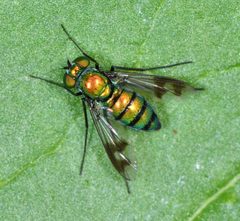
Condylostylus occidentalis is a of long-legged fly in the Dolichopodidae. It is a small, predatory fly typically found in gardens, forest edges, and similar sunny . The species exhibits the characteristic metallic coloration and elongated legs typical of its . Like other dolichopodids, it is known to be an active of other small insects.
Pronunciation
How to pronounce Condylostylus occidentalis: /ˌkɒndɪloʊˈstaɪləs ˌɒksɪˈdɛntəlɪs/
These audio files are automatically generated. While they are not always 100% accurate, they are a good starting point.
Identification
-level identification within Condylostylus generally requires examination of male genitalia, with claspers and other terminal appendages visible as forward-protruding structures at the tip. The can be distinguished from other dolichopodid genera by overall body proportions and leg structure, though specific traits for C. occidentalis are not well documented in accessible sources.
Images
Habitat
Has been observed in gardens and along forest edges in sunny locations, typical for Condylostylus in the eastern United States.
Distribution
Documented from Skokie, Illinois; likely more widespread in North America given the distribution, but specific range boundaries are not well established.
Diet
Predatory on other small insects, consistent with -level characteristics of Dolichopodidae.
Behavior
are active, rarely stationary, and sensitive to disturbance including camera pre-flash, making photography difficult. Exhibits rapid, darting typical of the .
Ecological Role
Functions as a of small insects in garden and forest edge , potentially contributing to natural pest control.
Similar Taxa
- Other Condylostylus speciesNearly indistinguishable without examination of male genitalia; C. occidentalis identification relies on subtle structural differences in terminalia.
- Other Dolichopodidae generaMany share metallic green coloration and long-legged appearance; -level identification requires attention to body proportions, structure, and leg proportions.
More Details
Taxonomic authority
Originally described as Psilopodinus occidentalis by Bigot in 1888, later transferred to Condylostylus.