
Condylostylus sipho
(Say, 1823)
long-legged fly
Condylostylus sipho is a of in the Dolichopodidae. Like other members of this family, it is a predatory insect active in sunny, open . The species is found in North America.
Pronunciation
How to pronounce Condylostylus sipho: /kɒnˈdɪloʊstɪləs ˈsaɪfoʊ/
These audio files are automatically generated. While they are not always 100% accurate, they are a good starting point.
Identification
Identification to level in Condylostylus generally requires examination of male genitalia. The Condylostylus can be distinguished from other dolichopodid genera by a combination of wing venation and leg characters, though specific distinguishing features for C. sipho versus are not well documented in accessible literature. The species is part of a within the genus.
Images
Appearance
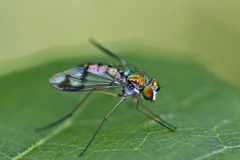
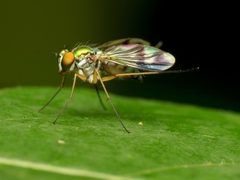
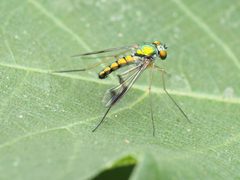
As a member of the Condylostylus, this exhibits the typical dolichopodid body plan: small size (likely under 5 mm), slender build, and notably elongated legs. Condylostylus species are typically metallic green, , or bronze in coloration. Males possess forward-protruding claspers at the tip of the , visible as curled appendages beneath the abdomen. The are large and prominent, with complex patterns.
Habitat
Found in gardens, along forest edges, and similar sunny, open . Typical of Condylostylus , it frequents vegetation in sunlit areas where it hunts small prey.
Distribution
North America. The was described by Thomas Say in 1823, indicating an established presence in the eastern or central United States.
Diet
Predatory on other small insects. As with other dolichopodids, it likely captures prey using modified mouthparts—specifically an extendable lower lip with opposable lobes used to crush or tear victims.
Life Cycle
Larval unknown. Most dolichopodid larvae are aquatic or semi-aquatic , but specific details for C. sipho have not been documented.
Behavior
Active, fast-moving fly that rarely pauses. Highly sensitive to disturbance and camera pre-flash, making observation and photography challenging. Males likely perform , as is typical for the , though specific for this are unrecorded.
Ecological Role
of small insects in terrestrial and edge . Contributes to regulation of of minute arthropods in sunny vegetation zones.
Human Relevance
Potential value as a agent in gardens due to predatory habits. No documented negative impacts.
Similar Taxa
- Other Condylostylus speciesConspicuously similar appearance; -level identification requires genitalia examination
- Dolichopus speciesShare metallic coloration and long-legged build, but Dolichopus males have distinctive ornamented front with -like flags not present in Condylostylus
- Hydrophorus speciesSimilar metallic appearance, but Hydrophorus are associated with water surfaces and exhibit skating unlike typical Condylostylus
More Details
Taxonomic note
Condylostylus sipho is listed as a 'complex' in some databases, suggesting potential cryptic diversity or unresolved boundaries within this nominal .