
Cremastocheilus retractus
LeConte, 1874
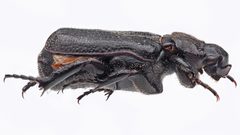
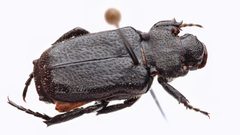
Cremastocheilus retractus is a of anteater scarab beetle in the Scarabaeidae. Like other members of its , this species is myrmecophilous, living within colonies where feed on ant larvae and pupae. The species occurs in central North America, with records from the United States and Mexico. Two are recognized: C. r. retractus and C. r. incisus.
Pronunciation
How to pronounce Cremastocheilus retractus: /krɛməstoʊˈkiːləs rɪˈtræktəs/
These audio files are automatically generated. While they are not always 100% accurate, they are a good starting point.
Images
Habitat
Distribution
Nearctic region: United States (Colorado, Illinois, Iowa, Nebraska, Texas, Wyoming) and Mexico (Durango).
Seasonality
disperse in spring to find new colonies. New adults emerge from pupal in late summer or early fall, then move to the center of nests to overwinter. Activity resumes in spring when feeding on ant begins.
Diet
feed on larvae and pupae. Larvae feed on decaying vegetation that ants have composted within the nest mound.
Host Associations
- Formica - -preyprimary ; mound-building
Life Cycle
Females lay singly in soil around nest periphery. Larvae pass through three instars, feeding on composted nest material, and can defend themselves by striking with and secreting repellent liquids from mandibular and anal glands. occurs in oval chambers constructed from soil particles. Complete cycle from egg to takes approximately four months.
Behavior
gain entry to nests by death-feigning () in areas trafficked by ants. The motionless posture with legs outstretched mimics a dead insect, prompting scavenging ants to carry the into the nest. Newly emerged adults move slowly to the nest center, accumulating colony scent to avoid detection. Adults are largely during winter within the ant nest.
Ecological Role
Intra-nest of ants. Specialized myrmecophile that exploits the resource base and protective environment of colonies.
Similar Taxa
- Other Cremastocheilus speciesshare myrmecophilous lifestyle and morphological adaptations including dense, armored , reduced , and modified for piercing ; distinguished by specific body proportions and surface sculpturing
More Details
Subspecies
Cremastocheilus retractus incisus Casey, 1915 and Cremastocheilus retractus retractus LeConte, 1874
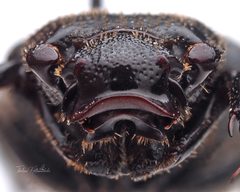
Morphological adaptations
Possesses enlarged, shield-like covering other mouthparts from below; modified into sharp piercing appendages; reduced for liquid food transport; dense, pitted or wrinkled for protection within nests; trichomes (hair brushes) on hind angle of pronotum with associated glands of uncertain function