
Cremastocheilus planatus
LeConte, 1863
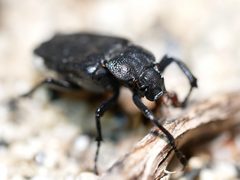
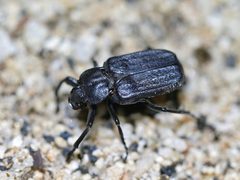
Cremastocheilus planatus is a myrmecophilous scarab beetle in the Cremastocheilus, commonly known as "anteater scarabs." are obligate of larvae and pupae within colonies. The exhibits specialized morphological adaptations for life inside ant nests, including dense armor and modified mouthparts for piercing soft-bodied prey. Like other members of the genus, it is believed to enter host colonies through death-feigning , allowing ants to carry it inside.
Pronunciation
How to pronounce Cremastocheilus planatus: //krɛˌmæstoʊˈkaɪləs pləˈneɪtəs//
These audio files are automatically generated. While they are not always 100% accurate, they are a good starting point.
Identification
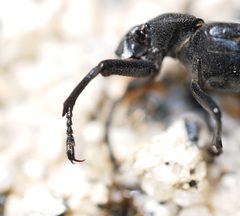
Distinguished from other Cremastocheilus by flattened, angular body with dense, pitted . The combination of reduced , enlarged shield-like , and modified piercing is diagnostic for the . Specific identification of C. planatus requires examination of subtle morphological differences in body proportions and surface sculpturing; the is being revised taxonomically. Separated from other myrmecophilous beetles by scarab-like with club and overall scarabaeid body plan.
Images
Habitat
Associated with colonies, particularly mound-building . Found within nest structures and surrounding soil. nests provide protected environment with stable microclimate and food resources.
Distribution
Nearctic region: recorded from Arizona, California, New Mexico, and Texas. Neotropical region: recorded from Sonora, Mexico. Distribution follows that of , particularly Formica mound-builders.
Seasonality
disperse to find new colonies during spring. New adults emerge from pupal in late summer or early fall, then slowly move to nest centers to overwinter. Active feeding on resumes in spring.
Diet
are obligate of larvae and pupae. Larvae feed on decaying vegetation composted by ants within nest mounds.
Host Associations
- Formica - primary ; mound-building
- Myrmecocystus - honeypot ants
- Lasius - cornfield ants
- Camponotus - carpenter ants
- Pogonomyrmex - harvester ants; southwestern US
- Veromessor - harvester ants; southwestern US
- Aphaenogaster - spine-waisted ants; southwestern US
Life Cycle
Female lays singly in soil around periphery of nest mound. Larva passes through three instars, feeding on decaying vegetation composted by ants. Larvae defend against ant attacks by striking with jaws and secreting repulsive liquids from mandibular and anal glands. occurs in oval chambers constructed from soil particles. Complete cycle from egg to takes approximately four months. Newly emerged adults migrate to nest center, acquiring colony scent during transit. Adults overwinter in nests, becoming active in spring.
Behavior
employ death-feigning () to gain entry to colonies: remain motionless with legs outstretched in areas trafficked by ants, eliciting retrieval . Once inside, adults move slowly to nest center, accumulating colony odor to avoid detection. Adults are fast, capable fliers but crash-land in areas frequented by scouting ants. Larvae actively defend against ant aggression using and chemical secretions.
Ecological Role
within colonies, exerting top-down pressure on . May regulate host colony growth or serve as on host ant and nest defense. As larvae, contributes to decomposition of organic matter within nest .
Human Relevance
Occasionally encountered by entomologists and naturalists excavating colonies. Subject of scientific interest due to specialized myrmecophilous adaptations. No known economic importance.
Similar Taxa
- Other Cremastocheilus speciesSimilar myrmecophilous lifestyle, body form, and adaptations; distinguished by subtle differences in body proportions, surface sculpturing, and geographic distribution. The is undergoing taxonomic revision.
- Other myrmecophilous StaphylinidaeAlso inhabit colonies as social , but differ in body plan (elongate, flexible), form (, not ), and feeding mechanisms (primarily elicit regurgitation rather than on ).
More Details
Morphological adaptations
The exhibits extreme specialization for myrmecophily: dense armor protects against attack; reduced and modified form a piercing-sucking feeding apparatus for consuming liquid contents of ant larvae and pupae; trichomes on pronotum were historically interpreted as producing pacifying secretions but their function remains unresolved.
Taxonomic status
The Cremastocheilus is currently under revision, with approximately 35 recognized in North America north of Mexico. Species boundaries and relationships are actively being investigated using morphological and molecular data.