
Crocothemis
Brauer, 1868
Scarlet Skimmers
Species Guides
1- Crocothemis servilia(Scarlet Skimmer)
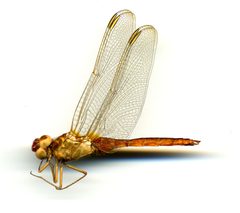
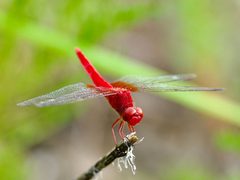
Crocothemis is a of in the Libellulidae, Sympetrinae. occur across southern Europe, Africa, Asia, Australia, and the Southwest Pacific. These are small to medium-sized dragonflies known for bright coloration in males, ranging from vivid red to rich blue, while females are typically dull brown or orange. They are aerial that perch on vegetation near water and fly out to capture prey.
Pronunciation
How to pronounce Crocothemis: //ˌkrɒkoʊˈθiːmɪs//
These audio files are automatically generated. While they are not always 100% accurate, they are a good starting point.
Identification
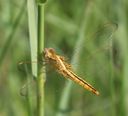
Males are distinguished by bright coloration—uniformly red in several (e.g., C. erythraea, C. servilia) or rich blue in C. nigrifrons—while females are dull brown or orange with spotted patterns. Crocothemis erythraea and C. servilia are similar and can be confused; they are separated by altitude (C. erythraea at higher elevations, C. servilia in lowlands) and confirmed by male genitalia structure. Molecular analysis of COI and ITS2 sequences distinguishes these species.
Images
Habitat
Aquatic environments including freshwater , irrigated canals, marshy areas, agricultural ponds, and domestic water storage. frequent sunlit water bodies with moderate vegetation and open locations. Larvae inhabit warm, shallow aquatic (typically <25 cm depth) with submerged and semiaquatic vegetation and silt-detritus bottoms.
Distribution
Southern Europe, Africa, Asia, Australia, and the Southwest Pacific. Documented in India (Western Ghats, lowlands and high elevations), Pakistan (Sindh province), Central Caucasus, and Japan.
Diet
Nymphs feed on aquatic including paramecia, daphnia, redworms, and mosquito larvae. are aerial of insects including paddy pests (Nilaparvata sp., Chilo suppressalis, Chilo partellus) and other flying insects.
Host Associations
- Nilaparvata sp. - paddy jassid,
- Chilo suppressalis - paddy borer,
- Chilo partellus - jowar stem borer,
- Aedes aegypti - mosquito larvae, nymphal
Life Cycle
Amphibiotic with three stages: , nymph (naiad), and . Eggs are rounded, bluish, ~1.5 mm, laid in water. Nymphs are aquatic, flat-bodied, ~2 cm, with labial mask for prey capture and rectal gills. C. servilia servilia: 12 nymphal instars, each 7–10 days (72 days total nymphal stage), egg stage 15–18 days, total cycle ~3 months under laboratory conditions (24°C, 70–75% RH, 12 hr ). C. erythraea: 11 age stages grouped into 6 age groups, total development including egg phase 81–104 days. and triggered by water warming to 18±1°C.
Behavior
Perches on sticks, reeds, or stones near water, flying out to catch insects and returning to perch. Males establish and defend territories. exhibit obelisking posture ( raised vertically) to reduce sun exposure when overheated. Adults can survive 4 days without food under laboratory conditions. Males pursue females for mating; in C. servilia, males chase females over long distances.
Ecological Role
Human Relevance
Used as a biocontrol agent for paddy pests in agricultural systems. Potential for of Aedes aegypti mosquitoes in domestic water storage. Subject of odonatological research and citizen science observation.
Similar Taxa
- SympetrumBoth are Sympetrinae darters with similar body plan; Crocothemis males typically brighter red or blue, Sympetrum often with more patterned and different wing venation
- LibellulaBoth Libellulidae skimmers; Crocothemis generally smaller, with more uniform male coloration, while Libellula often larger with patterned wings and
- Crocothemis erythraea vs. C. serviliaClosely similar requiring male genitalia examination or molecular analysis for definitive identification; altitudinally separated in Western Ghats with C. erythraea at higher elevations, C. servilia in lowlands
More Details
Sexual dimorphism
Males and females differ markedly in coloration. Mature males are uniformly bright colored (pink, red, or blue depending on ), while females are spotted and yellow-brownish or orange. Color change occurs during maturation within the same sex.
Laboratory rearing
C. servilia servilia has been successfully reared in laboratory conditions at 24°C with 70–75% relative humidity and 12-hour . Single mated females produce approximately 142 from 140–150 .
Genetic differentiation
COI and ITS2 sequence analysis shows 99.5% identity in COI and ~98.95% in ITS2 between C. erythraea from Western Ghats and Himalayas, suggesting these montane populations are despite geographic separation.
Sources and further reading
- BugGuide
- Wikipedia
- GBIF taxonomy match
- iNaturalist taxon
- NCBI Taxonomy
- Catalogue of Life
- From Toe Biters to Flame Skimmers | Bug Squad
- The Day That Dragonflies Sprang to Life | Bug Squad
- Bug Eric: Filigree Skimmers Are Back
- Bug Eric: New Mexico Dragonfly Blitz - Day 4
- Bug Eric: New Mexico Dragonfly Blitz - Day 3
- How a Hydrogen Isotope Reveals a Dragonfly's Long-Distance Journey
- Ecology and Development of Scarlet Dragonfly (Crocothemis еrythraea (Odonata)) Larvae in the Central Caucasus
- Biology of A Dragaonfly Crocothemis Servilia Servilia Drury (Odonata: Libellulidae), A Predator of Paddy Pests in Kolhapur.
- Studies on Habitat Preference and Morphology of <i>Crocothemis servilia servilia</i> (Drury, 1770) in Ecological Zones of District Khairpur Mirs Sindh, Pakistan
- Taxonomic notes on Crocothemis erythraea (Brullé, 1832) (Odonata: Libellulidae) from the Western Ghats of Peninsular India