
Crocothemis servilia
(Drury, 1773)
Scarlet Skimmer, Ruddy Marsh Skimmer
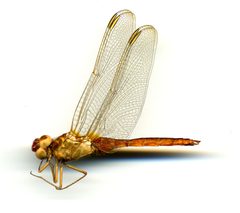
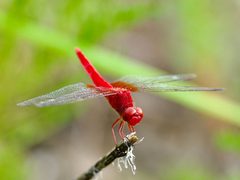
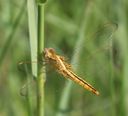
Crocothemis servilia is a widely distributed libellulid native to southern and eastern Asia, with introduced in North America, Australia, and other regions. The exhibits striking : males are uniformly vivid red to pink, while females and males are yellow-brown with spotted patterning. It is an amphibious with nymphal development in aquatic and aerial adults. The species has been studied as a potential biocontrol agent for agricultural pests and mosquitoes.
Pronunciation
How to pronounce Crocothemis servilia: //ˌkroʊ.kəˈθiː.mɪs sərˈvɪl.iə//
These audio files are automatically generated. While they are not always 100% accurate, they are a good starting point.
Identification
Distinguished from similar red libellulids by combination of: uniformly vivid red males (not orange-red); broad, somewhat flattened ; wing venation pattern with specific anal appendage structure. Females require careful separation from other yellow-brown libellulids by spotted pattern and anal appendage . Nymphs identifiable by flattened body form and labial mask structure. Introduced outside native range may be confused with native red skimmers; geographic context important.
Images
Appearance
Medium-sized with robust build. males: vivid red to pink coloration covering most of body and wings. Adult females and males: yellow-brown base color with darker spotted or patterned markings. Wings: broad with characteristic venation; hindwings broader than forewings. : moderately broad, slightly flattened. Anal appendages: distinct in both sexes, used in identification. Nymph (naiad): body flattened, approximately 2 cm in length; equipped with extendable labial mask for prey capture and rectal gills for respiration. : rounded, bluish, approximately 1.5 mm in diameter.
Habitat
Aquatic and semi-aquatic environments including freshwater ponds, irrigated canals, marshy areas, agricultural ponds, and domestic water storage containers. Breeding requires standing or slow-moving water. Highest abundance in sunlit water bodies with moderate vegetation and open surrounding areas. Nymphal stage entirely aquatic; terrestrial but remain near water.
Distribution
Native to southern and eastern Asia including India, Pakistan, Southeast Asia, China, Japan, and Korea. Introduced and established in North America (United States), Australia, and other regions. Present study records from Maharashtra, India; Sindh, Pakistan; and global introduced ranges per GBIF.
Seasonality
activity recorded March through June in Sindh, Pakistan. Year-round activity likely in tropical and subtropical portions of range; seasonal in temperate areas. Laboratory rearing completed in approximately 3 months at 24°C.
Diet
Nymphs: predatory, feeding on aquatic including mosquito larvae (Aedes aegypti), small crustaceans, and worms. : predatory on flying insects; documented as of paddy pests including planthoppers (Nilaparvata sp.) and stem borers (Chilo suppressalis, Chilo partellus).
Life Cycle
Amphibiotic with three stages. : deposited in water, incubation 15-18 days under laboratory conditions (24°C). Nymph (naiad): 12 instars, each lasting 7-10 days, total nymphal period approximately 72 days. : from aquatic stage, terrestrial. Complete time approximately 3 months under favorable conditions. Single mated female produces 140-150 eggs, yielding approximately 142 adults under laboratory conditions.
Behavior
Nymphs are sit-and-wait using extendable labial mask to capture prey. are active aerial predators. Adults can survive 4 days without food under laboratory conditions. Breeding occurs in standing water; females oviposit in water bodies or water troughs.
Ecological Role
Human Relevance
Evaluated as biocontrol agent for rice paddy pests in India and for mosquito control (Aedes aegypti). Potential value in programs. No documented negative impacts; introduced outside native range warrant monitoring.
Similar Taxa
- Other Crocothemis species members share general body plan and coloration; require examination of anal appendages and wing venation for separation
- Libellula saturata (Flame Skimmer)Similar red male coloration in North America where C. servilia introduced; Flame Skimmer males have more extensive wing coloration and different abdominal shape
- Other red Libellulidae (e.g., Sympetrum, Trithemis)Convergent red coloration in males; distinguished by body proportions, wing shape, venation details, and geographic range
More Details
Laboratory rearing conditions
Study from Kolhapur, India used controlled conditions: temperature 24°C, relative humidity 70-75%, 12-hour . These parameters produced consistent development times but may not reflect field conditions.
Introduced range status
GBIF records indicate presence in North America, Australia, and Oceania; these represent established introduced outside native Asian range.
Sources and further reading
- BugGuide
- GBIF taxonomy match
- NCBI Taxonomy
- Catalogue of Life
- Biology of A Dragaonfly Crocothemis Servilia Servilia Drury (Odonata: Libellulidae), A Predator of Paddy Pests in Kolhapur.
- Studies on Habitat Preference and Morphology of <i>Crocothemis servilia servilia</i> (Drury, 1770) in Ecological Zones of District Khairpur Mirs Sindh, Pakistan