
Curinus coeruleus
(Mulsant, 1850)
Metallic Blue Lady Beetle
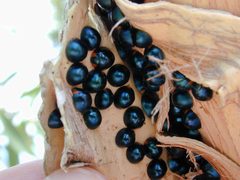
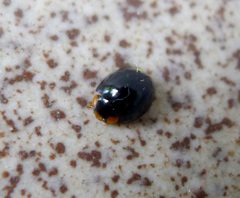
Curinus coeruleus is a metallic blue ladybeetle in the Coccinellidae, established as an introduced agent in multiple regions. It is known to prey on armored scale insects, particularly Florida red scale (Chrysomphalus aonidum), and has been evaluated for control of Heteropsylla cubana. The exhibits a distinctive metallic blue coloration and has been introduced to areas including the Philippines and Florida for pest management.

Pronunciation
How to pronounce Curinus coeruleus: /ˈkjʊrɪnəs kɔˈruːliːəs/
These audio files are automatically generated. While they are not always 100% accurate, they are a good starting point.
Identification
Metallic blue coloration distinguishes this from most other coccinellids, which typically exhibit red, orange, or yellow with black spotting patterns. The uniform metallic blue sheen is diagnostic within its range.
Images
Habitat
Citrus production systems; areas where target pest are established. Specific microhabitat preferences beyond agricultural contexts are not documented.
Distribution
Native to South America (Brazil: Alagoas, Minas Gerais, Pernambuco, Paraná, Rio de Janeiro, Santa Catarina, São Paulo). Introduced to Middle America, North America (Florida), Oceania, and the Philippines.
Diet
of armored scale insects, specifically Florida red scale (Chrysomphalus aonidum). and larvae (3rd–4th instar) consume both armored and unarmored , with significantly higher consumption rates on unarmored scales. Adults reared on armored scales subsequently prefer unarmored scales when given a choice.
Host Associations
- Chrysomphalus aonidum - prey ()Florida red scale; primary prey in citrus systems
- Heteropsylla cubana - preyTarget of introduction in Philippines
Life Cycle
Complete with , larval, pupal, and stages. Larval development occurs on prey; 3rd–4th instar larvae have been documented consuming prey. Adults emerge from larvae reared on scale diets.
Behavior
is reduced by the physical armor of prey, which acts as an initial barrier. Consumption rates increase over time (24–72 hours) as overcome this obstacle. show learned or developmental preference for unarmored scales when reared on armored or mixed diets.
Ecological Role
agent of pests in citrus production systems. Significant consumption of Chrysomphalus aonidum indicates capacity to suppress pest , though armor reduces immediate .
Human Relevance
Used as an introduced agent for management of Florida red scale in citrus production and Heteropsylla cubana in the Philippines. Potential for suppressing pest in agricultural systems where established.
Similar Taxa
- Other CoccinellidaeMost ladybeetles exhibit red/orange/yellow coloration with black spots rather than uniform metallic blue; Curinus coeruleus distinguished by metallic blue sheen
More Details
Predation on Armored Scales
Laboratory studies demonstrate that the protective armor of Chrysomphalus aonidum significantly impedes : consumption of armored scales was 64–68% at 24 hours versus 100% for unarmored ; larval consumption was 25% versus 92–100% respectively. However, consumption rates increase over 72 hours, indicating eventually overcome this barrier.
Introduction History
The has been deliberately introduced to multiple regions outside its native South American range for purposes, including Florida and the Philippines.