
Aprostocetus
Westwood, 1833
Species Guides
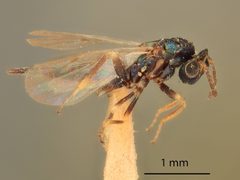
1Aprostocetus is a large of in the Eulophidae, established by Westwood in 1833. With approximately 800 described , it has a global distribution across all major zoogeographic regions. Species are primarily ectoparasitoids or endoparasitoids of insects inhabiting plant galls, including gall midges (Cecidomyiidae), gall wasps (Cynipoidea), and other spanning Hemiptera, Coleoptera, Lepidoptera, Blattodea, Orthoptera, and Neuroptera. Some species are phytophagous, inducing galls directly on plants. The genus is economically significant as a source of agents for pests.

Pronunciation
How to pronounce Aprostocetus: /æp.rɒs.toʊˈsiːtəs/
These audio files are automatically generated. While they are not always 100% accurate, they are a good starting point.
Identification
Members of Aprostocetus can be distinguished from similar eulophid by the following combination of characters: body typically small (1-3 mm), often metallic green or blue; with three anelli and three funicular segments; mesoscutum with two rows of adnotaular setae on each side of the mid lobe in many ; scutellum usually with two pairs of setae; propodeum with a distinct carina or areola; fore wing with reduced venation, typically with a closed speculum; ovipositor usually at least slightly projecting beyond the metasoma, rarely completely retracted. The genus is divided into six subgenera (Aprostocetus, Tetrastichodes, Ootetrastichus, and others) based primarily on antennal and mesosomal characters.
Images
Habitat
are found in diverse terrestrial wherever their organisms occur. Most are associated with vegetation bearing plant galls, including forests, woodlands, grasslands, and agricultural systems. Some species inhabit aquatic or semi-aquatic environments when associated with hosts on emergent vegetation such as Phragmites. Laboratory rearing has been successful on potted plants with gall-forming hosts.
Distribution
Global distribution across all major zoogeographic regions: Holarctic, Palearctic, Nearctic, Neotropical, Afrotropical, Indomalayan, and Australasian. Specific records include: North America (Canada, United States, Mexico, Caribbean), South America (Brazil, Chile, Argentina, Uruguay), Europe (widespread including Mediterranean islands), Africa (Kenya, Tanzania, South Africa, West Africa, Madagascar), Asia (China, India, Southeast Asia, Japan, Taiwan, Russia Far East), and Oceania (Australia, New Zealand, Hawaii, Pacific islands).
Host Associations
- Cecidomyiidae (gall midges) - primary Most common ; numerous attack various gall midge including Asphondylia, Dasineura, Rhopalomyia, Rabdophaga, Contarinia, Mayetiola, and others
- Cynipoidea (gall wasps) - primary include Biorhiza, Diplolepis, Dryocosmus, Neuroterus, Plagiotrochus, Aylax, Callirhytis, and others
- Coccidae and other scale insects - primary Includes Ceroplastes, Pulvinaria, Eulecanium, Kermes, and mealybugs such as Ferrisia, Planococcus, Maconellicoccus
- Coleoptera - primary include leaf beetles (Cassida, Galeruca, Plagiodera, Pyrrhalta), weevils (Curculionidae, Apionidae), bark beetles (Cryphalus, Ips, Tomicus, Phloeophthorus), longhorn beetles (Apriona, Tragocephala), buprestids (Agrilus, Coraebus)
- Hemiptera - primary Includes leafhoppers (Cicadellidae), planthoppers (Delphacidae, Tropiduchidae), psyllids (Trioza, Phytolyma), aphids (Myzus), mirid bugs, and lace bugs (Tingidae)
- Lepidoptera - primary include various : Gracillariidae, Lyonetiidae, Gelechiidae, Tortricidae, Tischeriidae, Noctuidae, Pyralidae, Lasiocampidae, , , Saturniidae, Yponomeutidae, Eriocraniidae
- Blattodea - primary including Periplaneta, Parcoblatta, Loboptera; some used for biocontrol
- Orthoptera - primary Crickets (Oecanthus), katydids (Tettigoniidae), grasshoppers (Paulinia)
- Neuroptera - primary Recorded for some
- Araneae - primary A. arachnophagus and A. riverai parasitize spiders in Argentina and Uruguay
- Odonata - primary Damselflies of Lestes recorded as
- Diptera - primary Tephritid fruit flies, chloropid flies (Lipara), agromyzid flies
- Hymenoptera - primary or secondary Some attack other (hyperparasitoids), including fellow Eulophidae, Encyrtidae, Eurytomidae, Torymidae, Braconidae, and even their own
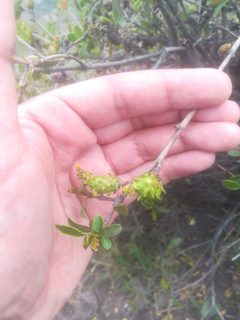
- Plants - gall inducerSome are phytophagous and induce galls directly, e.g., A. colliguayae on Colliguaja odorifera, A. smilax on Smilax havanensis
- Nematodes - One unidentified reported as larval of nematodes
Life Cycle
details vary by but generally follow the pattern: laid into or on organisms, larval development as ectoparasitoids or endoparasitoids, within host remains or in plant tissue, and . For A. nitens, egg to adult emergence takes approximately 20 days at 21.8°C. Some species exhibit (all-female production), while others show or biparental . Multiple per year are typical in temperate regions.
Behavior
Most are solitary , with one individual completing development per . Some species can attack multiple hosts within a gall complex. Several species are known to be hyperparasitoids, attacking other parasitoids rather than primary hosts. Host searching involves locating plant galls and assessing host suitability; some species show high host specificity while others are . of many species feed on honeydew or nectar.
Ecological Role
Primary that regulate of gall-forming insects and other herbivores. Some serve as hyperparasitoids, potentially disrupting other parasitoid populations. Phytophagous species function as herbivores that induce plant galls. The is a significant source of agents for pests including the Erythrina gall wasp (Quadrastichus erythrinae) and various scale insects, mealybugs, and gall-forming insects in agricultural and forest systems.
Human Relevance
Multiple have been deployed or proposed for : A. ceroplastae introduced to Africa and Australia for coccid control; A. hagenowii used in North America for biocontrol; A. nitens proposed for release in Hawaii against the Erythrina gall wasp; A. bipolaris sp. nov. identified as potential control agent for invasive Eucalyptus gall wasp in China. Some species are important natural enemies in systems for grapes, citrus, and other crops.
Similar Taxa
- TetrastichusBoth in Tetrastichinae with similar general ; Aprostocetus typically has more projecting ovipositor and different antennal segmentation patterns
- BaryscapusSimilar and ; distinguished by antennal structure and propodeal
- CeranisusSome historically confused; Ceranisus primarily attacks rather than gall-formers
- EurytomaBoth attack gall-formers; Eurytoma in Eurytomidae has different wing venation and lacks the characteristic eulophid mesosomal structure
- QuadrastichusRelated eulophid ; some Aprostocetus attack Quadrastichus species as or are morphologically similar, requiring careful examination of antennal and mesoscutal characters
Sources and further reading
- BugGuide
- Wikipedia
- GBIF taxonomy match
- iNaturalist taxon
- NCBI Taxonomy
- Catalogue of Life
- Publications | Entomology Research Museum
- Taxonomic notes on the genus Aprostocetus Westwood (Hymenoptera, Eulophidae) from China, with the description of a new species.
- A New Species of Aprostocetus (Hymenoptera: Eulophidae), a Parasitoid from China of the Invasive Gall Wasp Ophelimus bipolaris (Hymenoptera: Eulophidae) on Eucalyptus.
- Aprostocetus nitens (Hymenoptera: Eulophidae), an Ectoparasitoid Proposed for Biological Control of the Destructive Erythrina Gall Wasp, Quadrastichus erythrinae, in Hawai'i.