
Diplolepis ignota
(Osten Sacken, 1863)
gall wasp
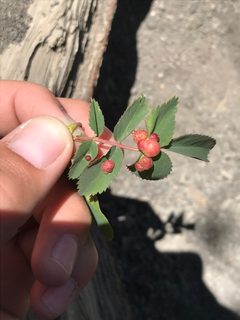
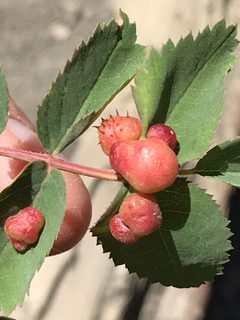
Diplolepis ignota is a in the Cynipidae that induces spherical, single-chambered galls on the leaves of wild rose (Rosa). The galls serve as both shelter and food source for developing larvae. Multiple galls frequently coalesce into irregularly rounded clusters. emerge from galls the summer following gall initiation. The species has been reported throughout most of the continental United States and in parts of central Canada.
Pronunciation
How to pronounce Diplolepis ignota: //dɪpˈlɒlɪpɪs ɪɡˈnoʊtə//
These audio files are automatically generated. While they are not always 100% accurate, they are a good starting point.
Identification
Galls are spherical, single-chambered, and formed on rose leaves; multiple galls often coalesce into irregularly rounded structures. The itself is small and difficult to distinguish from related Diplolepis without examining gall characteristics and plant. Closely related to D. nebulosa and D. variabilis, with which it shares similar gall and host associations.
Images
Habitat
Associated with wild rose in a variety of terrestrial where Rosa occurs, including prairies, open woodlands, and disturbed areas.
Distribution
Continental United States; Canada: Alberta, Saskatchewan, Manitoba, Ontario, and Quebec.
Seasonality
Gall initiation occurs in August; emerge from galls the following summer.
Diet
Larvae feed on gall tissue induced on wild rose leaves. Specific diet is unknown.
Host Associations
- Rosa arkansana - gall
- Rosa blanda - gall
- Rosa carolina - gall
- Rosa virginiana - gall
- Rosa nitida - gall
Life Cycle
Bisexual produces galls in August; larvae develop within galls through winter and spring; emerge the following summer. Specific details of the agamic () generation, common in related Diplolepis , have not been documented for this species.
Behavior
Females induce gall formation on rose leaves through chemical stimulation during oviposition. Larvae remain within galls until .
Ecological Role
Gall formation creates and food resources for and , including Periclistus (Cynipidae), Aprostocetus (Eulophidae), Eurytoma (Eurytomidae), and Orthopelma (Ichneumonidae).
Similar Taxa
- Diplolepis rosaeAlso forms galls on roses, but produces the distinctive 'Mossy Rose Gall' with a rough, spiny surface, unlike the smooth spherical galls of D. ignota.
- Diplolepis nebulosaVery closely related with similar gall ; reliable distinction may require genetic analysis or detailed examination of gall and morphology.
- Diplolepis variabilisVery closely related with overlapping range; gall characteristics and geographic distribution may help distinguish the two.