
Periclistus
Förster, 1869
Periclistus is a of micro-hymenopteran gall wasps (Cynipidae) comprising at least 17 described . These are obligate that occupy galls induced by other cynipid genera on plants in the rose (Rosaceae), particularly roses (Rosa). Unlike gall inducers, Periclistus species have lost the ability to initiate galls but retain the capacity to modify existing gall tissue, inducing nutritive tissue for their own larvae. The genus exhibits a phylogenetic divide between Palaearctic and Nearctic clades, with specificity ranging from to across different species.


Pronunciation
How to pronounce Periclistus: //ˌpɛrɪˈklɪstəs//
These audio files are automatically generated. While they are not always 100% accurate, they are a good starting point.
Identification
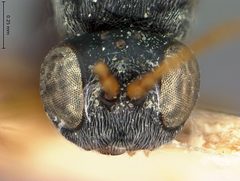
Periclistus are difficult to distinguish from one another and from their gall-inducing based on alone. Diagnostic characters include mesoscutum , development of notauli, closure of the radial in the forewing, and relative proportions of flagellomeres. identification traditionally relies on gall structure, though molecular data (COI ) reveals incongruence between morphological and molecular boundaries in some species groups. Gall morphology alone may be inadequate for species delimitation.
Images
Habitat
Occupies galls induced by other cynipid on plants in the rose (Rosaceae), primarily on wild roses (Rosa). Specific include stem galls and other gall types on rose . -occupied galls become enlarged and multichambered compared to inducer-only galls.
Distribution
Holarctic distribution with a distinct phylogenetic divide between Palaearctic and Nearctic clades. Documented from: western Palaearctic (Europe), eastern Palaearctic (Japan, Russian Far East, China including Qinghai Province), and Nearctic (North America). GBIF records indicate presence in Denmark, Norway, and Sweden.
Seasonality
emerge in September. Galls are typically collected in spring (May) for rearing, though plant identification may be difficult at this time due to weather conditions.
Diet
Wholly phytophagous. Larvae feed on nutritive tissue that they induce within existing galls. larvae consume parenchymatous tissue and the nutritive they stimulate the plant to produce around their chambers.
Host Associations
- Rosa - plantWild roses (Rosaceae); galls occur on stems and other plant parts
- Diplolepis - gall inducer ( )Primary gall inducer; Periclistus in Diplolepis galls on roses
- Diastrophus - gall inducer ( )Gall inducer on Rosaceae
- Liebelia - gall inducer ( )Gall inducer on Rosaceae
- Xestophanes - gall inducer ( )Gall inducer on Rosaceae
Life Cycle
Females oviposit into existing galls induced by cynipids, killing the gall inducer larva in the process. Multiple may be deposited per gall, and galls may contain eggs from several females. Larvae hatch and disperse over the chamber surface, inducing their own nutritive tissue within separate chambers. surrounding each larval chamber lignify into a sclerenchyma as galls mature. Development occurs within the modified gall through to .
Behavior
Obligate inquilinism: Periclistus has lost the ability to induce galls but directly modifies gall tissue surrounding larvae, inducing nutritive tissue characteristic of gall-inducer larval chambers. Females kill the gall inducer larva at oviposition. The relationship is unilateral, benefiting only the . specificity varies from to across .
Ecological Role
modifier of cynipid galls on roses. Acts as a competitor and indirect of gall-inducing cynipids by killing inducer larvae and usurping gall resources. Alters gall development, converting single-chambered galls into enlarged, multichambered structures with distinct tissue organization.
Similar Taxa
- DiplolepisCo-occurs in rose galls and are morphologically similar; distinguished by (Diplolepis induces galls, Periclistus is ) and gall structure (single-chambered vs. multichambered when modified)
- SynergusAlso cynipids formerly classified together in tribe Synergini; distinguished by gall associations and morphological characters
More Details
Taxonomic history
Formerly included in tribe Synergini; now placed in tribe Diastrophini based on phylogenetic revisions.
Molecular systematics
COI supports most described but reveals inconsistent species boundaries in four species groups, indicating need for taxonomic revision. Full species-level revision requires additional molecular markers.
Gall modification
Periclistus pirata converts single-chambered, prosoplasmic stem galls of Diplolepis nodulosa on Rosa blanda into enlarged, hollow, multichambered spheres with little resemblance to original inducer galls.
Sources and further reading
- BugGuide
- Wikipedia
- GBIF taxonomy match
- iNaturalist taxon
- NCBI Taxonomy
- Catalogue of Life
- Revision on Palaearctic species of Periclistus Förster with description of a new species and its host plant gall (Hymenoptera, Cynipidae)
- Phylogeny of Holarctic gall wasps of the genera Diplolepis and Periclistus (Hymenoptera: Cynipidae) based on DNA barcodes
- DNA barcodes reveal inconsistent species boundaries in Diplolepis rose gall wasps and their Periclistus inquilines (Hymenoptera: Cynipidae)
- Developmental morphology of stem galls of Diplolepis nodulosa (Hymenoptera: Cynipidae) and those modified by the inquiline Periclistus pirata (Hymenoptera: Cynipidae) on Rosa blanda (Rosaceae)
- Figure 3 from: Pujade-Villar J, Wang Y, Guo R, Chen X (2015) Revision on Palaearctic species of Periclistus Förster with description of a new species and its host plant gall (Hymenoptera, Cynipidae). ZooKeys 596: 65-75. https://doi.org/10.3897/zookeys.596.5945
- Figure 1 from: Pujade-Villar J, Wang Y, Guo R, Chen X (2015) Revision on Palaearctic species of Periclistus Förster with description of a new species and its host plant gall (Hymenoptera, Cynipidae). ZooKeys 596: 65-75. https://doi.org/10.3897/zookeys.596.5945
- Figure 2 from: Pujade-Villar J, Wang Y, Guo R, Chen X (2015) Revision on Palaearctic species of Periclistus Förster with description of a new species and its host plant gall (Hymenoptera, Cynipidae). ZooKeys 596: 65-75. https://doi.org/10.3897/zookeys.596.5945