
Synergus
Hartig, 1840
inquiline oak gall wasps
Species Guides
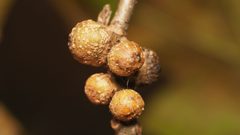
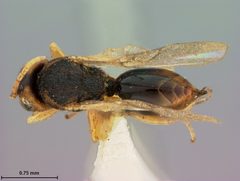
1Synergus is a of inquiline gall wasps in the tribe Synergini (Hymenoptera: Cynipidae). Most develop within galls induced by other cynipid on oaks (Quercus), though some inhabit galls on chestnuts (Castanea). The genus is distributed worldwide, with notable diversity in the New World and Eastern Palaearctic. One species, S. itoensis, has independently evolved the ability to induce its own galls inside oak acorns, representing a rare transition from inquilinism to gall induction. Species are morphologically grouped by fore wing radial structure and mesopleural .

Pronunciation
How to pronounce Synergus: //sɪˈnɜːrɡəs//
These audio files are automatically generated. While they are not always 100% accurate, they are a good starting point.
Identification
New World Synergus are classified into three morphological groups: (i) species with open radial of fore wings; (ii) species with closed radial cell and completely sculptured mesopleurae bearing transversal ; (iii) species with closed radial cell and partially smooth mesopleurae with shiny, unsculptured speculum. The latter group is unique to the New World fauna. Identification to species level requires examination of these characters plus detailed morphological features described in taxonomic revisions.
Images
Habitat
Associated with galls on oaks (Quercus spp.) and chestnuts (Castanea spp.). Most inhabit galls induced by other cynipid , particularly members of Cynipini. specificity is determined by gall availability on suitable host plants.
Distribution
Worldwide distribution with documented in the New World (Nearctic and Neotropical regions, particularly Mexico and the Pacific Coast of North America), Eastern Palaearctic (including Japan and Taiwan), and China. The partially smooth mesopleurae species group is to the New World.
Host Associations
- Quercus - plantprimary for most
- Castanea - plantS. castaneus reared from galls on C. mollissima and C. seguinii
- Cynipini - gall inducermost Synergus are in galls induced by this tribe
- Andricus quercuslaurinus - gall induceragamic galls
- Andricus stellulus - gall inducer
- Disholcaspis quercusvirens - gall inducer
- Andricus mukaigawai - gall inducer for S. japonicus complex
- Philonix nigra - gall inducer for S. nigrus
Life Cycle
Most exhibit , with larvae developing inside galls induced by other cynipid . Sexual and agamic are associated with oak galls. S. japonicus females copulate once and never adopt the acceptance posture again; males can copulate multiple times. S. itoensis has evolved independent gall induction ability, developing inside oak acorns.
Behavior
inhabit and develop within existing galls rather than inducing their own. Courtship involves females adopting a specific acceptance posture that signals receptivity to males. In the S. japonicus complex, exhibit ethological isolation despite identical courtship patterns—females maintain the acceptance posture longer post-copulation, and no interspecific copulation occurs. Males do not discriminate between virgin and previously copulated females, or between young and old females.
Ecological Role
in oak and chestnut galls. The term "multi-inquilinism" describes galls that foster multiple inquiline simultaneously, as documented in galls of Andricus mukaigawai housing multiple Synergus species. S. itoensis represents an exception as a gall inducer rather than inquiline. May influence gall structure through competition for gall resources and as prey for .
Human Relevance
Subject of taxonomic and evolutionary research due to the rare transition from inquilinism to gall induction documented in S. itoensis. Genomic studies of this have identified signatures of selection associated with the origin of gall induction, particularly enrichment in genes related to ovarian follicle development. Some may be encountered in biodiversity surveys and oak gall studies.
Similar Taxa
- Ceroptresalso in tribe Synergini, but differs in morphological characters and associations
- Saphonecrusanother in Synergini, distinguished by morphological features and geographic distribution
- Tribe Cynipinigall-inducing cynipids that serve as for most Synergus ; Synergus species are (or rarely gall inducers) rather than primary gall formers
More Details
Genomic evolution of gall induction
Comparative genomic analysis of S. itoensis and three related identified that the gall-inducing lineage had more genes with significantly elevated dN/dS ratios than inquiline branches. The positive signature gene set in S. itoensis is notably enriched for "Ovarian Follicle Development," suggesting this developmental was co-opted during the evolution of gall induction.
Taxonomic revisions
Recent comprehensive revisions have stabilized New World Synergus , describing 11 new from Mexico and resolving multiple synonymies. The Eastern Palaearctic fauna includes at least eight additional species described since 2015.
Sources and further reading
- BugGuide
- iNaturalist taxon
- NCBI Taxonomy
- Catalogue of Life
- Synergus Hartig species group (Hymenoptera: Cynipidae: Synergini) with partially smooth mesopleurae from the New World
- The Life History and Immature Stages of Synergus pacificus McCracken and Egbert (Hymenoptera: Cynipidae)
- Ethological Isolation between Inquiline Gall Wasps, the Synergus japonicus Complex(Hymenoptera:Cynipidae), Which Sometimes Coexist in Host Galls
- New species of cynipid inquilines of the genus Synergus (Hymenoptera: Cynipidae: Synergini) from the Eastern Palaearctic
- The genus Synergus Hartig (Hymenoptera: Cynipidae: Synergini) in the New World: a complete taxonomic revision with a key to species
- Notices on courtship behaviour and copulation of Synergus japonicus Walker (Hym., Cynipidae)1
- From Inquilines to Gall Inducers: Genomic Signature of a Life-Style Transition in Synergus Gall Wasps
- Description of Synergus castaneus n. sp. (Hymenoptera: Cynipidae: Synergini) Associated with an Unknown Gall on Castanea spp.(Fagaceae) in China
- Synergus nigrus (Hymenoptera, Cynipidae, Synergini), a new inquiline species reared from galls of Philonix nigra Gillette, 1889 (Cynipidae, Cynipini).
- Discovery of a new species of Synergus (Hymenoptera, Cynipidae, Synergini) based on morphology and molecular data.