
Cynipini
Latreille, 1802
Oak Gall Wasps
Genus Guides
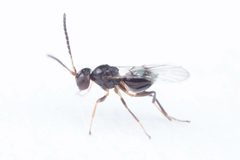
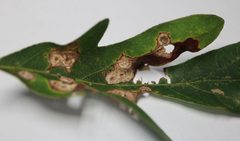
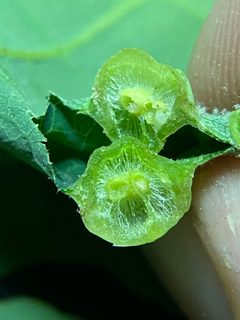
34Cynipini is the largest tribe of gall wasps in the Cynipidae, comprising approximately 936 to 1,000 described . Members are commonly known as oak gall wasps due to their specialized association with oaks (Quercus) and other Fagaceae. The tribe is primarily distributed in the Holarctic region, with significant diversity also in Mexico and Central America. Cynipini species induce structurally diverse galls on various oak tissues including leaves, buds, branches, petioles, catkins, acorns, and roots. Most species exhibit cyclical , alternating between sexual and that often produce different gall on the same or different tissues.
Pronunciation
How to pronounce Cynipini: /sɪˈnɪpɪnaɪ/
These audio files are automatically generated. While they are not always 100% accurate, they are a good starting point.
Identification
Identification to requires examination of mesosomal , wing venation details, and presence/absence of transscutal . Recent keys (Buffington et al. 2020) provide couplets for distinguishing Cynipini from other Cynipoidea. Within Cynipini, generic keys rely on characters including: pronotal structure, mesoscutellar foveae, radial shape, tarsal claw , and metasomal petiole length. -level identification is challenging and often requires knowledge of oak species, gall morphology, and type (sexual vs. ). Molecular data (COI barcoding) increasingly used to match alternate generations and confirm species boundaries. For field identification, gall morphology and location on host plant are often more informative than characters.
Images
Habitat
Strictly associated with oak-dominated . Found in temperate and subtropical forests, woodlands, savannas, and urban parks where Quercus occur. specificity determined by oak distribution rather than . In Mexico and Central America, diversity peaks in montane oak forests. Some species associated with specific oak sections (e.g., Quercus section Cerris, section Lobatae, section Quercus), reflecting coevolutionary host relationships.
Distribution
Primarily Holarctic in distribution, with centers of diversity in the Mediterranean basin, western Asia, Mexico, and the southeastern United States. Present across Europe, North Africa, temperate Asia, and North America. Extends into Central America (Panama, Rica) and northern South America. Absent from Australia, New Zealand, and oceanic islands except where oaks have been introduced. Some introduced inadvertently with oak plantings outside native range.
Seasonality
Activity patterns tightly linked to oak . Sexual typically emerges in spring (March–May in temperate regions) coinciding with oak bud break and flowering. generation emerges in summer to autumn (June–October), with timing varying by and gall location (leaf galls often earlier than woody stem galls). Some species exhibit extended with multi-year development. Gall formation visible on plants often persists longer than period, providing extended detection window.
Host Associations
- Quercus - gall inducerPrimary ; gall induction on leaves, buds, stems, catkins, acorns, and roots. Host specificity ranges from monophagous (single oak ) to oligophagous (multiple species within section) to (across oak sections).
- Fagaceae - gall inducerSecondary associations documented with Castanea (chestnuts) and Fagus (beeches), though Quercus dominates.
Life Cycle
Cyclical (heterogony) is the ancestral and predominant : alternating sexual and (agamic) . Sexual generation produces haploid males and females from fertilized ; asexual females produce diploid eggs parthenogenetically. Generations often differ morphologically and produce distinct gall types, sometimes on different tissues or even different host . Some species have lost sexual generation (thelytoky), reproducing exclusively parthenogenetically. Development time varies: leaf galls typically single-season; woody galls may require 1–3 years. occurs as larva within gall or as pupa.
Behavior
females locate suitable tissue using chemical and tactile cues; oviposition induces gall formation through manipulation of plant growth processes. Gall induction represents active manipulation of host plant and biochemistry, with larvae receiving nutrient delivery from host vascular tissue. Some galls exhibit specialized : 'jumping galls' (e.g., Pseudoneuroterus saltabundus) detach and actively disperse via hygroscopic movements. Disholcaspis produce sugary secretions from galls, attracting mutualists that may reduce attack rates.
Ecological Role
engineers: gall formation creates novel microhabitats supporting complex . Galls (specialized herbivores that exploit gall tissue without inducing galls) and diverse communities (Ichneumonoidea, Chalcidoidea). Parasitoid often exceeds gall wasp species richness in local communities. Gall wasps serve as foundations, linking (oaks) to higher . Some function as nutrient sinks, altering carbon and nitrogen allocation in host trees. In urban settings, some Disholcaspis species can become street tree pests through heavy gall .
Human Relevance
Historical importance in ink production (iron gall ink derived from tannic acid in oak galls, particularly Andricus gall wasp galls on Quercus infectoria). Modern relevance includes: (1) basic research on plant-insect interactions, developmental , and evolutionary ; (2) potential biocontrol applications through understanding ; (3) bioindicators of oak health; (4) nuisance pests in urban forestry when gall densities are high; (5) citizen science engagement through platforms like iNaturalist and Gallformers.org. Recent NSF-funded research (2024) focuses on North American diversity and parasitoid .
Similar Taxa
- CeroptresiniAlso associated with oak galls, but are that inhabit galls induced by Cynipini rather than inducing their own galls. Distinguished by and specific morphological characters including mesosomal structure.
- Synergini tribe inhabiting Cynipini galls; some formerly misplaced in Cynipini. Distinguished by larval (feeding on gall tissue without inducing galls) and morphological characters.
- AylaciniTribe of Cynipidae inducing galls on herbaceous plants (primarily Rosaceae and Asteraceae) rather than woody Fagaceae. Distinguished by association and gall location.
- RhoditiniTribe inducing galls on roses (Rosa). Distinguished by association and specific morphological characters of mesosoma and wings.
More Details
Taxonomic challenges
Cynipini is complicated by cyclical : sexual and of the same were historically described as separate species. Integration of molecular data (, phylogenomics) with has resolved many such cases, but numerous species remain known from only one generation. The tribe contains approximately 40 recognized , with Andricus, Neuroterus, Cynips, and Callirhytis among the most species-rich.
Gall morphology diversity
Galls exhibit extraordinary morphological diversity, ranging from tiny spangles (<1 mm) to large woody structures (>5 cm). Forms include: spangles, bullet galls, oak apples, rosette galls, artichoke galls, kernel galls, and jumping galls. Gall is typically consistent within - combinations and serves as important identification character, though occurs.
Research tools
The publication of a comprehensive illustrated key to Cynipidae and related Cynipoidea (Buffington et al. 2020, Insect and Diversity) has substantially improved accessibility for non-. The website Gallformers.org provides identification resources and -sourced data on North American gall-forming insects. NSF-funded research (2024–2027) is conducting the most extensive cophylogenetic study of oak gall wasps and their to date.
Sources and further reading
- BugGuide
- Wikipedia
- iNaturalist taxon
- NCBI Taxonomy
- Catalogue of Life
- Discovery of wasp species previously unknown in the U.S.
- Is That a Gall Wasp? Now You Can Find Out
- What is Femuros (Cynipidae: Cynipini)?
- New species of oak gallwaps from Iran (Hymenoptera: Cynipidae: Cynipini)
- Contributions to Disholcaspis Dalla Torre And Kieffer (Hymenoptera: Cynipidae: Cynipini)
- Andricus partali n. sp. from Costa Rica (Hymenoptera: Cynipidae: Cynipini)
- New species of oak gallwasps from Taiwan (Hymenoptera: Cynipidae: Cynipini)
- Description of Pseudoneuroterus saltabundus new species (Hymenoptera: Cynipidae: Cynipini) with jumping galls from Italy and revised keys to Western Palaearctic Cynipini genera lacking transscutal articulation
- New Atrusca gallwasp species from Baja California, Mexico (Hymenoptera: Cynipidae: Cynipini)
- Two new species of oak gall wasps from Turkey (Hymenoptera: Cynipidae, Cynipini)
- New species of Nearctic oak gall wasps (Hymenoptera: Cynipidae, Cynipini)
- Two New Species of Oak Gall Wasp (Hymenoptera: Cynipidae, Cynipini) from Türkiye
- The genus Amphibolips Reinhard (Hymenoptera: Cynipidae: Cynipini) in the Neotropics, with description of three new species from Panama
- A new species of oak gall wasp (Hymenoptera: Cynipidae, Cynipini) from Turkey
- Diversity of galls induced by wasps (Hymenoptera: Cynipidae, Cynipini) associated with oaks (Fagaceae: <em>Quercus</em>) in Mexico Diversidad de agallas inducidas por avispas (Hymenoptera: Cynipidae, Cynipini) asociadas a encinos (Fagaceae: <em>Quercus</em>) en México
- Another brushstroke on the cynipoid painting: a new species of Andricus (Hymenoptera: Cynipidae: Cynipini) from Türkiye
- A new species of Plagiotrochus from China (Hymenoptera: Cynipidae: Cynipini) galling on Quercus glauce (Fagaceae)
- Synergus nigrus (Hymenoptera, Cynipidae, Synergini), a new inquiline species reared from galls of Philonix nigra Gillette, 1889 (Cynipidae, Cynipini).