
Andricus stellulus
stellar gall wasp
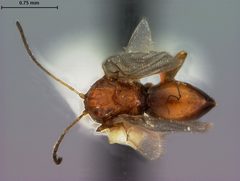
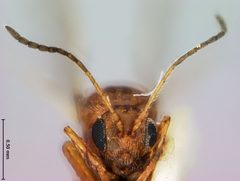
Andricus stellulus is a gall-inducing cynipid that forms distinctive stellar galls on oak leaves. The is known from arid regions of the southwestern United States, particularly the Mojave Desert of California, where it induces small, uniquely structured galls on scrub oak and shrub live oak. The galls consist of thin, hair-like stalks topped with toothed cups, representing one of the more architecturally unusual gall forms among the highly diverse Cynipidae.
Pronunciation
How to pronounce Andricus stellulus: /ˈæn.drɪ.kəs ˈstɛl.jʊ.ləs/
These audio files are automatically generated. While they are not always 100% accurate, they are a good starting point.
Identification
The galls of Andricus stellulus are diagnostic: small clusters of tiny galls, each comprising thin, hair-like stalks approximately 6–7 mm long topped with toothed cups about 3 mm in diameter. These stellar or star-like structures are unlike other oak galls in the region. The itself is minute, typical of cynipids, with reduced wing venation characteristic of the . Identification to level requires examination of the gall ; the wasp cannot be reliably distinguished from without gall association.
Images
Habitat
Found in isolated, small clusters of scrub oak (Quercus dumosa) and shrub live oak (Quercus turbinella) in the Mojave Desert of California. The is characterized by extreme aridity, high temperatures, and sparse vegetation on rocky or sandy substrates.
Distribution
Known from the Mojave Desert region of California, USA. Records indicate localized occurrence associated with specific oak in desert environments.
Host Associations
- Quercus dumosa - gall scrub oak
- Quercus turbinella - gall shrub live oak
Ecological Role
As a gall inducer, the manipulates oak leaf tissue to create a specialized structure that provides shelter and nutrition for its developing larvae. The gall represents a form of extended phenotype where the wasp directs plant growth through chemical signaling.
Human Relevance
No direct economic or medical significance. The galls are of interest to naturalists and entomologists studying plant-insect interactions and gall diversity. The exemplifies the remarkable architectural diversity of cynipid galls.
Similar Taxa
- Andricus spp.Numerous induce galls on oaks, but none produce the distinctive stalked, toothed-cup stellar of A. stellulus. Other Andricus typically form spherical, disc-shaped, or irregular galls without the elongated stalk structure.
- Other CynipidaeThe Cynipidae contains thousands of gall wasp , many on oaks. The stellar gall form is unique to A. stellulus among described North American species; other stalked galls (e.g., some Neuroterus or Trichoteras) differ in gall shape, association, or geographic range.
More Details
Gall architecture
The stellar gall structure—thin stalks supporting toothed cups—is among the most morphologically distinctive in the Cynipidae. This form has been described as particularly intriguing given the extreme desert conditions where the galls occur, suggesting remarkable to arid environments.