
Diplolepis
Geoffroy, 1762
gall wasps, rose gall wasps
Species Guides
10- Diplolepis bicolor(spiny rose gall wasp)
- Diplolepis californica(leafy bract gall wasp)
- Diplolepis gracilis
- Diplolepis ignota(gall wasp)
- Diplolepis nervosa(Spiked Pea Gall Wasp)
- Diplolepis polita(Spiny Leaf Gall Wasp)
- Diplolepis rosae(Mossy Rose Gall Wasp)
- Diplolepis rosaefolii
- Diplolepis spinosa(many-spined twig gall wasp)
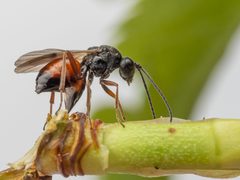
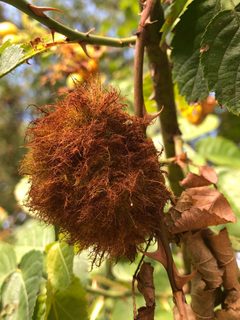
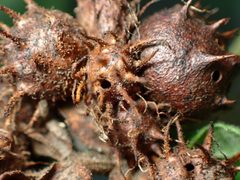
Diplolepis is a of gall-inducing in the Diplolepididae, most commonly associated with roses (Rosa spp.). These small wasps are notable for inducing complex, often conspicuous galls on their plants through chemical manipulation of plant tissues. The genus includes both sexual and parthenogenetic , with some like D. rosae reproducing primarily by . Diplolepis species exhibit intricate involving alternation between sexual and agamic , and their galls support diverse of and .
Pronunciation
How to pronounce Diplolepis: /ˌdɪploʊˈlɛpɪs/
These audio files are automatically generated. While they are not always 100% accurate, they are a good starting point.
Identification
Diplolepis are distinguished from other cynipoid gall wasps by their exclusive or near-exclusive association with Rosaceae, particularly Rosa. The can be separated from related cynipid genera by morphological features of the and, more reliably, by the characteristic structure of their galls. Species-level identification typically requires examination of gall , plant species, and microscopic features of adult specimens.
Images
Habitat
Associated with wild and cultivated roses (Rosa spp.) in diverse including dry pastures, heathlands, coastal dunes, and shrublands. The themselves are found within or emerging from galls on their plants.
Distribution
Holarctic distribution with recorded across Europe, Asia, and North America. Specific species distributions vary: D. rosae occurs across Europe and has been introduced to North America; D. mayri is found in Europe and Asia; D. spinosa and D. triforma occur in North America; D. valtonyci is known from northeastern China.
Seasonality
Activity patterns vary by and . Sexual generations typically emerge in spring to early summer; agamic (parthenogenetic) generations emerge in late autumn to winter. Laboratory rearing indicates continuous development possible under controlled conditions with appropriate and temperature.
Diet
Larvae feed on plant tissues within the gall structure. do not feed; they rely on energy reserves accumulated during larval development.
Host Associations
- Rosa spp. - gall inductionPrimary plants for most . Specific associations include R. canina, R. rubiginosa, R. gallica, R. spinosissima, R. arvensis, R. rugosa, R. davurica, R. blanda, and R. acicularis.
Life Cycle
Complex involving : a sexual spring with winged males and females that mate, and an agamic () generation of parthenogenetic females that typically emerge in late autumn or winter. Some under laboratory conditions can produce multiple generations per year. are laid singly on plant epidermal using a specialized ovipositor inserted between developing leaflets. Larval development occurs within the gall, with distinct growth and maturation phases.
Behavior
Females use a specialized ovipositor to insert between developing leaflets of rose buds. Gall formation involves chemical manipulation of plant tissues, with larvae inducing abnormal plant growth through secretions that stimulate expansion and differentiation. Galls provide protected chambers for larval development.
Ecological Role
Gall inducers that create novel plant structures serving as microhabitats for diverse . Galls support that prey on gall wasp larvae, as well as that exploit gall resources without killing the inducer. Nutrient redistribution within galls alters plant physiology, with potential consequences for plant vulnerability to other herbivores.
Human Relevance
Diplolepis rosae produces the 'bedeguar' or 'robin's pincushion' gall, a conspicuous and well-known structure on wild roses. Some are considered minor pests in horticulture; galls may be removed to reduce plant stress and vulnerability to other pests. The has been used as a model system for studying gall induction, , and - interactions.
Similar Taxa
- DisholcaspisAlso induces hard, woody galls on oaks, but distinguished by association (Fagaceae vs. Rosaceae) and gall structure.
- AndricusOak-associated cynipid gall wasps with similar , but on Quercus rather than Rosa.
- RhoditesAnother rose-associated cynipid ; distinguished by gall and morphological features.
More Details
Nutritional ecology
Galls induced by Diplolepis exhibit lower concentrations of nitrogen and most mineral nutrients compared to ungalled tissues, indicating that these regulate rather than concentrate nutrients. However, absolute mineral quantities correlate positively with the number of inhabitants, suggesting individual wasps drive nutrient transport. larvae within galls have nutrient concentrations similar to gall wasp larvae, explaining why does not alter gall nutrient profiles.
Reproductive biology
Diplolepis rosae reproduces primarily by (production of females from unfertilized ), yet maintains significant genetic variation through occasional . genomic studies reveal two distinct lineages differing 13-fold in rates, with selection acting on genes related to male traits in the more sexual lineage.
Molecular evolution
Mitochondrial of Diplolepis exhibit highly rearranged gene orders compared to ancestral hymenopteran mitogenomes, involving multiple transpositions, , and shuffling events.
Associated communities
Diplolepis galls support complex including , , and microbial associates including bacteria. The parthenogenetic D. rosae maintains associations with Wolbachia that may influence .
Sources and further reading
- BugGuide
- Wikipedia
- iNaturalist taxon
- NCBI Taxonomy
- Catalogue of Life
- Bug Eric: Wasp Wednesday: Gall Wasps
- An Introduction to the Wonderful World of Wasps: Meet the Heath Sand Wasp - Buglife Blog - Buglife
- Dynamic Rearrangement Events in the Mitogenomes of Gall Inducing Wasps, Diplolepis fructuum and Diplolepis rosae (Hymenoptera: Diplolepididae)
- A robust multigenerational laboratory rearing methodology for Diplolepis mayri and Diplolepis rosae on wild roses ( Rosa spp.)
- ALLOCATION PATTERNS OF ORGANIC NITROGEN AND MINERAL NUTRIENTS WITHIN STEM GALLS OFDIPLOLEPIS SPINOSAANDDIPLOLEPIS TRIFORMA(HYMENOPTERA: CYNIPIDAE) ON WILD ROSES (ROSACEAE)
- Diplolepis Rosae (L.) (Hymenoptera: Cynipidae): Development, Ecology and Galls in the Brno Region
- Distribution of Wolbachia among the guild associated with the parthenogenetic gall wasp Diplolepis rosae
- A new species of Diplolepis Geoffroy (Hymenoptera: Cynipidae: Diplolepidini) from northeastern China
- Host Plant Specificity and Allozyme Variation in the Parthenogenetic Gall Wasp Diplolepis mayri and its Relatedness to D. rosae (Hymenoptera: Cynipidae)
- Distribution of Wolbachia among the guild associated with the parthenogenetic gall wasp Diplolepis rosae
- Population genomics of the mostly thelytokous Diplolepis rosae (Linnaeus, 1758) (Hymenoptera: Cynipidae) reveals population-specific selection for sex
- Population Genomics of the Mostly Thelytokous Diplolepis rosae (Linnaeus, 1758) (Hymenoptera: Cynipidae) Reveals Population-specific Selection for Sex
- ANATOMY OF THE OVIPOSITOR AND OVIPOSITION BEHAVIOR OF THE GALL WASPDIPLOLEPIS ROSAE(HYMENOPTERA: CYNIPIDAE)
- Optimal clutch size of the gall wasp <i>Diplolepis rosae</i> (Hymenoptera: Cynipidae)
- Parasitoid wasps associated with Diplolepis galls (Hymenoptera: Cynipidae) in Turkey: an updated checklist and report of three non-regular species
- Galls Induced by Diplolepis spinosa Influence Distribution of Mineral Nutrients in the Shrub Rose
- Transcriptome analysis of Diplolepis rosae : revealing overexpression of genes potentially associated with insect immune response and gall formation at early larval stages