
Diplolepis rosaefolii
(Cockerell)
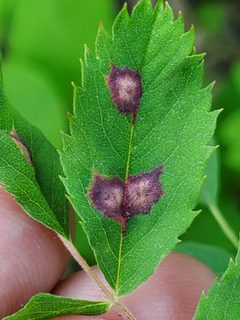
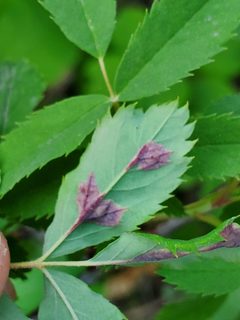
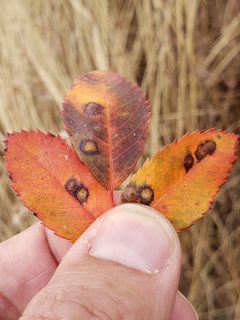
Diplolepis rosaefolii is a gall wasp in the Cynipidae that induces distinctive lenticular (lens-shaped) galls on the leaves of rose plants across Canada. The exhibits an typical of cynipid , with a bisexual spring producing the visible galls and an agamic () winter generation of wingless females. In Ontario and Quebec, it is primarily associated with native Rosa acicularis, though have been documented on the cultivated hybrid rugosa shrub rose 'Thérèse Bugnet'. The galls support a diverse component including multiple wasp species and .
Pronunciation
How to pronounce Diplolepis rosaefolii: //ˌdɪp.loʊˈlɛp.ɪs ˌroʊ.zəˈfɔ.li.aɪ//
These audio files are automatically generated. While they are not always 100% accurate, they are a good starting point.
Identification
Forms lenticular (lens-shaped, flattened) galls on rose leaves. The galls are hard and woody, distinguishing them from the soft, mossy rose galls produced by Diplolepis rosae. Gall and plant identity are key diagnostic features for distinguishing this from other Diplolepis gallers on roses.
Images
Habitat
Associated with Rosa acicularis in natural across Ontario and Quebec, Canada. Also documented in experimental rose fields on cultivated hybrid roses. The requires rose plants as for gall formation.
Distribution
Canada: recorded from Ontario, Quebec, Alberta, British Columbia, Labrador, and Manitoba. Primary association is with Rosa acicularis in Ontario and Quebec.
Host Associations
- Rosa acicularis Lindl. - primary Native in Ontario and Quebec
- Rosa rugosa hybrid 'Thérèse Bugnet' - secondary Documented shift in experimental rose field in Quebec
Life Cycle
Exhibits typical of Cynipidae: a bisexual spring with winged males and females that mate and induce galls, followed by an agamic () winter generation of wingless females that reproduce via . The large, hard, lenticular galls are produced by the spring bisexual generation and serve as the structure from which the asexual winter generation emerges.
Behavior
Induces lenticular gall formation on rose leaves through chemical compounds introduced during -laying and larval feeding, which stimulate abnormal plant growth. Documented to exhibit shift , expanding from native Rosa acicularis to cultivated hybrid rugosa roses.
Ecological Role
Galler (gall-former) that creates for a component of associated insects. Galls are inhabited by up to eight of , with Chrysocharis pentheus, Orthopelma luteolator, and Eupelmus dryorhizoxeni being most common, plus the Periclistus sp. These associated species represent 48–62% of gall inhabitants. The galls themselves rarely cause significant damage to plants beyond cosmetic effects.
Human Relevance
Of interest to entomologists studying gall wasp and -plant relationships. Documented host shift to cultivated ornamental roses suggests potential relevance to horticulture. Galls may be collected for study of associated .
Similar Taxa
- Diplolepis rosaeAlso forms galls on roses, but produces soft, mossy 'bedeguar' or 'robin's pincushion' galls rather than hard lenticular galls; likely introduced from Europe
- Other Diplolepis species on rosesDifferentiated primarily by gall and specific plant associations; lenticular gall shape is diagnostic for D. rosaefolii
Sources and further reading
- BugGuide
- GBIF taxonomy match
- iNaturalist taxon
- NCBI Taxonomy
- Bug Eric: Wasp Wednesday: Gall Wasps
- An Introduction to the Wonderful World of Wasps: Meet the Heath Sand Wasp - Buglife Blog - Buglife
- Phytokeys | Blog - Part 2
- BIOLOGY OF THE GALLERDIPLOLEPIS ROSAEFOLII(HYMENOPTERA: CYNIPIDAE), ITS ASSOCIATED COMPONENT COMMUNITY, AND HOST SHIFT TO THE SHRUB ROSE THÉRÈSE BUGNET