
Eupelmus
Dalman, 1820
Species Guides
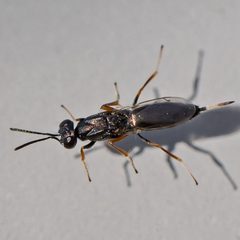
7Eupelmus is a large of chalcidoid wasps in the Eupelmidae, comprising over 330 with distribution. Species exhibit dual : most are ectoparasitoids attacking larval and nymphal stages of diverse holometabolous insects, while some are phytophagous with larvae feeding on plant tissues. The genus has been subject to extensive taxonomic revision, with molecular studies challenging the traditional three-subgenus classification (Eupelmus, Episolindelia, Macroneura) in favor of approximately twelve species groups. Several species have demonstrated potential for of agricultural pests.

Pronunciation
How to pronounce Eupelmus: /juːˈpɛlməs/
These audio files are automatically generated. While they are not always 100% accurate, they are a good starting point.
Identification
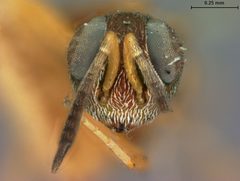
Identification to level requires examination of microscopic morphological characters and often molecular data. The is characterized by features typical of Eupelmidae, though specific diagnostic traits for distinguishing Eupelmus from related genera are not provided in available sources. Seven informal species groups have been recognized in the Palaearctic (fulgens-, fulvipes-, iranicus-, orientalis-, splendens-, stramineipes-, and urozonus-groups) based on morphological and molecular evidence. Females of E. (Eupelmus) species in North America can be distinguished using published illustrated keys.
Images
Habitat
are diverse and -specific. Eupelmus orientalis and E. vuilleti occur in fields and traditional granaries containing stored cowpea (Vigna unguiculata) in tropical Africa. Eupelmus messene is associated with galls formed by Aulacidea hieracii on hawkweed (Hieracium × robustum) stems. Eupelmus urozonus has been recorded from pine processionary masses in Bulgaria. The as a whole spans agricultural, forest, and storage .
Distribution
distribution with over 330 described . Well-documented regional faunas include: Palaearctic region (104+ extant species, with 76 in subgenus Eupelmus), North America north of Mexico (19 species), and tropical Africa (sympatric occurrence of E. orientalis and E. vuilleti). GBIF records document occurrence in North America (Arkansas, British Columbia, California), Europe (Canary Islands), and Asia (Andhra Pradesh, India).
Seasonality
Activity patterns vary by and climate. Eupelmus orientalis and E. vuilleti exhibit locomotor activity primarily during the photophase in tropical Africa. E. vuilleti initiates activity 4–5 hours earlier than E. orientalis, beginning displacements before dawn while E. orientalis requires light presence. This temporal partitioning facilitates coexistence in shared granary .
Host Associations
- Callosobruchus maculatus - West African bruchid; for E. orientalis larvae and pupae
- Thaumetopoea pityocampa - Pine processionary ; parasitized by E. urozonus in Bulgaria
- Aulacidea hieracii - Gall wasp; for E. messene
- Hylaeus anthracinus - for E. niger
- Bactrocera oleae - potential targetOlive fruit fly; studied as potential target
- Dryocosmus kuriphilus - potential targetChestnut gall wasp; studied as potential target
Life Cycle
Eupelmus orientalis: solitary ectoparasitoid with total mean developmental time of 18.6 days for males and 20.0 days for females at 33°C:23°C, 50%:80% r.h., L:D 12:12. time approximately 30 days; doubling time approximately 5 days. Females are pro-ovigenic or synovigenic with age-dependent ; mean longevity 46 days with mean lifetime fecundity of 220 and production of 167 offspring per female under laboratory conditions with ten per day.
Behavior
Females possess a thin, flexible, mobile ovipositor used to drill into substrates to access . Eupelmus messene has been observed drilling through polystyrene Petri dish walls and cementing perforations with a biological substance, a interpreted as substrate-raking to clear plastic particles not required in natural gall substrates. Females of E. orientalis are unable to recognize hosts previously parasitized by other . Locomotor activity rhythms show daily cyclic variation with species-specific timing that reduces competitive interactions between sympatric .
Ecological Role
Ectoparasitoids of various holometabolous insects, primarily attacking larval and nymphal stages. Serve as natural enemies of agricultural pests including bruchid beetles in stored legumes. Eupelmus urozonus comprises a minor component (0.1%) of complexes on pine processionary . Competitive coexistence between sympatric is mediated by temporal activity partitioning. Some species have been investigated for classical and programs.
Human Relevance
Investigated for of stored product pests (bruchids on cowpea) and agricultural pests (olive fruit fly, chestnut gall wasp). Eupelmus orientalis shows favorable demographic parameters for mass rearing ( 0.139 per day). Ovipositor drilling mechanics have potential biomimetic applications for development of minimally surgical instruments, guided probes for neurosurgery, and needle biopsy tools.
Similar Taxa
- BrasemaTwenty formerly classified in Eupelmus have been transferred to Brasema based on morphological re-examination; these were misidentified due to convergent characters
- AnastatusEupelmus ashmeadi transferred to Anastatus; both are eupelmids but differ in associations and morphological details
- ReikosiellaTwo formerly in Eupelmus transferred to Reikosiella; distinguished by structural features of the ovipositor and
More Details
Taxonomic instability
The has undergone extensive revision, with 25 new described from the Palaearctic in 2016 alone, and numerous synonymies and generic transfers. Molecular has revealed that the traditional three-subgenus system does not reflect evolutionary relationships; instead, approximately twelve species groups are recognized. The urozonus and vesicularis complexes contain cryptic diversity with more than ten new species discovered in the Euro-Mediterranean region through integrated molecular and morphological analysis.
Host specificity patterns
Comparative analyses in the urozonus group reveal that specificity is not constrained by ; closely related exhibit highly contrasting host ranges. Ovipositor length, a morphological trait hypothesized to determine host access, appears evolutionarily labile and does not predict host spectrum at this taxonomic .
Sources and further reading
- BugGuide
- Wikipedia
- GBIF taxonomy match
- iNaturalist taxon
- NCBI Taxonomy
- Catalogue of Life
- New oviposition behaviour spotted in parasitoid wasp | Blog
- The species of Eupelmus (Eupelmus) Dalman and Eupelmus (Episolindelia) Girault (Hymenoptera: Eupelmidae) in North America north of Mexico
- Revision of the Palaearctic species of Eupelmus (Eupelmus) Dalman (Hymenoptera: Chalcidoidea: Eupelmidae)
- Rythmes d'activité locomotrice chez deux insectes parasitoïdes sympatriques : Eupelmus orientalis et Eupelmus vuilleti (Hyménoptère, Eupelmidae)
- Eupelmus (Eupelmus) urozonus Dalman (Hymenoptera: Eupelmidae) - a new egg parasitoid of Thaumetopoea pityocampa (Denis & Schiffermüller) (Lepidoptera: Notodontidae) in Bulgaria
- Supplementary material 1 from: Nikelshparg MI, Nikelshparg EI, Anikin VV, Polilov AA (2023) Extraordinary drilling capabilities of the tiny parasitoid Eupelmus messene Walker (Hymenoptera, Eupelmidae). Journal of Hymenoptera Research 96: 715-722. https://doi.org/10.3897/jhr.96.107786
- Apports de la biologie moléculaire à la systématique, biogéographie et écologie des espèces euroméditerranéennes du genre Eupelmus : implications pour leur utilisation en lutte biologique
- DNA insertions as a component of the evolution of unique satellite DNA families in two genera of parasitoid wasps: Diadromus and Eupelmus (Hymenoptera).
- Reproductive potential in the parasitoid Eupelmus orientalis (Hymenoptera: Eupelmidae)
- Sex Allocation Decision Under Superparasitism by the Parasitoid Wasp Eupelmus vuilleti