
Bactrocera oleae
(Rossi, 1790)
olive fruit fly, olive fly, δάκος της ελιάς
is a tephritid fruit fly and the most destructive pest of olive worldwide. Larvae feed exclusively on olive fruits (Olea europaea), causing direct damage to pulp and oil quality. crop losses can reach 30% without control, and exceed 90% in severe . The is monophagous on olives and has developed resistance to multiple classes, driving research into alternative management strategies including sterile insect technique and .
Pronunciation
How to pronounce Bactrocera oleae: /bæktroʊˈsɪrə ˈoʊliˌaɪ/
These audio files are automatically generated. While they are not always 100% accurate, they are a good starting point.
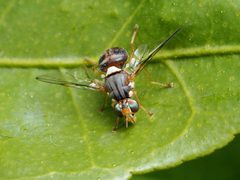
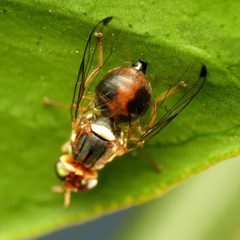
Images
Habitat
Olive groves and wild olive (Olea europaea) stands; presence strictly tied to tree availability. Landscape complexity affects abundance—lower in areas with high scrubland area, patch richness, and landscape diversity, and high olive grove dominance. No evidence that land uses other than olive groves serve as summer .
Distribution
Native to sub-Saharan Africa; now widespread across Mediterranean Europe (Albania, Croatia, Cyprus, France including Corsica, Greece including Crete, Italy including Sardinia and Sicily, Malta, Montenegro, Portugal including Azores, Slovenia, Spain including Balearic and Canary Islands, Switzerland), Middle East (Georgia, Iran, Israel, Jordan, Lebanon, Saudi Arabia, Syria, Turkey), South Asia (India, Pakistan), and North Africa (Algeria, Egypt, Eritrea, Ethiopia, Kenya, Libya, Morocco, Sudan, Tunisia). Introduced to North America (California, USA; Mexico) and some islands (Mauritius, Réunion, Seychelles, South Africa).
Seasonality
activity peaks in spring and autumn; movement occurs mainly in spring and among olive groves. rates vary with climatic conditions, cardinal directions, and . Late summer–autumn abundance is reduced in complex landscapes with high olive grove dominance.
Diet
Strictly monophagous: larvae feed on mesocarp of olive fruits (Olea europaea), showing to high phenolic compound levels especially in unripe green olives. diet not specified in sources.
Host Associations
- Olea europaea - obligate Cultivated and wild olives; exclusive for oviposition and larval development
Life Cycle
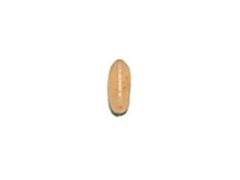
deposited exclusively in olive fruits. Larvae feed and develop in fruit mesocarp, creating tunnels that render fruits susceptible to secondary . occurs in soil or within fallen fruit. Developmental timing tied to and climatic conditions.
Behavior
Sexually mature males produce characteristic wing vibration sounds at dusk (fundamental frequency 300–390 Hz, distinct from sounds at 170–190 Hz) during courtship activities. Sounds are typically intermittent pulses but can exceed 2 minutes with harmonics reaching 10 kHz. Wing vibration frequency increases when virgin males are grouped together versus isolated or with females; more frequent in male-only groups, alternating with aggressive interactions. Rebroadcast sounds do not attract flies, suggesting potential substrate-borne vibration communication. are with peak activity 15:00–20:59; younger adults more mobile than older individuals. Virgin wild males show higher locomotor activity than females, decreasing after mating. Artificially reared flies exhibit lower locomotor activity and fragmented night rest patterns compared to wild flies. Food and water deprivation increase mobility. Virgin adults show greater starvation resistance than mated adults; females show greater water deprivation resistance than males at 15 and 30 days of age.
Ecological Role
Major economic pest; no documented positive services. (Psyttalia lounsburyi, P. ponerophaga) attack larvae, providing natural in native range.
Human Relevance
Most economically important pest of olive globally. Causes up to 30% yield loss under management, with potential losses exceeding 90% without intervention. Reduces both fruit yield and oil quality. Control relies heavily on , synthetic , and spinosad, with documented resistance development driving search for alternatives. Sterile insect technique (SIT) proposed but not yet successfully implemented; effectiveness limited by incomplete knowledge of and . Genetically modified male strains (Oxitec) developed and evaluated in caged trials, with field trial applications pending regulatory approval in EU. Augmentorium technique (mesh tents retaining pests while releasing ) under development for enhancement. Systemin treatment of olives reduces oviposition through induced volatile emissions, representing novel management approach.
Similar Taxa
- Ceratitis capitataMediterranean fruit fly, co-occurs in olive systems; broader range, distinct wing pattern and coloration
- Bactrocera dorsalis; different preferences, distribution in many regions
- Drosophila suzukiiSpotted-wing drosophila; smaller size, different oviposition (intact fruit skin penetration), distinct wing spot
More Details
Insecticide Resistance
Resistance documented to , , and spinosad. Transcriptomic studies identified differentially expressed genes associated with spinosad resistance, including upregulated protein 2, synthase, cationic transporter, serine , and P450 6a23-like, and downregulated heat-shock proteins, larval serum protein, hexamerin, and .
Sex Determination and Mating Systems
Transcriptomic analysis identified 1,238 genes upregulated in males and 330 in females. Male-specific upregulated genes include male factors (kl2, kl3, kl5), occludin-related Y protein (ory), sex-determining protein fem-1, and others; female-specific upregulation includes pupal protein (pcp). Mating induces substantial transcriptomic changes: 1,607 genes upregulated and 384 downregulated in male accessory glands with ejaculatory bulb; 1,705 upregulated and 120 downregulated in mated females.
Artificial Rearing Effects
Laboratory rearing on artificial diet for approximately 40 years produces phenotypic changes including reduced locomotor activity, altered circadian rest patterns, and reduced spermathecal size in females mated with reared males compared to wild males. These quality differences impact suitability for SIT programs.
Sources and further reading
- BugGuide
- GBIF taxonomy match
- iNaturalist taxon
- NCBI Taxonomy
- CDFA to Host Fruit Fly Workshop, Free to Participants | Bug Squad
- Honoring Hannah Burrack | Bug Squad
- Entomologist Hannah Burrack: Outstanding UC Davis Alumna | Bug Squad
- Our IPM Expert | Bug Squad
- Pests In, Parasitoids Out: The Augmentorium for Biocontrol in IPM
- A Genetically Modified Insect May be Field Tested in Europe
- Bactrocera oleae . [Distribution map].
- Bactrocera oleae . [Distribution map].
- Sound communication and effect of artificial rearing in the behavior of Bactrocera oleae
- Effect of food and water deprivation on the longevity and mobility of Bactrocera oleae
- Olive Landscape Affects Bactrocera Oleae Abundance, Movement and Damage
- Τρανσκριπτομική και πρωτεομική ανάλυση του σημαντικότερου παράσιτου της ελιάς, του εντόμου Bactrocera oleae, με έμφαση στα συστήματα φυλοδιαχωρισμού και ανθεκτικότητας στα εντομοκτόνα
- Evaluation of the impact of olive fruit fly (<i>Bactrocera oleae</i> [Gmelin, 1790], Diptera: Tephritidae) infestation on olive grove in Biskra (Algeria) Ocena vpliva napada oljčne muhe (<i>Bactrocera oleae </i>[Gmelin, 1790], Diptera: Tephritidae) v oljčnem nasadu v Biskri (Alžirija)
- Decoding the reproductive system of the olive fruit fly, Bactrocera oleae
- Olive Landscape Affects Bactrocera oleae Abundance, Movement and Infestation
- Exogenous systemin peptide treatment in olive alters Bactrocera oleae (Diptera, Tephritidae) oviposition preference