
Anastatus
Motschulsky, 1859
eupelmid egg parasitoids
Species Guides
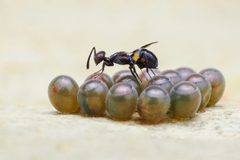
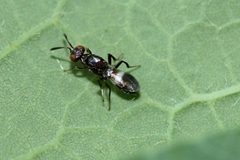
2Anastatus is a large of chalcidoid wasps in the Eupelmidae, comprising approximately 160 globally with about 18 species recorded from North America north of Mexico. All species are , attacking the eggs of various insects including true bugs, , and other arthropods. The genus exhibits extreme : females are brachypterous or with powerful jumping abilities, while males are fully winged and capable of . Several species have been introduced as agents, including A. disparis for spongy moth management and A. orientalis for spotted lanternfly control.
Pronunciation
How to pronounce Anastatus: /əˈnæstətəs/
These audio files are automatically generated. While they are not always 100% accurate, they are a good starting point.
Identification
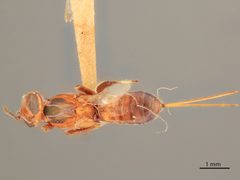
Females are distinguished by reduced or absent wings, with forewings when present bearing distinct banding patterns thought to enhance mimicry. The ovipositor is almost entirely concealed, separating Anastatus from similar eupelmid . Males possess fully developed wings and do not jump. Some have brachypterous females with abbreviated wing structures. Dead females often assume a characteristic U-shaped posture due to contraction of enlarged dorso-longitudinal thoracic muscles used for jumping.
Images
Distribution
distribution with records from North America, Europe, Asia, and Papua New Guinea. GBIF distribution records include Andaman and Nicobar Islands, Anhui, Assam, Bihar, and California.
Host Associations
- Lymantria dispar - A. disparis introduced to North America for
- Halyomorpha halys - A. bifasciatus recorded as in Türkiye
- Lycorma delicatula - A. orientalis under investigation for ; reported to parasitize up to 69% of in China
- Eurycantha calcarata - A. eurycanthae described from oil palm pest in Papua New Guinea
- Arilus cristatus - A. reduvii known of wheel bug
- Antheraea pernyi - of A. disparis
- Odonestis pruni - of A. disparis
- Actias selene ningpoana - of A. disparis
- Supella longipalpa - A. tenuipes associated with brown-banded cockroach
Life Cycle
development: females deposit single eggs into eggs, with larvae developing internally as solitary parasitoids and killing the host. A. japonicus exhibits larval . Sex determination is haplodiploid: males develop from unfertilized eggs and are haploid, females from fertilized eggs and are .
Behavior
Females exhibit remarkable jumping ability powered by enlarged dorso-longitudinal thoracic muscles and energy stores; they prefer until disturbed, then leap with such force that they often tumble on landing. Males fly readily and do not jump. Males of A. disparis exhibit frequent and extreme fighting to acquire mating opportunities. Females of A. disparis live more than one month in the field, while males live only 5-7 days. Females produce to attract males.
Ecological Role
that regulate of various insect pests. Several are employed or under investigation as agents for pests including spongy moth, brown marmorated stink bug, and spotted lanternfly.
Human Relevance
Used in programs. A. disparis was purposefully introduced to North America for spongy moth control. A. orientalis is under investigation for spotted lanternfly management. A. tenuipes arrived accidentally with brown-banded cockroach. Female-specific venom proteins identified in A. disparis may have applications in technology.
Similar Taxa
- EupelmusSimilar eupelmid , but distinguished by wing venation and body proportions; Anastatus females have concealed ovipositors and distinct forewing banding
- ReikosiellaFormerly included now transferred out of Anastatus; distinguished by structural features of mesosoma and wing characters
- TineobiusSome Anastatus transferred to this ; distinguished by antennal structure and leg proportions
Sources and further reading
- BugGuide
- Wikipedia
- GBIF taxonomy match
- iNaturalist taxon
- NCBI Taxonomy
- Bug Eric: Wasp Wednesday: Anastatus spp. Eupelmids
- Anastatus orientalis - Entomology Today
- Be Prepared for the Invasive Spotted Lanternfly, Entomologists Warn
- Bug Eric: Rough Stink Bugs
- How One Entomologist Tackles Invasive Species as a State Pest Biologist
- Nomenclatural changes in Anastatus Motschulsky and the description of Anastatus eurycanthae Gibson n. sp. (Eupelmidae: Eupelminae), an egg parasitoid of Eurycantha calcarata Lucas (Phasmida: Phasmatidae) from Papua New Guinea
- Sexual dimorphism and sex-biased gene expression in an egg parasitoid species, Anastatus disparis
- Sexual dimorphism and sex-biased gene expression in an egg parasitoid species, Anastatus disparis
- Identification of Odorant-Binding Protein AjapOBP26 as the Key Mediator of 2Ethyl-1-hexanol Avoidance in the Egg Parasitoid Anastatus japonicus
- First Record of Native Egg Parasitoid, Anastatus bifasciatus, on Halyomorpha halys (Stål, 1855) (Hemiptera: Pentatomidae) Eggs in Türkiye Halyomorpha halys (Stål, 1855) (Hemiptera: Pentatomidae) Yumurtalarında Yerli Yumurta Parazitoiti olarak Anastatus bifasciatus (Geoffroy) (Hymenoptera: Eupelmidae)’un Türkiye’de ilk Kaydı
- Description of two new brachypterous species of Anastatus (Chalcidoidea: Eupelmidae) from India
- Increased Reproductive Success with Age in an Egg Parasitoid, Anastatus disparis (Hymenoptera: Eupelmidae)
- Sexual dimorphism and sex-biased gene expression in an egg parasitoid species, Anastatus disparis
- Sexual dimorphism and sex-biased gene expression in an egg parasitoid species, Anastatus disparis
- Parasitism Rate of Egg Parasitoid Anastatus orientalis (Hymenoptera: Eupelmidae) on Lycorma delicatula (Hemiptera: Fulgoridae) in China
- Mechanisms Responsible for Larval Diapause in Anastatus japonicus Ashmead, Shown by Integrated Transcriptomic and Proteomic Analyses.