
Eupelmidae
Walker, 1833
Subfamily Guides
2is a of parasitic in the superfamily Chalcidoidea, containing approximately 905-1100 described across 39-45 . The family is currently defined to include three : Eupelminae, Calosotinae, and Eusandalinae. Members exhibit remarkable , with females of many species possessing modified mesothoracic musculature that enables powerful jumping using the middle legs. The majority are of other insects, with including larvae, spider , , and various other arthropods. Some species are facultative hyperparasitoids. The group has significant potential as agents for agricultural and forest pests.
Pronunciation
How to pronounce Eupelmidae: /juˈpɛlmɪdiː/
These audio files are automatically generated. While they are not always 100% accurate, they are a good starting point.
Identification
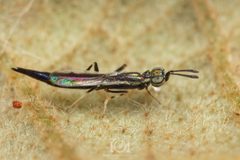
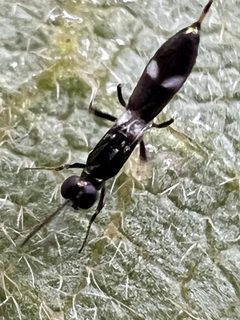
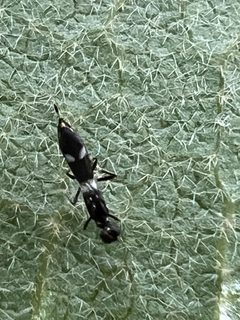
can be separated from other Chalcidoidea by the combination of: medially concave in many ; large convex mesopleuron; middle positioned near hind coxae; and in Eupelminae, the distinctive jumping apparatus involving modified mesothoracic segments and musculature. Females of Anastatus are recognized by banded forewings and concealed ovipositor, distinguishing them from similar . The Eupelminae is characterized by the jumping ability of females, which often die in a characteristic U-shaped posture with and metasoma nearly touching above the . Calosotinae and Eusandalinae lack this jumping modification. Specimen identification to genus or species typically requires microscopic examination and often rearing from known .
Images
Habitat
Found in virtually all terrestrial worldwide, from tropical to temperate regions. Specific microhabitats vary by association: parasitizing wood-boring beetles occur on tree trunks with exposed dead wood; gall-associated species inhabit plant galls; are found wherever host eggs occur, including leaf surfaces, stems, and concealed locations such as . No specific climatic or elevational restrictions are documented for the as a whole.
Distribution
distribution throughout all major biogeographic regions. Documented from North America (119 north of Mexico), Palaearctic region (extensive in Eupelmus alone), Oriental region, Afrotropical region, Neotropical region, and Australasia. Some species have been accidentally introduced outside native ranges; for example, Balcha indica was introduced to the eastern United States (Maryland, Michigan, Virginia) from the Oriental region.
Seasonality
Activity patterns vary by and climate. of many species have been observed in spring through autumn in temperate regions. typically occurs as mature larvae or pupae within remains. Specific seasonal data is insufficiently documented for most species.
Host Associations
- Coleoptera larvae - primary Most common group for majority of
- Araneae (spider eggs) - Documented for multiple including Arachnophaga
- Mantodea (oothecae) - Eupelmus (Macroneura) vesicularis reported from in Iran
- Saturniidae (Lepidoptera eggs) - Mesocomys are of Saturniidae
- Buprestidae (Coleoptera) - Metapelma parasitize wood-boring beetles including Buprestidae and Cerambycidae
- Cerambycidae (Coleoptera) - for Metapelma and Balcha
- Agrilus planipennis (emerald ash borer) - adventitious Balcha indica in eastern United States
- Lymantria dispar (spongy moth) - biocontrol targetAnastatus disparis introduced for control
- Supella longipalpa (brown-banded cockroach) - Anastatus tenuipes introduced with this
- Arilus cristatus (wheel bug) - Anastatus reduvii documented from wheel bug
- Coreidae (Hemiptera eggs) - Anastatus observed parasitizing leaf-footed bug
- Lycorma delicatula (spotted lanternfly) - Anastatus orientalis studied as potential biocontrol agent
- Biprorulus bibax (pentatomid bug) - for Anastatus biproruli
- Various scale insects (Coccoidea) - Multiple eupelmid
- Lepidoptera caterpillars - Some attack and larvae
- Gall midges (Cecidomyiidae) - Documented group
- Lacewings (Neuroptera) - Recorded group
- Cockroaches - Various
- Other parasitic wasps - hyperparasitoidSome are facultative hyperparasitoids
Life Cycle
Development is parasitoidal, with larvae feeding internally or externally on arthropods. Most are solitary ectoparasitoids, though some are gregarious. details vary considerably: some attack host , others larvae, and some are hyperparasitoids of other already present in hosts. stage is typically mature larva or pupa within host remains or in protected locations. Specific developmental times and voltinism are poorly documented for most species.
Behavior
Females of Eupelminae exhibit a remarkable jumping powered by modified mesothoracic musculature rather than direct leg muscles. When disturbed, these launch themselves using the middle legs, often tumbling on landing; this has earned them the suggested "back-rolling wonders." The jump is triggered by release of energy stored in blocks, causing thoracic contraction that pulls the middle leg basal segment inward. Males of Eupelminae fly normally, while females prefer to walk and rely on jumping for escape. Males of Anastatus disparis engage in lethal combat, with fight intensity increasing with competitor and female presence; death may result from cumulative injuries sustained in repeated encounters rather than single lethal attacks. Many exhibit mimicry, with females of Anastatus displaying banded forewings that adhere closely to the body, creating a wingless appearance at rest.
Ecological Role
function primarily as regulating of other arthropods. As primary parasitoids of larvae, spider , and various insect eggs and larvae, they contribute to natural in terrestrial . Some are facultative hyperparasitoids, potentially affecting populations of other parasitoid species. Their broad range across multiple insect orders and spiders suggests significant but poorly quantified impacts on structure. Several species have been evaluated or employed as biological control agents for pests, including Anastatus disparis for spongy moth control and Anastatus orientalis for spotted lanternfly management.
Human Relevance
Several have been introduced intentionally or accidentally for of pests. Anastatus disparis was purposefully imported to North America to aid control of the spongy moth (Lymantria dispar). Anastatus tenuipes arrived accidentally with its , the brown-banded cockroach. Balcha indica was accidentally introduced to the eastern United States and has been recorded as an adventitious of the emerald ash borer (Agrilus planipennis). The has been identified as having substantial unexploited potential for biocontrol of agricultural and forest pests, though it has been described as a "forgotten" chalcidoid group requiring further study. No species are known to be harmful to humans; all are stingless.
Similar Taxa
- MetapelmatidaeFormerly included in ; separated in 2022 taxonomic revision based on phylogenetic evidence
- NeanastatidaeFormerly included in ; elevated to status in 2022 revision
- Other Chalcidoidea families distinguished by medially concave , large convex mesopleuron, and in Eupelminae, the jumping modification of females; other lack this combination of features
More Details
Taxonomic instability
The has undergone recent significant revision. In 2022, were moved to newly recognized families Metapelmatidae and Neanastatidae. The current definition includes 39 genera in three (Eupelminae, Calosotinae, Eusandalinae), though some sources cite 45 genera reflecting ongoing taxonomic flux. The group is apparently polyphyletic as currently defined, with subfamilies potentially representing separate monophyletic lineages that may be elevated to family status.
Sexual dimorphism
Extreme is characteristic, particularly in Eupelminae. Females often have reduced wings or are brachypterous, with modified thoracic musculature for jumping, while males are fully winged and fly normally. In some (e.g., Ooderella), males were unknown or unassociated with females until recent taxonomic revisions.
Research needs
relationships remain poorly documented for most . Many species are known only from females, and males have not been associated for numerous . The has been identified as understudied in major regions including India, where no comprehensive work has been produced for approximately a decade. Rearing parasitized hosts represents the primary method for studying these , offering opportunities for citizen science contributions to understanding host- relationships.
Sources and further reading
- BugGuide
- Wikipedia
- GBIF taxonomy match
- iNaturalist taxon
- NCBI Taxonomy
- Catalogue of Life
- Bug Eric: Wasp Wednesday: Anastatus spp. Eupelmids
- Bug Eric: April 2012
- Revision of the Old World genus Mesocomys Cameron (Hymenoptera: Eupelmidae)
- Chalcidoid parasitoids (Hymenoptera: Torymidae and Eupelmidae) of mantids (Mantodea) oothecae in Iran
- The world species of Balcha Walker (Hymenoptera: Chalcidoidea: Eupelmidae), parasitoids of wood-boring beetles
- Revision of the Palaearctic species of Eupelmus (Eupelmus) Dalman (Hymenoptera: Chalcidoidea: Eupelmidae)
- Rediscovery of Calymmochilus russoi Gibson, 1995 (Hymenoptera, Chalcidoidea, Eupelmidae), and revision of European Calymmochilus Masi, 1919
- A new coccid-parasite of the family Eupelmidae (Hym. Chalc.)
- Male-male lethal combat in the quasi-gregarious parasitoid Anastatus disparis (Hymenoptera: Eupelmidae)
- Revision of world Ooderella Ashmead (Hymenoptera: Chalcidoidea: Eupelmidae), with description of the first males for the genus
- Parasitism Rate of Egg Parasitoid Anastatus orientalis (Hymenoptera: Eupelmidae) on Lycorma delicatula (Hemiptera: Fulgoridae) in China
- Biology ofAnastatus biproruli (Hym.: Eupelmidae) a parasitoid ofBiprorulus bibax (Hem.: Pentatomidae)
- The species of Eupelmus (Eupelmus) Dalman and Eupelmus (Episolindelia) Girault (Hymenoptera: Eupelmidae) in North America north of Mexico
- Prospects of Eupelmidae (Hymenoptera: Chalcidoidea) as Natural Enemies for Agricultural Pests in India
- Behavioral Responses of the Egg Parasitoid Anastatus Orientalis (Hymenoptera: Eupelmidae) Towards Adult ‘Footprints’ of Target and Non-Target Hosts
- Review of the species of Anastatus (Hymenoptera: Eupelmidae) known from China, with description of two new species with brachypterous females
- Description of two new brachypterous species of Anastatus (Chalcidoidea: Eupelmidae) from India