
Diplolepididae
rose gall wasps
Genus Guides
1- Diplolepis(gall wasps)
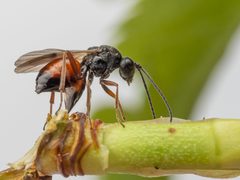
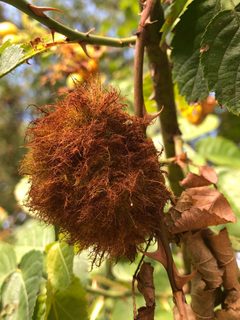
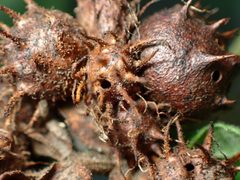
Diplolepididae is a small of gall-inducing in the order Hymenoptera, recently elevated from tribe status within Cynipidae based on genetic and morphological evidence. The family comprises two : Diplolepidinae (~60 in Diplolepis and Liebelia) which induce galls exclusively on roses (Rosa), and Pediaspidinae (two : Himalocynips and Pediaspis) with poorly known , though Pediaspis aceris has been observed inducing galls on maple. These wasps are found in temperate regions across the Northern Hemisphere including Europe, Asia, and North America.
Pronunciation
How to pronounce Diplolepididae: /dɪploʊˈlɛpɪdɪˌdeɪ/
These audio files are automatically generated. While they are not always 100% accurate, they are a good starting point.
Identification
Diplolepididae can be distinguished from Cynipidae by molecular phylogenetic markers and specific morphological features that supported their elevation to status. Within the family, Diplolepidinae (rose gall inducers) is distinguished from Pediaspidinae by plant association: Diplolepidinae exclusively on Rosaceae (Rosa), Pediaspidinae on other hosts including Acer. The Pediaspidinae contains only two (Himalocynips and Pediaspis), making this subfamily-level identification straightforward when host is known.
Images
Habitat
supporting plants: roses (Rosa spp.) for Diplolepidinae, and maple (Acer) for Pediaspis aceris. Documented from temperate forest and shrubland habitats in northeastern Anatolia (Turkey), the Eastern Black Sea Region, and Sichuan Province (China). Field studies indicate presence across diverse localities from lowland to montane elevations where host roses occur.
Distribution
Northern Hemisphere temperate regions. Documented from: Europe; Turkey (Eastern Black Sea Region, northeastern Anatolia); China (Sichuan Province); and inferred presence in North America based on rose distribution and iNaturalist records. The has been recorded from 695 localities across seven Turkish provinces (Artvin, Bayburt, Giresun, Gümüşhane, Ordu, Rize, Trabzon).
Diet
Larvae feed on plant tissue within induced galls. Specific dietary details beyond gall tissue consumption are not documented.
Host Associations
- Rosa - gall Exclusive for Diplolepidinae; includes Rosa chinensis var. spontanea in China
- Acer - gall for Pediaspis aceris (Pediaspidinae)
Life Cycle
Has been observed to induce galls on plants in which larvae develop and feed. -larval (Orthopelma spp., Ichneumonidae) oviposit into host eggs, indicating eggs are laid in or on host plant tissue. Specific developmental stages and timing beyond gall induction are not well documented.
Behavior
Induces galls on plants through modulation of host plant tissue. Gall formation provides protected environment for larval development. Host-searching of associated has been observed, suggesting chemical or visual cues are involved in gall location.
Ecological Role
Gall induction creates for complex of associated organisms. Serves as for including Eulophidae (Chalcidoidea) and Ichneumonidae (Orthopelma spp., Trematopygus vellicarius). Contributes to gall community structure and complexity in rose and maple habitats.
Human Relevance
Galls induced on ornamental roses may affect horticultural aesthetics. Documented as component of biodiversity surveys in Turkey and China. No significant economic impact documented.
Similar Taxa
- CynipidaeFormerly included Diplolepididae as tribes Diplolepidini and Pediaspini; distinguished by genetic and morphological features supporting -level separation
- FigitidaePhylogenetic sister group; distinguished by mitogenome architecture and gall-inducing lifestyle of Diplolepididae versus lifestyle of most Figitidae
More Details
Taxonomic history
Elevated from tribal status within Cynipidae to rank based on genetic and morphological evidence. Formerly treated as Diplolepidini (Diplolepidinae) and Pediaspini (Pediaspidinae) within Cynipidae.
Subfamily composition
Diplolepidinae: ~60 , 2 (Diplolepis, Liebelia), all on Rosa. Pediaspidinae: 2 genera (Himalocynips, Pediaspis), poorly known.
Molecular characteristics
Mitogenomes of Diplolepis show highly differentiated architecture with 11 parsimonious evolutionary steps including reverse transpositions, transpositions, , and shuffling events. AT content averages 84.10%.
Sources and further reading
- BugGuide
- Wikipedia
- iNaturalist taxon
- NCBI Taxonomy
- Gall wasp (Cynipoidea: Cynipidae and Diplolepididae) fauna of the Eastern Black Sea Region (Türkiye)
- Dynamic Rearrangement Events in the Mitogenomes of Gall Inducing Wasps, Diplolepis fructuum and Diplolepis rosae (Hymenoptera: Diplolepididae)
- New records for the association between eulophid parasitoids (Hymenoptera: Chalcidoidea: Eulophidae) and gall wasps (Hymenoptera: Cynipoidea: Cynipidae and Diplolepididae)
- New species of rose gall wasp Diplolepis Geoffroy, 1762 (Hymenoptera: Diplolepididae) and its parasitoid Orthopelma Taschenberg, 1865 (Hymenoptera: Ichneumonidae) on a rare endemic rose species in Sichuan, China
- On the biology of two parasitoids of rose gall wasps (Diplolepis spp. (Hymenoptera: Diplolepididae)), Orthopelma mediator (Thunberg, 1822) and Orthopelma brevicorne Morley, 1907 (Hymenoptera: Ichneumonidae: Orthopelmatinae), with a world list of Ichneumonidae known to oviposit into the host egg