
Figitidae
Subfamily Guides
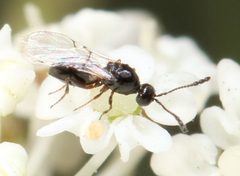
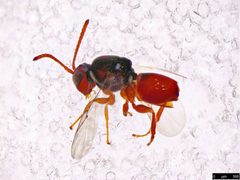
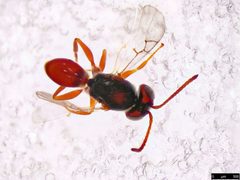
5Figitidae is a of within the superfamily Cynipoidea, comprising approximately 1400 described across over 130 . The family exhibits substantial undescribed diversity, particularly within the Eucoilinae, which alone contains over 1000 described species. Figitids are distributed globally and exhibit diverse associations, with many species acting as parasitoids of Diptera larvae.
Pronunciation
How to pronounce Figitidae: /fɪˈdʒɪtɪˌdeɪ/
These audio files are automatically generated. While they are not always 100% accurate, they are a good starting point.
Identification
Figitidae can be distinguished from other Cynipoidea by a combination of morphological features including wing venation patterns and metasomal structure. Within the family, are distinguished by specialized characters: Eucoilinae possess a distinctive pronotal structure; Aspicerinae exhibit reduced wing venation; Charipinae are typically small with reduced wing venation and distinct antennal segmentation. Identification to and level requires examination of minute morphological characters including facial , mesoscutal structure, and metasomal carination.
Images
Distribution
Figitidae occur throughout most of the world, with documented presence on every continent. The Eucoilinae shows particular diversity in tropical regions, especially the Neotropics. Specific distribution records include: Argentina (extensively documented for Eucoilinae, particularly in the NOA and NEA regions); Holarctic distribution for Aspicerinae such as Aspicera and Omalaspis; Nearctic distribution for Paraspicera; and Palaearctic records for Charipinae including numerous country-level records across Europe and Asia.
Host Associations
- Drosophila - Documented for Leptopilina, Leptolamina, and Ganaspis (Eucoilinae)
- Diptera Muscomorpha - Eucoilinae are koinobiont endoparasitoids of larval stages; include agromyzid leaf-miners and other fly larvae
- Drosophila suzukii - Documented for Ganaspis brasiliensis and Dieucoila in Argentina
- Ephydridae - Documented for undescribed Dieucoila
- Agromyzidae - for Preseucoela and Agrostocynips ; leaf-mining larvae
- Tephritidae - Documented in tritrophic studies in Brazil
- Lonchaeidae - Documented in tritrophic studies in Brazil
Life Cycle
Figitidae exhibit koinobiont development, where the continues to develop after . In Eucoilinae, females oviposit into host larvae, and development proceeds through , larval, and pupal stages within the host . occurs from the host puparium. Specific developmental details vary among and .
Ecological Role
Figitidae function as regulating of Diptera, particularly in agricultural and natural . Eucoilinae contribute to of pest flies including Drosophila suzukii, a significant agricultural pest. The represents a major component of parasitoid diversity in tropical ecosystems, with Eucoilinae being the most species-rich cynipoid in tropical regions.
Human Relevance
Several Figitidae have potential or documented value as agents. Ganaspis brasiliensis and related species are under investigation for control of Drosophila suzukii (spotted-wing drosophila), a destructive pest of soft fruits. Eucoiline of agromyzid leaf-miners contribute to natural pest suppression in agricultural systems.
Similar Taxa
- CynipidaeBoth belong to Cynipoidea and share reduced wing venation; Figitidae distinguished by lifestyle (vs. gall induction in Cynipidae) and associated morphological adaptations
- IbaliidaeBoth are cynipoid ; Figitidae distinguished by smaller size, different antennal structure, and associations with Diptera rather than Hymenoptera
- LiopteridaeBoth cynipoid with reduced wing venation; Figitidae distinguished by metasomal structure and typically smaller size
More Details
Subfamily classification
As of 2011, Figitidae contains 12 : Anacharitinae, Aspicerinae, Charipinae, Emargininae, Euceroptrinae, Eucoilinae, Figitinae, Mikeiinae, Parnipinae, Plectocynipinae, Pycnostigminae, and Thrasorinae. Eucoilinae was historically treated as a separate (Eucoilidae) but is now included within Figitidae.
Evolutionary history
Phylogenetic studies indicate that early figitids were of gall-inducing insects, with subsequent shifts to exposed hosts associated with aphids. The Eucoilinae is most closely related to Emargininae and Pycnostigminae. The earliest divergence in Eucoilinae appears to have been between Afrotropical and Neotropical lineages, with substantial radiation in the Neotropics.
Taxonomic challenges
Figitidae exhibits substantial undescribed diversity, with -level classification in Eucoilinae described as 'partly chaotic.' Several genera, including Ganaspis, are based on phylogenetic analyses. Intraspecific morphological variability in some genera (e.g., Callaspidia) complicates delimitation.
Sources and further reading
- BugGuide
- Wikipedia
- GBIF taxonomy match
- iNaturalist taxon
- NCBI Taxonomy
- Catalogue of Life
- Distribution of Eucoilinae (Hymenoptera, Cynipoidea, Figitidae)
- Phylogeny of the Eucoilinae (Hymenoptera: Cynipoidea: Figitidae)
- The phylogeny and evolution of Figitidae (Hymenoptera: Cynipoidea)
- Estudio sistemático y análisis cladístico del grupo Zaeucoila (Hymenoptera: cynipoidea: figitidae)
- Biodiversidad de <i>Ganaspini</i> (Hymenoptera: Figitidae: Eucoilinae) en la Argentina
- Revision of the genus Callaspidia Dahlbom, 1842 (Hym.: Figitidae: Aspicerinae)
- Revision of the genus Aspicera Dahlbom, 1842 (Hym.: Figitidae: Aspicerinae)
- Revision of the genus Omalaspis Giraud, 1860 (Hym.: Figitidae: Aspicerinae)
- Revision of the genus Paraspicera Kieffer, 1907 (Hym: Figitidae: Aspicerinae)
- Revision of the genus Prosaspicera Kieffer, 1907(Hym.: Figitidae: Aspicerinae)
- Relação tritrofica envolvendo lonquideos, tefritideos (Diptera: Tephritoidea) seus hospedeiros e seus parasitoides eucoilineos (Hymenoptera: Figitidae) e braconideos (Hymenoptera: Braconidae) em Monte Alegre do Sul e Campinas
- Four new species of Alloxysta (Hym.: Cynipoidea: Figitidae: Charipinae) from Petr Starý’s collection
- A revision of Ganaspidium Weld, 1952 (Hymenoptera, Figitidae, Eucoilinae): new species, bionomics, and distribution
- The description of Preseucoela Buffington, new genus, with notes on the status of Nearctic species of Agrostocynips Diaz (Hymenoptera: Figitidae: Eucoilinae)
- Palaearctic species of Charipinae (Hymenoptera, Figitidae): two new species, synthesis and identification key
- Deciphering Morphological Variability: Addressing Taxonomic Ambiguities in Contemporary Species Delimitation (Hymenoptera, Figitidae).