
Aspicerinae
Genus Guides
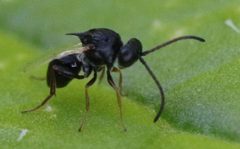
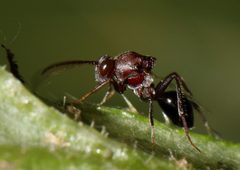
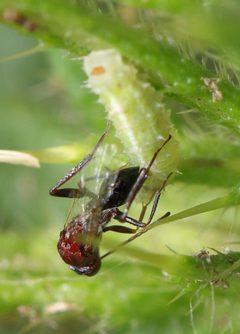
3Aspicerinae is a of parasitic cynipoid within the Figitidae (Hymenoptera: Cynipoidea). The subfamily contains multiple including Aspicera, Prosaspicera, Callaspidia, Omalaspis, and Paraspicera. Members are primarily Holarctic in distribution, though some genera extend into the Neotropical, Afrotropical, and Oriental regions. The group has undergone extensive recent taxonomic revision, revealing substantially greater than previously recognized.
Pronunciation
How to pronounce Aspicerinae: /ˌæspɪˈsɛrɪniː/
These audio files are automatically generated. While they are not always 100% accurate, they are a good starting point.
Identification
Aspicerinae can be distinguished from other Figitidae by morphological characters including the structure of the , mesosoma, and metasoma. Within Aspicerinae, are differentiated by diagnostic features: Omalaspis possesses a supratorular impression exclusive to this genus within the subfamily; Aspicera exhibit more morphological homogeneity compared to the highly variable Callaspidia; Prosaspicera and Paraspicera have distinct Nearctic distributions and characteristic spine and pit configurations on the and scutellum.
Images
Distribution
Holarctic distribution predominates in Aspicera, Callaspidia, and Omalaspis. Prosaspicera occurs primarily in the Nearctic, Neotropical, Afrotropical, and Oriental regions, with recent records from the Eastern Palaearctic (Japan). Paraspicera is restricted to the Nearctic region. Aspicera has been newly recorded from Canada, Cyprus, Greece, India (northeastern Himalayan range), Japan, Jordan, Mexico, Montenegro, and Turkey.
Ecological Role
Members are parasitic cynipoid . Specific relationships remain largely undocumented in the available literature.
Similar Taxa
- FigitinaeAnother of Figitidae; Aspicerinae is distinguished by diagnostic morphological characters of the capsule and mesosomal structure
- AnacharitinaeFormerly included now recognized as misplaced; Xyalaspis rugosa was restored to Anacharitinae based on morphological re-examination
- Xyalophora in Figitinae to which Aspicera nigra was transferred, demonstrating historical confusion between Aspicerinae and Figitinae
More Details
Taxonomic instability
Aspicerinae has experienced substantial taxonomic revision. Multiple have been transferred between : four species moved from Paraspicera to Aspicera; Heteraspidia synonymized with Aspicera; species previously placed in Aspicera transferred to Xyalophora, Neralsia, and Xyalaspis. Several species remain incertae sedis or species dubia due to lost or destroyed type material.
Undescribed diversity
Recent revisionary work indicates significant undescribed species diversity. Aspicera increased from 27 to 48 valid with 32 new species described. Prosaspicera increased from 17 to 30 valid species with 15 new species described. Callaspidia was reduced from 19 species to 6 valid species due to synonymy, suggesting previous over-splitting in some and under-recognition in others.
Sources and further reading
- BugGuide
- iNaturalist taxon
- NCBI Taxonomy
- Revision of the genus Callaspidia Dahlbom, 1842 (Hym.: Figitidae: Aspicerinae)
- Revision of the genus Paraspicera Kieffer, 1907 (Hym: Figitidae: Aspicerinae)
- Revision of the genus Prosaspicera Kieffer, 1907(Hym.: Figitidae: Aspicerinae)
- Revision of the genus Aspicera Dahlbom, 1842 (Hym.: Figitidae: Aspicerinae)
- Revision of the genus Omalaspis Giraud, 1860 (Hym.: Figitidae: Aspicerinae)
- Colour and Distributional Pattern of Callaspidia notata (Boyer de Fonscolombe, 1832) (Hymenoptera: Figitidae: Aspicerinae) from Pakistan