
Liopteridae
Genus Guides
1Liopteridae is a of in the superfamily Cynipoidea, comprising approximately 140 across 10 . Members are primarily larval parasitoids of wood-boring beetles, with the first definitive record confirming Paramblynotus koreanus as a parasitoid of the weevil Carcilia strigicollis. The family exhibits worldwide distribution with notable concentrations in the African Tropics and is associated with broadleaf forest .
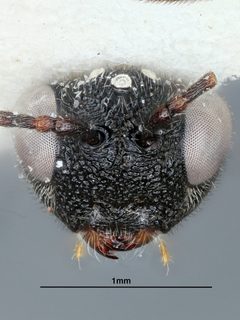
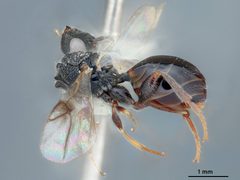
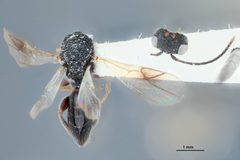
Pronunciation
How to pronounce Liopteridae: //laɪ.ˌɒp.təˈrɪ.diː//
These audio files are automatically generated. While they are not always 100% accurate, they are a good starting point.
Identification
Liopterids possess a distinctly —a narrow waist connecting the and abdomen. Members of the Mayrellinae are very small and superficially resemble gall wasps (Cynipidae), though they are not closely related. Specific identification typically requires examination of wing venation, structure, and abdominal petiole .
Images
Habitat
Broadleaf forests. Associated with woody vegetation where wood-boring are present. Paramblynotus koreanus has been documented on Quercus serrata trees.
Distribution
Worldwide, with concentrations in the African Tropics. Documented from Nearctic, Western Palearctic, Eastern Palearctic, Neotropical, Afrotropical, Australasian, and Oriental biogeographic zones. First record from India (Great Nicobar Island) and first record of Paramblynotus from Madagascar.
Host Associations
- Carcilia strigicollis (Coleoptera: Curculionidae) - definitive First confirmed record for the ; Paramblynotus koreanus association verified via LAMP assay detecting host in pupal chamber residue
- Buprestidae (Coleoptera) - presumed Larval ; cited in literature as but definitive confirmation lacking
- Cerambycidae (Coleoptera) - presumed Larval ; cited in literature as but definitive confirmation lacking
Life Cycle
Integral development (complete development on or within a single ). Pupal chamber formed within or associated with host remains.
Behavior
targeting wood-boring larvae. May serve as apparent for hyperparasitoids.
Ecological Role
Insect regulators of biodiversity; that contribute to of wood-boring beetles, including potential pest in Buprestidae and Cerambycidae.
Similar Taxa
- Cynipidae (gall wasps)Mayrellinae members superficially resemble gall wasps in size and general habitus, but differ in ( of wood-borers vs. gall inducers) and phylogenetic placement within Cynipoidea
- IbaliidaeAnother within Cynipoidea; both share lifestyles but differ in associations and morphological details
- FigitidaeRelated in Cynipoidea; liopterids distinguished by and specific wood-boring associations
More Details
Taxonomic Structure
Four recognized: Dallatorrellinae (Australasian, Oriental), Mayrellinae (worldwide), Liopterinae (Neotropical), and Oberthuerellinae (Afrotropical). Mayrellinae includes two (Kiefferiella, Paramblynotus); most known from single specimens and are extremely rare in collections.
Research Significance
The 2023 confirmation of Carcilia strigicollis as a represents a major breakthrough, as previous host associations were assumed but unconfirmed. The remains poorly known biologically despite taxonomic progress, particularly in Africa and Madagascar where substantial undiscovered diversity is expected.
Sources and further reading
- BugGuide
- Wikipedia
- GBIF taxonomy match
- NCBI Taxonomy
- Catalogue of Life
- Uncategorized | Blog - Part 40
- 9 new wasp species of the genus Paramblynotus described from Africa and Madagascar | Blog
- Family Liopteridae as insect regulators of biodiversity (Insecta: Hymenoptera: Cynipoidea)
- First definitive host record of Liopteridae revealed by biological observations and molecular biological assays: Paramblynotus koreanus (Hymenoptera: Liopteridae) is a parasitoid of Carcilia strigicollis (Coleoptera: Curculionidae)
- First record of the family Liopteridae (Hymenoptera: Cynipoidea) from India
- A taxonomic review of Paramblynotus Cameron, 1908 in China, with descriptions of five new species (Hymenoptera: Cynipoidea: Liopteridae)