
Agromyzidae
Fallén, 1823
leaf-miner flies, leaf miner flies
Subfamily Guides
3- Agromyzinae(mining flies)
- Ophiomyiinae
- Phytomyzinae(leaf-miner flies)
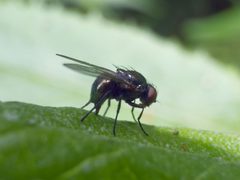
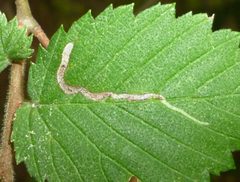
is a large of small flies comprising approximately 2,500 worldwide. are minute to small (0.9–6.5 mm), with distinctive patterns and reduced wing venation. The family derives its from the larval feeding habit: larvae are predominantly leaf miners that feed between the upper and lower of plant leaves, creating visible mines that are often species-specific in shape. Some species are significant agricultural pests, particularly in the Liriomyza, Phytomyza, and Ophiomyia.
Pronunciation
How to pronounce Agromyzidae: /ˌæɡroʊˈmɪzɪˌdiː/
These audio files are automatically generated. While they are not always 100% accurate, they are a good starting point.
Identification
recognized by distinctive pattern: frontal vitta forms contrasting patch different in color and texture from rest of head. Confirmatory characters include: postvertical orbital bristles always present and divergent; ocellar bristles present; 2–8 pairs frontal bristles (lower 1–3 pairs curve inward, remainder backward); vibrissae present (sometimes weak); third antennal segment large, usually rounded with swollen, non- ; wing with single costal break at end of subcosta; lower calypter reduced or absent. Some (all Agromyza spp.) capable of stridulation via file on first abdominal segment and scraper on hind . Larval leaf mines often species-specific in shape and useful for identification. increasingly used due to morphological similarity among species.
Images
Habitat
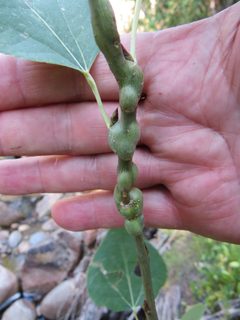
occur in diverse depending on larval plants, including forests, grasslands, agricultural fields, and urban landscapes. Larvae develop within living plant tissues, primarily leaves. Some occur in stems, seeds, roots, or under bark.
Distribution
Worldwide distribution with highest diversity in temperate and tropical regions. Approximately 2,500 described globally. Well-documented from: North America (California contains highest Liriomyza diversity in lower 48 states), South America (74 species recorded from Colombia), Europe, Africa (nine Japanagromyza species), Asia (29 Agromyzinae species in Thailand; diverse fauna in India), and Australasia.
Seasonality
activity patterns vary by and climate. Many species exhibit spring timed to plant —e.g., Phytomyza ilicicola emergence coincides precisely with tender new holly leaf production. Some species have extended or multiple per year. Long imaginal and hibernation is uncommon.
Diet
Larvae are phytophagous, feeding predominantly as leaf miners within plant tissue between leaf epidermal layers. Less frequently as stem miners, stem borers, or in developing seeds. A few produce galls or feed in roots or under bark. specificity varies: some species highly specialized (e.g., Phytomyza ilicicola feeds only on Ilex opaca), others (e.g., Liriomyza and Phytomyza species attack many plant species). feed at leaf puncture wounds made by ovipositor; some species use feeding punctures to obtain sap.
Host Associations
- Ilex opaca - Phytomyza ilicicola, native holly leaf miner, highly specialized
- Populus - Japanagromyza salicifolii
- Salix - Japanagromyza salicifolii
- Crotalaria - Japanagromyza parvula (Fabaceae)
- Vicia faba - on broad bean in Argentina
- Various cultivated plants - Approximately 110 occur on cultivated plants; major pest include Agromyza, Melanagromyza, Ophiomyia, Liriomyza, Napomyza, Phytomyza
Life Cycle
Complete . oval, white or yellowish, deposited into plant tissue via ovipositor. Larva apodous, cylindrical, tapering at both ends, 2–3 mm at final instar; feeds internally creating leaf mine. Tracheal system metapneustic in early first instar, amphipneustic in subsequent stages. Pupa variable in shape from barrel-shaped to elongated; outer surface smooth to wrinkled; color black to brown to yellowish-white. may occur within leaf mine or externally. often precisely timed to plant .
Behavior
Larvae feed internally within plant tissues, creating leaf mines that expand with each ; mine shape often characteristic of . Some species capable of stridulation in stage (Agromyza spp.). Females use elongated ovipositor to pierce plant tissue for -laying and to create feeding punctures for sap consumption.
Ecological Role
Larvae function as phytophagous herbivores, consuming photosynthetic tissue and creating entry points for . Some transmit plant viruses or inoculate pathogenic fungi via feeding wounds. Serve as for diverse complexes (Hymenoptera: Braconidae, Ichneumonidae, Eulophidae, Pteromalidae, etc.), contributing to structure in terrestrial .
Human Relevance
Approximately 10% of are agricultural or ornamental pests. Direct damage includes destruction of leaf tissue, particularly injurious to young plants. Major pest species include , L. sativae, L. trifolii, L. brassicae, Chromatomyia horticola, Ophiomyia simplex (asparagus miner), and Phytomyza ilicicola. Some species are pests in many countries. Used as biocontrol targets for research.
Similar Taxa
- CecidomyiidaeAlso small flies with reduced wing venation and long ; distinguished by presence of reduced wing , often clubbed antennae, and gall-forming or non-leaf-mining larval habits
- ChironomidaeNon-biting midges with aquatic larvae; lack functional mouthparts and have in males, unlike
- MycetophilidaeFungus gnats with similar small size; distinguished by long tibial spines and association with fungal substrates rather than leaf mining
Sources and further reading
- BugGuide
- Wikipedia
- GBIF taxonomy match
- iNaturalist taxon
- NCBI Taxonomy
- Catalogue of Life
- Primary Type List | Entomology Research Museum
- Bug Eric: First Night of Blacklighting
- Bug Eric: April 2024
- The Holly and Ivy - A two part series: This week the holly and the native holly leaf miner, Phytomyza ilicicola — Bug of the Week
- endoparasitoid | Blog
- Bug Eric: November 2023
- FAMILY AGROMYZIDAE
- Generic composition and distributional patterns of Agromyzidae from India (Diptera : Agromyzidae)
- Thailand Agromyzidae (Diptera)—2
- Host Specialization in the World Agromyzidae (Diptera)
- Complejo parasítico (Hymenoptera: Parasitica) de Liriomyza huidobrensis (Diptera: Agromyzidae) en haba Parasitic complex (Hymenoptera: Parasitica) of Liriomyza huidobrensis (Diptera: Agromyzidae) on broad bean
- Halticoptera andriescui Mitroiu (Hym.: Pteromalidae) a new parasitoid of Chromatomyia horticola (Goureau) (Dip.: Agromyzidae)
- Japanagromyza Sasakawa (Diptera: Agromyzidae) of Africa
- The Liriomyza (Agromyzidae: Schizophora: Diptera) of California