
Agromyzinae
Fallén, 1823
mining flies, leaf-miner flies
Genus Guides
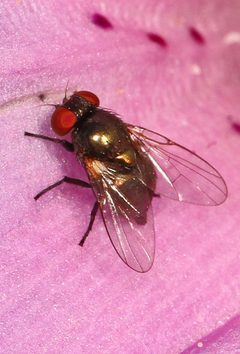
2Agromyzinae is a of small flies within the Agromyzidae, commonly known as mining flies or leaf-miner flies. The subfamily was established by Fallén in 1823 and contains multiple including Agromyza, Japanagromyza, Melanagromyza, Ophiomyia, and Epidermomyia. in this subfamily are best known for their larval habit of feeding within plant tissues, creating distinctive mines in leaves, stems, or other plant parts. The subfamily has a global distribution with documented diversity in Europe, Asia, and other regions, with over 100 species confirmed from Ukraine alone and 13 species recorded from southern India.
Pronunciation
How to pronounce Agromyzinae: /ˌæɡrəˈmɪzɪniː/
These audio files are automatically generated. While they are not always 100% accurate, they are a good starting point.
Images
Habitat
Found across varied landscapes including lowland and montane regions; altitudinal variation in distribution has been documented in southern India. Specific microhabitat associations are determined by plant availability.
Distribution
Documented from Europe (including Ukrainian Transcarpathia), southern India, and other regions globally. Ukraine has 105 confirmed . Southern India records 13 species from 5 .
Behavior
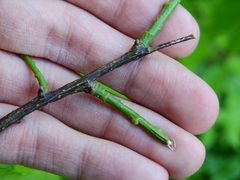
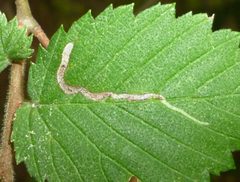
Larvae are leaf-miners, feeding internally within plant tissues and creating visible mines in leaves, stems, or other plant parts. This endophytic feeding habit is the defining behavioral characteristic of the group.
More Details
Taxonomic diversity
Southern India: 13 from 5 (1 Agromyza, 2 Japanagromyza, 4 Melanagromyza, 1 Ophiomyia, 5 Epidermomyia). Ukraine: 105 confirmed species including recent additions of Melanagromyza nartshukae, Ophiomyia pseudonasuta, Agromyza anderssoni, A. hendeli, and A. lucida.
Parasite associations
of Agromyzinae have been documented, though specific -parasite relationships require further study.