
Phytomyza
Fallén, 1810
Species Guides
75- Phytomyza aconiti(larkspur leafminer)
- Phytomyza actaeivora
- Phytomyza aesculi
- Phytomyza agromyzina
- Phytomyza aldrichi
- Phytomyza anemonivora
- Phytomyza angelicae
- Phytomyza aquilegiana(columbine leafminer)
- Phytomyza aquilegivora(columbine leafminer)
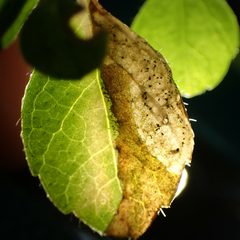
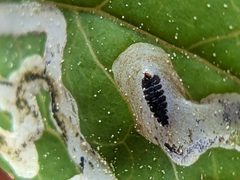
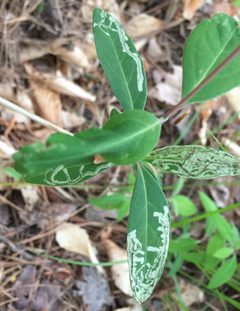
Phytomyza is a of leaf-mining flies in the Agromyzidae, comprising at least 170 described . Larvae develop as miners within living plant leaves, creating distinctive serpentine or blotchy galleries between the upper and lower . are small, typically black or dark-colored flies resembling tiny houseflies. The genus exhibits high specificity, with individual species often restricted to particular plant genera or families.
Pronunciation
How to pronounce Phytomyza: /faɪtoʊˈmaɪzə/
These audio files are automatically generated. While they are not always 100% accurate, they are a good starting point.
Identification
Identification to level requires examination of genitalia and chaetotaxy; larvae are recognized by their yellow coloration and the characteristic serpentine or blotch mines they create within leaves. Mines typically end with a small circular or slit-like exit hole cut by the larva before . Adults lack distinctive wing patterns common in some related agromyzid .
Images
Habitat
Associated with the plants of constituent , ranging from woodland and forest understories to agricultural and horticultural settings. Specific microhabitat depends entirely on the larval host plant requirements of individual species.
Distribution
distribution with records from Europe, Asia, Africa, Australasia, and North America. Individual ranges vary widely from restricted endemics to widespread pests.
Seasonality
is typically synchronized with the availability of tender new plant foliage in spring. Larval feeding may continue through winter in evergreen hosts, with development pausing during cold periods and resuming on warm days. generally occurs in spring.
Life Cycle
Holometabolous development with , larva, pupa, and stages. Females use a sharp ovipositor to pierce leaf surfaces and deposit eggs into soft mesophyll tissue. Larvae feed internally as leaf miners, creating galleries that expand as they grow and . Final instar larvae cut an exit window in the leaf before pupating, either within the leaf or in soil. Adult timing is critical; females must encounter susceptible young leaves to successfully oviposit.
Behavior
Larvae exhibit mining , consuming parenchyma between leaf surfaces while avoiding major vascular bundles. Some create linear mines with characteristic branching and turning patterns that may function to reduce detection by . females of some species additionally use the ovipositor to pierce leaves and feed on exuded sap, causing stippling damage that may curl or pucker leaves.
Ecological Role
Larvae function as herbivores, with individual typically restricted to one or few plant . Serve as prey for diverse hymenopteran , including species in Eulophidae, Braconidae, and others. Some species are significant economic pests of ornamental and agricultural plants.
Human Relevance
Several are economically important pests. Phytomyza ilicicola (native holly leafminer) and P. ilicis damage ornamental holly foliage, reducing aesthetic and commercial value of cut branches. P. gymnostoma attacks Allium crops (onions, leeks). P. atricornis (syn. Chromatomyia horticola) is a pest of beans, peas, brassicas, and chrysanthemums. P. syngenesiae affects artichokes. Management is complicated by the protected larval within leaf tissue, limiting chemical control options.
Similar Taxa
- ChromatomyiaHistorically congeneric; separated based on and larval mine characteristics. Some remain taxonomically contentious.
- LiriomyzaSimilar leaf-mining agromyzids, but typically create more linear mines and often have distinctive yellow markings on ; distinguished by wing venation and genitalia.
Sources and further reading
- BugGuide
- Wikipedia
- GBIF taxonomy match
- iNaturalist taxon
- NCBI Taxonomy
- Catalogue of Life
- The Holly and Ivy - A two part series: This week the holly and the native holly leaf miner, Phytomyza ilicicola — Bug of the Week
- Deck the halls with boughs of holly…and the Native holly leafminer, 'Phytomyza ilicicola', and Holly berry midge, 'Asphondylia ilicicola' — Bug of the Week
- Holly surprise: Native holly leafminer, Phytomyza ilicicola — Bug of the Week
- Holiday miners - Native holly leafminer, Phytomyza ilicicola — Bug of the Week
- Deck the halls with boughs of holly - and maybe some leaves with the native holly leafminer, Phytomyza ilicicola — Bug of the Week
- The Holly and Ivy: A two part series - This week the holly and holly leaf miner - Phytomyza ilicicola — Bug of the Week
- Phytomyza gymnostoma . [Distribution map].
- New data on the biology and distribution of agromyzid fly Phytomyza pastinacae Hendel, 1923 (Diptera: Agromyzidae)
- Seasonal Reproduction and Parasitism of a Leafminer Phytomyza nigra12
- Phytomyza atricornis . [Distribution map].
- Mining pattern of the honeysuckle leaf‐miner Phytomyza lonicerae
- Species and Cultivar Influences on Infestation by and Parasitism of a Columbine Leafminer (Phytomyza aquilegivora Spencer)
- Influence of Methyl and Ethyl Parathion on Parasitoids of Phytomyza syngenesiae (Diptera: Agromyzidae) in Artichokes
- The Holly Leaf-miner (Phytomyza ilicis, Curt.) and its Parasites
- Host-handling behavior of the parasitoid,Diglyphus minoeus [Hym.: Eulophidae], parasitizing the honeysuckle leaf-miner,Phytomyza lonicerae [Dipt.: Agromyzidae]
- Parthenogenetic Reproduction in Phytomyza plantaginis R.-D., the Second Reported Case in the Family Agromyzidae (Diptera)