
Liriomyza
Mik, 1894
Liriomyza leaf-mining flies
Species Guides
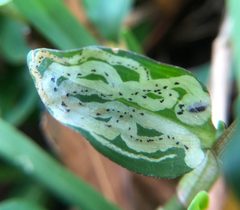
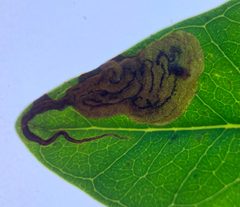
46Liriomyza is a of leaf-mining flies in the Agromyzidae comprising at least 410 described . The genus is distributed worldwide with particularly notable diversity in the Neotropical region. Larvae feed internally within plant leaves, creating distinctive serpentine or blotch mines that impair . Several species are significant agricultural pests, including the (L. huidobrensis) and vegetable leafminer (L. sativae), which have become in multiple continents. The genus exhibits considerable variation in plant specificity, with some species highly and others restricted to particular plant families.
Pronunciation
How to pronounce Liriomyza: //ˌlaɪri.ˈɒmɪzə//
These audio files are automatically generated. While they are not always 100% accurate, they are a good starting point.
Identification
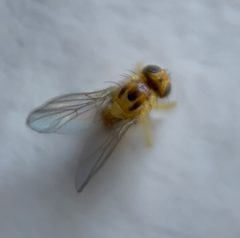
are small flies (typically 1.5–2.5 mm) with yellow and black coloration, reduced wing venation characteristic of Agromyzidae, and a rounded with large . Identification to level requires examination of male genitalia and female ovipositor structure. Larvae are legless, pale maggots found within leaf mines; the shape and pattern of mines (serpentine versus blotch) can provide preliminary clues to species identity. are typically formed within the mine or in soil. Distinguished from related agromyzid by specific configurations of the orbital setulae, costal wing break, and male terminalia.
Images
Habitat
Diverse terrestrial wherever suitable plants occur; occupy agricultural fields, gardens, natural vegetation, and disturbed habitats. Specific microhabitat depends on host plant distribution. Some species are restricted to highland elevations (e.g., L. huidobrensis in Guatemala above 1,000 meters), while others occupy broader altitudinal ranges.
Distribution
Worldwide distribution with records from North America, Central America, South America, Europe, Africa, and Asia. The (L. huidobrensis) originated in South America and has spread to Central America, Europe, Africa, and Asia. The vegetable leafminer (L. sativae) has a broader tropical distribution. Specific distribution varies considerably by ; some are restricted to particular regions while others have become through human-mediated transport.
Seasonality
Multiple per year typical for most in temperate and tropical regions. Activity patterns closely tied to plant availability and local climate. In temperate regions, typically occurs as in soil or leaf litter; resumes with warming temperatures in spring. In tropical regions, continuous breeding occurs where host plants and temperatures permit.
Diet
Leaf tissue; larvae are internal feeders that mine through the mesophyll of plant leaves between the upper and lower . Feeding creates visible tunnels or mines that disrupt . Specific feeding location varies: some mine leaf blades, others preferentially mine primary of large mature leaves.
Life Cycle
Complete with , larval, pupal, and stages. Females oviposit into leaf tissue using a piercing ovipositor. Larvae develop through three instars within the leaf mine. occurs either within the mine ( remaining in situ) or after larval from the leaf; some pupate in soil. Duration of developmental stages varies with temperature and plant quality. Multiple per year typical.
Behavior
Leaf-mining is the defining characteristic; larvae create distinctive serpentine or blotch mines visible on leaf surfaces. Some exhibit plant preferences for oviposition and larval development. are active fliers, typically remaining close to host plant stands. Mating occurs on or near host plants.
Ecological Role
Herbivores that function as primary consumers in ; leaf mining damage can significantly reduce plant photosynthetic capacity. Serve as for diverse including Braconidae (e.g., Opius ), Eulophidae (e.g., Diglyphus isaea), and Pteromalidae. Parasitoid complexes can reach 13 or more species on individual host , with rates varying by host plant and locality.
Human Relevance
Several are major agricultural pests causing economic damage to vegetable, ornamental, and field crops. The (L. huidobrensis) and vegetable leafminer (L. sativae) are particularly damaging to peas, beans, potatoes, spinach, and other crops. have spread globally through trade in plant material. Management relies on using , cultural practices, and selective use. Accurate species identification is critical for effective management due to differences in range and insecticide susceptibility.
Similar Taxa
- PhytomyzaAnother large of leaf-mining Agromyzidae; distinguished by differences in wing venation, particularly the costal break structure, and male genitalia . Phytomyza often create linear mines but may show blotch phases, requiring careful examination for separation.
- ChromatomyiaSimilar leaf-mining habit and ; distinguished by details of the chaetotaxy, particularly the arrangement of orbital setulae, and differences in larval structure.
Sources and further reading
- BugGuide
- Wikipedia
- GBIF taxonomy match
- iNaturalist taxon
- NCBI Taxonomy
- Catalogue of Life
- Liriomyza miserabilis Lonsdale lateral | Entomology Research Museum
- Primary Type List | Entomology Research Museum
- Publications | Entomology Research Museum
- Predicting Shifts in the Range of Invasive Insect Species in the Face of Climate Change
- A Case for Preservation: Maintaining Insect Collections in Developing Countries
- Biology Of Liriomyza
- Figures 48–51 from: Boucher S, Nishida K (2014) Description and biology of two new species of Neotropical Liriomyza Mik (Diptera, Agromyzidae), mining leaves of Bocconia (Papaveraceae). ZooKeys 369: 79-97. https://doi.org/10.3897/zookeys.369.6168
- Host Plant-Related Parasitism and Host Feeding Activities of Diglyphus isaea (Hymenoptera: Eulophidae) on Liriomyza huidobrensis, Liriomyza sativae, and Liriomyza trifolii (Diptera: Agromyzidae)
- On seasonal inoculative biological control : [governing Liriomyza populations by parasitoids]
- Complejo parasítico (Hymenoptera: Parasitica) de Liriomyza huidobrensis (Diptera: Agromyzidae) en haba Parasitic complex (Hymenoptera: Parasitica) of Liriomyza huidobrensis (Diptera: Agromyzidae) on broad bean
- Description of a nomen nudum species of Liriomyza Mik and the first record of Liriomyza blechi Spencer from Brazil (Insecta: Diptera: Agromyzidae)
- What Limits the Distribution of Liriomyza huidobrensis and Its Congener Liriomyza sativae in Their Native Niche: When Temperature and Competition Affect Species’ Distribution Range in Guatemala