
Leucoptera
Hübner, 1825
leaf miners, white-winged moths
Species Guides
4- Leucoptera erythrinella
- Leucoptera laburnella(Laburnum Leafminer)
- Leucoptera pachystimella
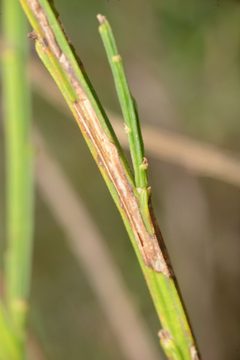
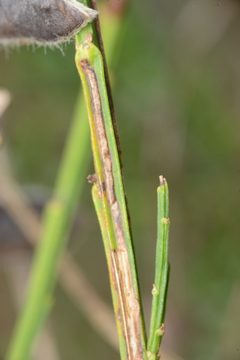
- Leucoptera spartifoliella(Scotch broom twig miner)
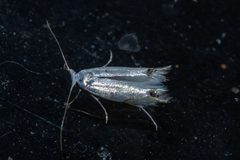
Leucoptera is a of small in the Lyonetiidae, commonly known as . The genus includes several economically important agricultural pests, most notably (the ) and Leucoptera malifoliella (the apple leaf miner). Larvae feed internally within leaf tissue, creating distinctive serpentine or blotch mines that reduce photosynthetic capacity and can cause significant crop losses. The genus has a global distribution with associated with diverse plants including coffee, apple, and other crops.
Pronunciation
How to pronounce Leucoptera: /luː.kɒpˈtɛr.ə/
These audio files are automatically generated. While they are not always 100% accurate, they are a good starting point.
Images
Habitat
Associated with plants in agricultural and natural settings; larvae develop within leaf tissue of coffee (Coffea spp.), apple (Malus spp.), and other plants. occur in vegetation near host plants.
Distribution
Global distribution including coffee-growing regions of the Neotropics, Africa (Kilimanjaro and Usambara districts of Tanzania), Asia (China), and Australia.
Seasonality
vary by region and plant. In Brazilian Cerrado coffee systems, highest densities occur between July and October during coffee fruiting and flowering phases. Development occurs between 16.59°C and 34.8°C with optimum at 26.81°C.
Diet
Larvae are internal feeding on mesophyll tissue of plant leaves. Specific host associations include Coffea spp. (coffee), Malus spp. (apple), and other plants.
Host Associations
- Coffea - larval plant
- Malus - larval plantapple Leucoptera malifoliella
Life Cycle
Complete with , larval, pupal, and stages. Larvae develop inside leaf mines, feeding on internal leaf tissue. occurs within the mine or in soil. Specific developmental parameters documented for L. coffeella: minimum temperature 16.59°C, optimum 26.81°C, maximum 34.8°C.
Behavior
Larvae create serpentine or blotch mines within leaf tissue, visible as pale trails or spots on leaf surfaces. are small, white-winged . Some show patterns in agricultural fields, with often beginning at crop edges.
Ecological Role
Agricultural pest causing significant yield reductions; high densities can decrease coffee productivity by 50-87%. Serves as for including miracine wasps (Braconidae: Miracinae) such as Mirax insularis and Centistidea striata, which are used in programs.
Human Relevance
Major economic pest of coffee and apple crops. is a key pest of Arabica coffee in the Neotropics, causing substantial yield losses. Management relies on , using , and agriculture approaches including management zones to reduce use. Subject of genomic research for RNAi-based development.
Similar Taxa
- LyonetiaBoth are in Lyonetiidae and are leaf-mining ; Leucoptera typically have more reduced wing venation and different genitalia structure
- PhyllonorycterBoth are leaf-mining Lepidoptera, but Phyllonorycter is in Gracillariidae and typically creates tentiform mines on the underside of leaves rather than serpentine mines
Sources and further reading
- BugGuide
- Wikipedia
- iNaturalist taxon
- NCBI Taxonomy
- Catalogue of Life
- Inspiring a new generation of taxonomists | Blog
- The Leucoptera Leaf Miners of Coffee on Kilimanjaro. I.—Leucoptera coffeella, Guér
- Establishment of a new breeding colony of Gould’s petrel (Pterodroma leucoptera leucoptera) through the creation of artificial nesting habitat and the translocation of nestlings
- Eradication of European rabbits (Oryctolagus cuniculus) from Cabbage Tree Island, NSW, Australia, to protect the breeding habitat of Gould's petrel (Pterodroma leucoptera leucoptera)
- Seasonal variation, spatial distribution and decision–making system to control of the Leucoptera coffeella in coffee arabica fields
- A draft genome assembly of the agricultural pest Leucoptera coffeella and analysis of its dsRNA processing machinery is a key step toward RNAi-based biopesticides in Lepidoptera.
- Population Dynamics and Biological Control of Leucoptera malifoliella in Apple Orchards in Hebei Province, China.
- Enhanced Control of Leucoptera coffeella on Coffee Leaves Using Cyantraniliprole-Hybrid Polymeric Membranes.
- Complete mitochondrial genome sequence of Leucoptera malifoliella (Lepidoptera: Lyonetiidae).