
Leucoptera laburnella
(Stainton, 1851)
Laburnum Leafminer, laburnum leaf miner
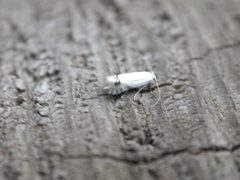
Leucoptera laburnella is a small in the Lyonetiidae, commonly known as the laburnum . The larvae are leaf miners that feed internally on leaves of various Fabaceae , particularly Laburnum. have distinctive white forewings marked with yellow and dark fuscous patterns. The species is native to Europe and has been introduced to North America.
Pronunciation
How to pronounce Leucoptera laburnella: /luːˈkɒptərə ˌlæbɜːrˈnɛlə/
These audio files are automatically generated. While they are not always 100% accurate, they are a good starting point.
Identification
Distinguished from other Leucoptera by the specific wing pattern: the combination of the oblique ochreous-yellow bar, the vertical costal spot before apex, and the distinctive violet-golden-metallic post-tornal spot. The association with Laburnum and related Fabaceae plants provides additional identification context. Larval identification requires examination of leaf mines on known host plants.
Images
Habitat
Associated with containing its Fabaceae plants, particularly laburnum (Laburnum anagyroides, L. alpinum) and related . Found in gardens, parks, woodland edges, and other settings where host plants occur.
Distribution
Native to most of Europe, excluding the European part of Russia and the southern Balkan Peninsula. Introduced and established in North America. GBIF records confirm presence in Belgium.
Diet
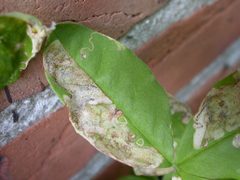
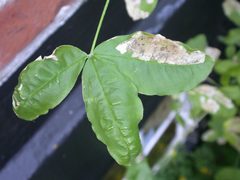
Larvae feed on leaves of Fabaceae : Astragalus, Chamaecytisus supinus, Genista tinctoria, Laburnocytisus adamii, Laburnum alpinum, Laburnum anagyroides, Lupinus polyphyllus, and Petteria ramentacea. They mine the leaves, feeding internally between the upper and lower leaf surfaces.
Host Associations
- Laburnum anagyroides - larval food plantprimary , source
- Laburnum alpinum - larval food plant
- Laburnocytisus adamii - larval food plant
- Genista tinctoria - larval food plant
- Chamaecytisus supinus - larval food plant
- Lupinus polyphyllus - larval food plant
- Astragalus - larval food plant level
- Petteria ramentacea - larval food plant
Life Cycle
Complete with , larval, pupal, and stages. Larvae develop as leaf miners inside plant leaves. Specific timing of not documented in sources.
Behavior
Larvae create leaf mines by feeding between the epidermal layers of plant leaves. are presumably active during daylight hours given the bright wing coloration, though specific activity patterns are not documented.
Ecological Role
As a , larvae may reduce photosynthetic capacity of plants. The serves as host for ; related Leucoptera species (L. coffeella) are known hosts for miracine wasps (Braconidae: Miracinae), suggesting similar parasitoid relationships may occur.
Human Relevance
Considered a minor pest of ornamental laburnum trees in gardens and parks. Leaf mining damage is usually cosmetic rather than seriously harmful to plant health. The has been introduced to North America, presumably through human transport of plants.
Similar Taxa
- Other Leucoptera speciesSimilar size and general wing pattern, but distinguished by specific arrangement and coloration of markings on forewing, particularly the violet-golden-metallic post-tornal spot and the pattern of yellow and dark fuscous bars.
- Other Lyonetiidae leaf minersSimilar larval mining habit on Fabaceae, but wing patterns differ; microscopic examination or plant association may be needed for definitive identification.
More Details
Taxonomic note
Originally described as Cemiostoma laburnella by Stainton in 1851, later transferred to Leucoptera. The placement in Cemiostominae reflects ongoing taxonomic refinement within Lyonetiidae.
Parasitoid biology
While not explicitly documented for L. laburnella, the congeneric () is a known for miracine wasps including Mirax insularis and Centistidea striata, which are used in . This suggests L. laburnella may similarly support .