
Lyonetia
Hübner, 1825
Species Guides
2- Lyonetia latistrigella
- Lyonetia prunifoliella(Blackthorn Blister Moth)
Lyonetia is a of in the Lyonetiidae. in this genus are leaf miners, with larvae that feed internally between the upper and lower of leaves. The genus includes species with broad geographic distributions across northern Europe, northern Asia, and North America. One species, Lyonetia ledi, has been documented as a glacial relict in the Swiss Alps, where it has shifted to feeding on the toxic alpine rose (Rhododendron ferrugineum).
Pronunciation
How to pronounce Lyonetia: //laɪˈɒnɪtiə//
These audio files are automatically generated. While they are not always 100% accurate, they are a good starting point.
Identification
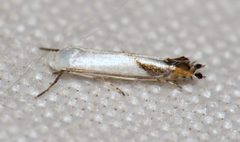
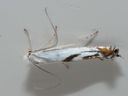
are small with distinctive wing patterns. Larvae create characteristic leaf mines: a long corridor that terminates in a large, square-like blotch. is deposited within the mine rather than expelled. occurs in a silken hammock or cocoon constructed on the underside of leaves or nearby foliage. Specific identification to level requires examination of genitalia and .
Images
Habitat
vary by . Lyonetia ledi occurs in northern Europe in raised bogs with swamp porst (Andromeda polifolia) and bog myrtle (Myrica gale). The relict Alpine inhabits steep, north-facing spruce-larch-pine forests at approximately 1,800 m elevation, where heavy winter snow cover and summer shade prevent plant flowering.
Distribution
Widespread in northern Europe, northern Asia, and North America. Specific distribution records include Denmark, Norway, Sweden, and Vermont, USA. A disjunct relict of Lyonetia ledi occurs in the Lower Engadine, Switzerland, separated by more than 400 km from the nearest known populations in Austria and the Czech Republic.
Seasonality
are likely and fly late in the year, probably hibernating in the adult stage. Larval activity occurs during summer months; in the Alps, caterpillars have been observed in July and August.
Diet
Larvae are specialized leaf miners. Lyonetia ledi feeds on swamp porst (Andromeda polifolia) and bog myrtle (Myrica gale) in northern Europe. The Alpine relict has been observed feeding exclusively on rust-red alpine rose (Rhododendron ferrugineum), a highly toxic plant avoided by most herbivores.
Host Associations
- Rhododendron ferrugineum - plantAlpine relict only; toxic alpine rose
- Andromeda polifolia - plantswamp porst; primary in northern Europe
- Myrica gale - plantbog myrtle; in northern Europe
Life Cycle
are laid on plant leaves. Larvae hatch and immediately burrow through the upper leaf , feeding internally between the leaf surfaces for their entire development. The mine begins as a long corridor and expands into a large blotch. accumulates within the mine. Final instar larvae exit the mine and construct a silken hammock or cocoon on the underside of a leaf or nearby foliage for . emerge after approximately 10 days under laboratory conditions.
Behavior
Larvae are endophytic leaf miners, feeding protected between intact leaf layers. This shields them from including birds, spiders, and predatory insects, as well as adverse weather. are presumed .
Ecological Role
As specialized herbivores, in this exert on their plants. The Alpine of Lyonetia ledi represents a rare example of a herbivore exploiting a highly toxic plant that is otherwise avoided by insect larvae, potentially filling an unoccupied .
Human Relevance
The discovery of Lyonetia ledi on alpine rose highlighted gaps in 250 years of Alpine lepidopteran research. The has become a focus of conservation concern due to its restricted range and vulnerability to climate change. Alpine rose is a culturally significant and popular ornamental plant in alpine regions.
Similar Taxa
- Other LyonetiidaeShare leaf-mining habit but differ in plant specificity and mine ; precise identification requires genitalia examination and analysis
- PhyllonorycterAlso leaf-mining but typically create tentiform mines on the lower leaf surface rather than epidermal blotch mines
More Details
Glacial relict hypothesis
The disjunct Swiss of Lyonetia ledi is hypothesized to represent a relict from the last glacial maximum approximately 22,000 years ago. During cold phases, swamp porst and alpine rose shared perialpine lowland . Post-glacial warming separated the plant distributions, and the population either shifted preference or was isolated with the alpine rose in the Alps.
Conservation status
The Alpine is considered at risk from climate change due to its restricted range, specific microhabitat requirements (north-facing slopes with persistent snow cover), and dependence on a single plant in that region.