
Lyonetiinae
Stainton, 1854
Genus Guides
1Lyonetiinae is a of small in the Lyonetiidae, within the superfamily Yponomeutoidea. Members are characterized by their diminutive size and leaf-mining larval habits. The subfamily includes such as Lyonetia and Phrixe. These moths are found across temperate and tropical regions worldwide.
Pronunciation
How to pronounce Lyonetiinae: //ˌlaɪəˈniːtiaɪniː//
These audio files are automatically generated. While they are not always 100% accurate, they are a good starting point.
Identification
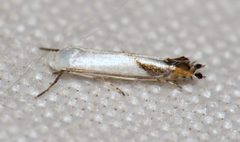
are small with wingspans typically under 15 mm. Forewings are narrow and often exhibit metallic or iridescent markings. Larvae are minute, flattened, and adapted for creating serpentine or blotch mines in leaves. Distinguished from other Yponomeutoidea by reduced wing venation and specific genitalic structures visible under magnification.
Images
Habitat
Associated with woody and herbaceous plants in forests, woodlands, gardens, and agricultural settings. Larvae require living leaf tissue for mining development.
Distribution
distribution with records from North America, Europe, Asia, Africa, and Australia. Highest diversity in temperate regions of the Northern Hemisphere.
Seasonality
activity varies by latitude; generally active during warmer months in temperate zones, with multiple possible in tropical regions.
Diet
Larvae feed internally on leaf mesophyll, creating mines. Specific plant associations vary by and .
Life Cycle
Complete with , larva, pupa, and stages. Larvae are leaf miners; occurs within the mine or in a silken cocoon on the leaf surface or ground.
Behavior
Larvae are sedentary leaf miners, feeding between leaf epidermal layers. are generally and may be attracted to light.
Ecological Role
Leaf miners influence leaf physiology and may affect plant growth. They serve as prey for and other natural enemies.
Human Relevance
Some are minor pests of fruit trees and ornamental plants. Lyonetia clerkella (apple ) has been recorded causing damage in apple orchards.
Similar Taxa
- YponomeutinaeAlso small in Yponomeutoidea, but larvae are web-forming external feeders rather than leaf miners, and often have more pronounced wing spotting patterns.
- BucculatricidaeLarvae are also leaf miners, but Bucculatricidae have more robust body structure and larvae with distinct on ; molecular data support separate status.
More Details
Taxonomic History
Lyonetiinae was established by Stainton in 1854. The group has undergone various rearrangements, with some former members transferred to the Cemiostominae (now often treated as a separate Cemiostomidae or subfamily within Lyonetiidae depending on classification system used).