
Melanagromyza
Hendel, 1920
Species Guides
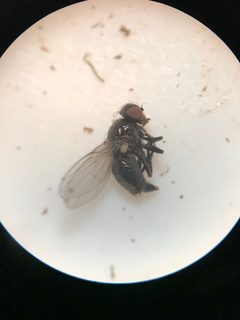
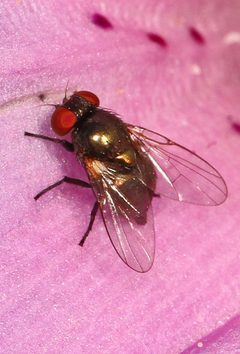
11Melanagromyza is a of leaf-miner flies in the Agromyzidae, established by Hendel in 1920. The genus has distribution and contains numerous , many of which are significant agricultural pests. Several species, particularly Melanagromyza sojae (soybean stem fly) and Melanagromyza obtusa (pigeon pea fly), cause substantial economic damage to legume crops through larval mining of stems, roots, and petioles. The genus has been the focus of research, with multiple species identified as potential natural enemies.
Pronunciation
How to pronounce Melanagromyza: /mɛˌlænoʊˌɡroʊˈmaɪzə/
These audio files are automatically generated. While they are not always 100% accurate, they are a good starting point.
Identification
-level identification within Melanagromyza requires examination of male genitalia and detailed morphological study. The can be distinguished from other Agromyzidae by features of the structure and wing venation, though specific diagnostic characters vary among species. flies are typically small with dark coloration, often showing metallic green or bronze reflections.
Images
Habitat
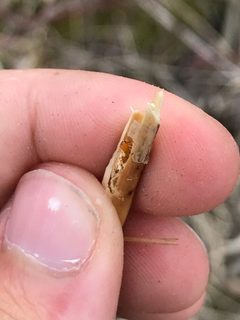
Agricultural and agroecosystem settings, particularly fields cultivated with leguminous plants. Larvae develop internally within plant tissues including stems, taproots, and petioles.
Distribution
. occur across multiple continents including Asia (India, China, Japan, Southeast Asia), Africa (Egypt, Libya, South Africa), Europe (Russia, Ukraine, Malta), North America (USA), Central America and Caribbean (Dominican Republic, Haiti, Puerto Rico), South America (Argentina, Brazil, Bolivia, Paraguay), and Oceania (Australia, Papua New Guinea, Pacific islands).
Diet
Larvae feed internally on plant tissues; specific feeding habits vary by . Melanagromyza sojae larvae mine soybean stems, taproots, and petioles. Melanagromyza obtusa larvae feed on pigeon pea, mung bean, and cowpea. Melanagromyza dolichostigma has been reported as a root miner in soybean.
Host Associations
- Glycine max - soybean; primary for M. sojae and M. dolichostigma
- Cajanus cajan - pigeon pea; primary for M. obtusa
- Vigna radiata - mung bean; for M. obtusa
- Vigna unguiculata - cowpea; for M. obtusa
Life Cycle
Complete with , larval, pupal, and stages. Larvae are internal feeders within plant stems, roots, or petioles. typically occurs within the plant tissue or in soil. Specific developmental durations and voltinism vary by and climatic region.
Behavior
Larvae exhibit stem-mining or root-mining , feeding internally within plant vascular tissues. are not known to cause direct damage. Some show simultaneous by multiple species.
Ecological Role
Agricultural pests of leguminous crops, causing yield reduction through larval mining damage. Serve as for (Hymenoptera: Pteromalidae, Eulophidae), contributing to local dynamics in agroecosystems.
Human Relevance
Significant economic impact as pests of major food and forage crops. Melanagromyza sojae (soybean stem fly) and M. obtusa (pigeon pea fly) are subject to management efforts including application and research. attacking these flies have been investigated as biocontrol agents, with some proposed for implementation in programs.
Similar Taxa
- OphiomyiaAnother of Agromyzidae with stem-mining larvae; distinguished by structure and larval feeding patterns
- AgromyzaRelated in Agromyzidae with leaf-mining rather than stem-mining larvae; differs in larval and
More Details
Notable species
Melanagromyza sojae Zehntner, 1900 (soybean stem fly) is a major pest of soybean across multiple continents. Melanagromyza obtusa (Malloch) (pigeon pea fly) causes severe damage to pigeon pea crops in tropical regions, with reported losses up to 76% in some localities. Melanagromyza dolichostigma is recognized as a soybean root miner.
Biological control research
Multiple have been documented attacking Melanagromyza species, including Pediobius cajanus (Eulophidae) on M. obtusa in the Dominican Republic, and Syntomopus parisii and Leptomeraporus sp. (Pteromalidae) on M. sojae in Brazil. These natural enemies have been proposed as biocontrol agents due to their higher rates compared to previously known enemies.
Sources and further reading
- BugGuide
- Wikipedia
- GBIF taxonomy match
- iNaturalist taxon
- NCBI Taxonomy
- Catalogue of Life
- agriculture | Blog - Part 2
- biocontrol | Blog - Part 2
- parasitoid | Blog
- Uncategorized | Blog - Part 10
- Melanagromyza dolichostigma (miner, soybean root)
- Melanagromyza dolichostigma (miner, soybean root)
- Syntomopus parisii and Leptomeraporus sp. parasitizing Melanagromyza sojae in Brazil
- Melanagromyza obtusa . [Distribution map].
- Melanagromyza sojae (Zehntner). [Distribution map].
- Impact of planting dates on yield and resistance of soybean varieties to soybean stem fly (Melanagromyza sojae) in Egypt.