
Melanagromyza undescribed-blephilia-stem-borer
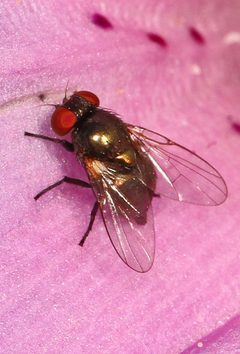
An undescribed species in the Melanagromyza, a group of stem-boring flies in the Agromyzidae. The informal name indicates this develops as a stem borer in plants of the genus Blephilia, a group of mint-family herbs native to North America. As an undescribed species, it lacks formal scientific description and has not been assigned a species epithet. The genus Melanagromyza contains numerous economically significant agricultural pests, though this particular species appears to be associated with wild plants rather than cultivated crops.
Pronunciation
How to pronounce Melanagromyza undescribed-blephilia-stem-borer: //ˌmɛləːnəɡrəˈmaɪzə ˌʌndɪsˈkraɪbd ˈblɛfɪliə stɛm ˈbɔːrər//
These audio files are automatically generated. While they are not always 100% accurate, they are a good starting point.
Images
Habitat
Associated with Blephilia plants, which are woodland herbs of the mint (Lamiaceae) native to eastern and central North America. Blephilia typically occur in moist to dry forests, woodland edges, and rocky slopes. The fly's larval is within the stems of these plants.
Distribution
Range corresponds to that of Blephilia , which occur in eastern and central North America from Ontario and Quebec south to Florida and west to Texas and Missouri. Specific distribution records for this undescribed fly are not formally documented.
Diet
Larval stage feeds internally within stems of Blephilia . feeding habits are not documented.
Host Associations
- Blephilia - larval Stem-boring development in plants of this
Life Cycle
Typical of agromyzid stem borers: deposited in plant stems, larvae feed internally creating galleries, occurs within the stem or in soil. Specific details for this undescribed species are not documented.
Behavior
Larvae are endophagous stem borers, developing concealed within plant tissues. likely emerge to mate and oviposit, with limited adult longevity typical of the .
Ecological Role
As a stem borer, contributes to herbivore pressure on Blephilia . May serve as prey for , though specific parasitoid associations are not documented. The ecological impact on plant populations is likely minor given the specialized host association.
Human Relevance
No documented economic importance. Blephilia are not significant agricultural or horticultural crops, and this fly has not been reported as a pest of cultivated plants.
Similar Taxa
- Melanagromyza obtusaAnother Melanagromyza that is a stem borer, but associated with pigeon pea (Cajanus cajan) rather than Blephilia; distinguished by plant association and geographic distribution (pantropical pest vs. North American native)
- Other Melanagromyza speciesMany are agricultural pests of legumes (e.g., soybean, cowpea); this undescribed species is distinguished by its association with non-cultivated Lamiaceae
More Details
Taxonomic status
This is currently undescribed, meaning it has been recognized as distinct by researchers but lacks formal scientific description including a species epithet, designation, and published . The informal name 'undescribed-blephilia-stem-borer' serves as a placeholder for identification purposes.
Research context
Undescribed species in well-known like Melanagromyza are frequently encountered in ecological and agricultural research. Formal description requires detailed morphological study, often including genitalia dissection and comparison with of related , which may be pending.