
Leptomeraporus
Graham, 1957
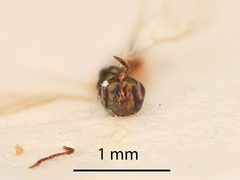
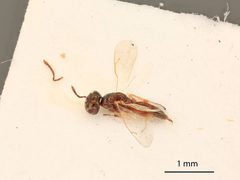
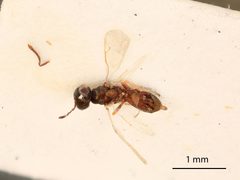
Leptomeraporus is a of chalcidoid wasps in the Pteromalidae. A Brazilian study documented Leptomeraporus sp. as a of the soybean stem miner fly Melanagromyza sojae, marking the first record of this genus in South America. The specimens were identified as likely representing an undescribed species. Members of this genus are known or suspected to act as primary parasitoids of dipteran larvae and may exhibit secondary on other Hymenoptera.
Pronunciation
How to pronounce Leptomeraporus: /lɛptoʊˌmɛrəˈpɔrəs/
These audio files are automatically generated. While they are not always 100% accurate, they are a good starting point.
Identification
Identification to level requires expert examination; the Brazilian specimens were identified by Dr. Steven L. Heydon as probably representing an undescribed species. As a within Pteromalidae, members are small with reduced wing venation typical of the Chalcidoidea, though specific diagnostic features for Leptomeraporus are not detailed in available sources.
Images
Habitat
Agricultural , specifically soybean crops; associated with soybean stems where larvae and pupae develop.
Distribution
First documented in South America from Brazil (municipalities of Tupanciretã and Cruz Alta, Rio Grande do Sul state). GBIF records indicate presence in Sweden (SE).
Host Associations
- Melanagromyza sojae - larvae and pupae; first record in Brazil
Behavior
Simultaneous with Syntomopus parisii has been observed on shared . Secondary parasitism on other Hymenoptera is a possibility based on known records, though this remains speculative.
Ecological Role
Natural enemy of stem miner flies; potential agent for Melanagromyza sojae in soybean production systems.
Human Relevance
Of interest for of the soybean stem miner fly, an agricultural pest. The simultaneous occurrence with Syntomopus parisii suggests potential for integrated complexes in pest management.
Similar Taxa
- SyntomopusSyntomopus parisii was found simultaneously parasitizing the same (Melanagromyza sojae) in Brazil; both are Pteromalidae but belong to different with presumably distinct morphological and ecological traits
More Details
Taxonomic Status
The Brazilian specimens were identified as Leptomeraporus sp., probably representing an undescribed species according to Dr. Steven L. Heydon. This suggests the may contain additional undescribed diversity.