
Pteromalinae
Dalman, 1820
Tribe Guides
2Pteromalinae is a large of within the Pteromalidae, containing hundreds of including economically important such as those in the genus Nasonia. Members are primarily solitary or gregarious ectoparasitoids of holometabolous insects, with documented spanning Lepidoptera, Coleoptera, Diptera, and gall-forming Hymenoptera. The subfamily has a global distribution across all zoogeographical regions.
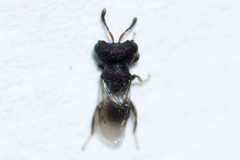
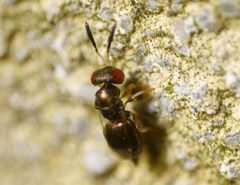
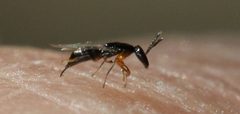
Pronunciation
How to pronounce Pteromalinae: /ˌtɛrəˈmælɪnaɪ/
These audio files are automatically generated. While they are not always 100% accurate, they are a good starting point.
Identification
Identification to level requires microscopic examination of chalcidoid , particularly wing venation and antennal segmentation. Pteromalinae can be distinguished from other Pteromalidae subfamilies by combinations of characters including mesosoma structure, petiole form, and antennal club segmentation. Definitive identification typically requires reference to specialized taxonomic keys for Chalcidoidea.
Images
Habitat
are defined by availability; have been collected from urban parks, university campuses, and natural vegetation stands. Specific collection records include Ulmus pumila stands in Xinjiang, China.
Distribution
Global distribution across all zoogeographical regions including the Palearctic, Nearctic, Neotropical, Afrotropical, Oriental, and Australasian regions. The is represented on every continent except Antarctica.
Host Associations
- Lepidoptera - of larvae and pupaedocumented for Pteromalus
- Coleoptera - of larvae and pupaeincluding Curculionidae such as Orchestes steppensis
- Cynipidae - gall-forming Hymenoptera
- Tenthredinidae - gall-forming Hymenoptera
- Tephritidae - Diptera
Life Cycle
Development as primary ectoparasitoids on larvae and pupae. includes , larval, pupal, and stages with development occurring externally on the host. Some are solitary, producing one offspring per host, while others are gregarious.
Behavior
Ectoparasitoid development on external surfaces of larvae and pupae. Females locate and oviposit on or near suitable hosts. Solitary produce single offspring per host individual.
Ecological Role
Regulating agents of phytophagous insect . By parasitizing larvae and pupae of herbivorous insects, Pteromalinae contribute to natural of potential pest .
Human Relevance
Some , particularly Nasonia, serve as important model organisms for genetic and developmental research due to their haplodiploid sex determination and ease of laboratory rearing. in other genera provide incidental of agricultural and forest pests.
Similar Taxa
- other Pteromalidae subfamiliesdistinguished by combinations of mesosomal structure, petiole , and antennal segmentation patterns; requires microscopic examination and specialized keys
- other Chalcidoidea familiesseparated by wing venation patterns, antennal structure, and tarsal segmentation; Pteromalinae typically show reduced wing venation characteristic of Pteromalidae
More Details
Taxonomic Scope
Pteromalinae contains two major tribes (Otitesellini and Pteromalini) and hundreds of described , making it one of the most diverse within Chalcidoidea. The genus Pteromalus alone contains approximately 500 globally.