
Pediobius
Walker, 1846
Species Guides
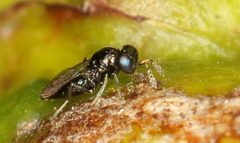
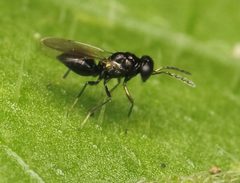
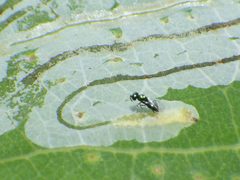
3Pediobius is a of minute chalcid wasps in the Eulophidae, containing over 200 described . The larvae are of various arthropods, primarily insects. Several species have been employed in biological pest control programs, including Pediobius foveolatus against and Pediobius cajanus against the Asian fly in pigeon pea crops.
Pronunciation
How to pronounce Pediobius: /pɛ.diˈoʊ.bi.jəs/
These audio files are automatically generated. While they are not always 100% accurate, they are a good starting point.
Identification
Identification to level requires examination of microscopic morphological features including segmentation, wing venation patterns, and body . The is distinguished from other Eulophidae by a combination of characters including the structure of the propodeum and the arrangement of setae on the mesoscutum. Molecular identification may be necessary for cryptic species.
Images
Distribution
of Pediobius have been recorded across multiple continents. Pediobius cajanus has been documented in the Dominican Republic with potential distribution across Hispaniola and neighboring Caribbean islands. Pediobius foveolatus was released in the mid-Atlantic region of the United States for biocontrol. GBIF records indicate presence in Denmark and Norway.
Host Associations
- Melanagromyza obtusa - Asian fly; Pediobius cajanus is a gregarious endoparasitoid of this pest of pigeon pea crops
- Epilachna varivestis - Mexican bean beetle; Pediobius foveolatus is a released for biocontrol in the mid-Atlantic United States
Ecological Role
As , Pediobius function as natural enemies of various insect pests, contributing to of their . Some species have been evaluated or deployed as agents in agricultural systems.
Human Relevance
Multiple Pediobius have been utilized in biological pest control. Pediobius foveolatus was released decades ago in the mid-Atlantic United States to suppress Mexican bean beetle . Pediobius cajanus has been proposed as a biocontrol agent against the Asian fly (Melanagromyza obtusa), which can destroy up to 76% of pigeon pea crops in some localities. The was found to kill an average of 25% of Asian fly larvae in studied areas, compared to 2% mortality caused by previously known natural enemies.
Similar Taxa
- Other Eulophidae generaSimilar minute size and general body plan; distinguished by specific morphological characters of the propodeum, mesoscutal setal patterns, and structure
More Details
Biocontrol potential
Pediobius cajanus represents the first record of the associated with the Asian fly (Melanagromyza obtusa), an pest of pigeon pea. Authors suggest the may be distributed across the entire island of Hispaniola, neighboring Caribbean islands, and tropical mainland Americas, warranting further investigation for biocontrol implementation.
Sources and further reading
- BugGuide
- Wikipedia
- GBIF taxonomy match
- iNaturalist taxon
- NCBI Taxonomy
- Catalogue of Life
- Bad lady beetles: Mexican bean beetles, Epilachna varivestis — Bug of the Week
- agriculture | Blog - Part 2
- Lady beetles with a taste for beans: Mexican bean beetles, Epilachna varivestis — Bug of the Week
- biocontrol | Blog - Part 2
- parasitoid | Blog
- Latin America | Blog