
Mycetophilidae
Fungus Gnats
Subfamily Guides
6- Eudicraninae
- Gnoristinae(fungus gnats)
- Leiinae(fungus gnats)
- Mycetophilinae(fungus gnats)
- Mycomyinae(fungus gnats)
- Sciophilinae(fungus gnats)
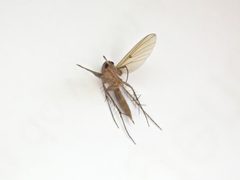
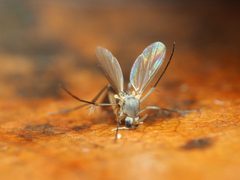
is a of small flies commonly known as fungus gnats, comprising approximately 3,000 described in 150 with the true diversity likely much higher. These nematoceran flies are strongly associated with fungal throughout their , particularly at the larval stage. are characterized by a distinctly humped , well-developed , and often spinose legs. The family is well-represented in fossil deposits dating to the Cretaceous period, indicating an ancient and diverse lineage.
Pronunciation
How to pronounce Mycetophilidae: //ˌmaɪsɪtəˈfɪlɪdiː//
These audio files are automatically generated. While they are not always 100% accurate, they are a good starting point.
Identification
can be distinguished from other small nematoceran flies by the combination of a strongly humped , elongate , and often spinose legs. Differentiation from Sciaridae (dark-winged fungus gnats) is particularly important: typically have that do not meet above the and are generally larger (5–10 mm versus less than 5 mm for Sciaridae). Definitive identification to or requires examination of microscopic characters including wing venation details, chaetotaxy patterns, and male genitalia structure.
Images
Appearance
Small flies, typically 5–10 mm in length. possess a strongly humped that gives them a characteristic profile, well-developed (bases of the legs), and legs that are often spinose. Wing venation patterns and chaetotaxy (bristle arrangement) are important diagnostic features but require microscopic examination. Larvae are translucent, legless worms with a dark sclerotized capsule, measuring 8–10 mm when mature.
Habitat
Primarily associated with damp forested environments where fungi occur. Larvae develop in soil, decaying plant tissue, under bark of decaying trees, and within fungal fruiting bodies. Unlogged forests and old-growth stands are particularly important for maintaining diversity. Some occupy specialized microhabitats such as river gulches, mires, springs, and wetlands. Indoor can establish in potted plants and greenhouses where moist conditions and fungal growth occur.
Distribution
Worldwide distribution with highest diversity in temperate and regions. Fennoscandia represents a major biodiversity hotspot with approximately 1,000 (83% of Europe's total). Well-documented from the Neotropical region (1,145 species), Colombian Andes, Atlantic Forest of Brazil, Scandinavian forests, southern Norway, Sardinia, Juan Fernández Islands, Easter Island, Seychelles, and circum-Antarctic regions. The is also represented in fossil deposits from the Green River Formation (Eocene) and Cretaceous amber, indicating a long evolutionary history.
Seasonality
activity patterns vary by and latitude. Some species are active during winter months and can be observed on snow during warm spells. General adult activity peaks in spring and summer in temperate regions. Indoor may persist year-round under favorable conditions.
Diet
Larvae feed primarily on fungi, including fruiting bodies, spores, and . Some have been recorded feeding on mosses and liverworts. Certain species exhibit partial predatory while remaining associated with fungal . do not feed on plants; some species lack functional mouthparts entirely.
Life Cycle
Females deposit small on moist soil surfaces or in decaying organic matter. Larvae emerge and develop through several instars, feeding on fungal material or, in some , exhibiting predatory . occurs in the substrate. Development time varies with temperature and resource availability. Under indoor conditions, larvae may complete development in 2–3 weeks when substrate is adequate.
Behavior
sometimes form dense swarms in suitable . They frequently gather in large numbers in hiding places such as under tree roots and in cavities. Some are attracted to fungal odors and have been documented as of plants such as Jack-in-the-Pulpit (Arisaema triphyllum), falling into inflorescences and effecting pollination. Approximately a dozen species exhibit , though these are now classified in Keroplatidae by some authorities.
Ecological Role
Larvae function as primary consumers of fungal , contributing to nutrient cycling in forest . They serve as prey for various including predatory fungi-associated insects. Some act as for specific plant species. The serves as an indicator group for forest biodiversity and ecosystem health, showing vulnerability to forestry practices including clearcutting. explosions can lead to significant root damage in agricultural and horticultural settings.
Human Relevance
Larvae are significant pests in mushroom , where they infest fruiting bodies and reduce crop value. In greenhouses and indoor plantings, larvae can damage tender roots and underground shoots when fungal food sources are depleted, causing yellowing, stunted growth, and reduced productivity. Larvae may plant pathogenic fungi and bacteria. are generally harmless nuisance pests that do not bite or transmit . The is important in entomological research as a biodiversity indicator and for studies of forest dynamics.
Similar Taxa
- SciaridaeDark-winged fungus gnats overlap in and ; distinguished by smaller size (typically <5 mm), that meet above the , and generally less robust .
- KeroplatidaeFormerly included within as Keroplatinae; separated based on morphological differences including in some . Taxonomic boundaries remain debated with many sources still treating Keroplatidae as part of Mycetophilidae sensu lato.
- Ditomyiidae, Lygistorrhinidae, Diadocidiidae, RangomaramidaeRelated sometimes included within sensu lato; not universally recognized as distinct families by all taxonomic authorities.
Misconceptions
Often confused with mosquitoes due to small size and delicate appearance, but fungus gnats lack and do not bite humans. The 'fungus gnat' is applied to multiple (, Sciaridae, Keroplatidae), leading to taxonomic confusion. Bioluminescent traditionally associated with Mycetophilidae are now generally classified in Keroplatidae.
More Details
Taxonomic Instability
The boundaries remain in flux, with Keroplatidae, Ditomyiidae, Lygistorrhinidae, Diadocidiidae, and Rangomaramidae variously treated as of or as distinct families depending on the authority. Mycetophilidae sensu lato contains approximately 330 described .
Fossil Record
The is well-represented in amber deposits dating to the Cretaceous period, with some extant documented from these ancient deposits, indicating long-term morphological stability and diversification by at least the Late Cretaceous.
Research Significance
Fennoscandia harbors approximately 100 undescribed species awaiting formal description, with northern mires and forests representing frontier areas for discovery. The group exemplifies how neglected insect can yield substantial new biodiversity knowledge with basic collecting methods.
Sources and further reading
- BugGuide
- Wikipedia
- GBIF taxonomy match
- iNaturalist taxon
- NCBI Taxonomy
- Catalogue of Life
- Chironomidae | Beetles In The Bush
- Diptera | Beetles In The Bush | Page 4
- fungus gnat | Blog
- paleoentomology | Beetles In The Bush
- Bug Eric: City Nature Challenge 2024 Recap
- Bug Eric: Beat The Winter Blues With An Indoor Bug Hunt
- FAMILY MYCETOPHILIDAE
- Phthinia Winnertz (Diptera: Mycetophilidae): new species and records from the Neotropical and Oriental regions