
Lygistorrhinidae
Long-beaked Fungus Gnats
Genus Guides
1- Lygistorrhina(long-beaked fungus gnats)
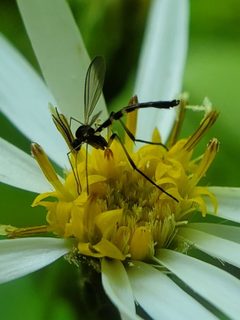
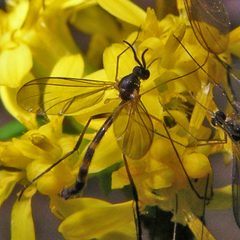
Lygistorrhinidae is a small of flies in the order Diptera, commonly known as long-beaked fungus gnats. The family contains approximately 7 and at least 30 described . These insects are distinguished by their elongated mouthparts and association with fungal . They are relatively poorly studied compared to other fungus gnat families, with limited biological and ecological documentation.
Pronunciation
How to pronounce Lygistorrhinidae: //laɪˌdʒɪstəˈɹaɪnɪˌdiː//
These audio files are automatically generated. While they are not always 100% accurate, they are a good starting point.
Identification
Members of Lygistorrhinidae are characterized by exceptionally elongated (the paired lobes at the tip of the ), forming a distinct 'long beak' structure that gives the its . This proboscis is longer than that of most other fungus gnats. The family can be distinguished from the closely related Mycetophilidae and other Sciaroidea by this exaggerated mouthpart combined with specific wing venation patterns, including reduced branching in the radial sector.
Images
Habitat
in this are found in forested environments, particularly in association with decaying wood and fungal fruiting bodies. Larvae develop in moist, decomposing organic matter rich in fungal growth. are often found in shaded, humid microhabitats within mature forests.
Distribution
The has a disjunct global distribution with records from the Neotropical region (Central and South America), Australasia (including New Zealand and Australia), and parts of Asia. This patchy distribution likely reflects both actual biogeographic patterns and limited sampling effort in many regions.
Ecological Role
Larvae function as decomposers in forest , processing decaying wood and fungal material. The contributes to nutrient cycling in mature forest , though specific quantitative impacts have not been documented.
Similar Taxa
- MycetophilidaeAlso fungus gnats with similar overall body form and preferences, but lack the extremely elongated characteristic of Lygistorrhinidae; structure and wing venation differ.
- KeroplatidaeAnother fungus gnat with overlapping use; distinguished by different larval and mouthpart structure, including less pronounced elongation of feeding appendages.
More Details
Taxonomic history
Lygistorrhinidae has been variously treated as a of Mycetophilidae or as a distinct . Current classification recognizes it as a separate family within the superfamily Sciaroidea based on morphological and molecular evidence, though relationships within this group remain under study.
Research status
The is among the least studied dipteran families, with many known from few specimens and large geographic areas lacking any records. The 84 observations in iNaturalist represent a significant portion of documented occurrences, highlighting both the rarity of encounters and growing citizen science contribution to knowledge of this group.