
Keroplatidae
Predatory Fungus Gnats, Fungus Gnats
Tribe Guides
3- Keroplatini
- Macrocera(predatory fungus gnats)
- Orfeliini
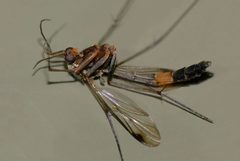
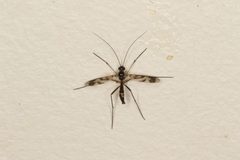
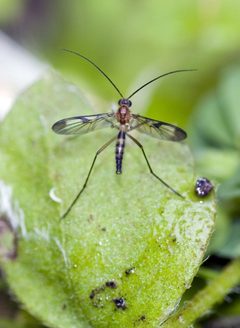
is a of small, delicate flies in the order Diptera, commonly known as predatory fungus gnats. The family comprises approximately 950 described , though true diversity is estimated to be substantially higher. Members are predominantly forest-dwelling insects associated with damp microhabitats where fungi occur. The family is notable for containing three —Arachnocampa, Orfelia, and Keroplatus—with bioluminescent larvae, commonly called "glowworms." Larval varies: some feed on fungi, others are predatory, and many combine both strategies. The fossil record extends to the Cretaceous period.
Pronunciation
How to pronounce Keroplatidae: //ˌkɛrəˈplætɪˌdiː//
These audio files are automatically generated. While they are not always 100% accurate, they are a good starting point.
Identification
can be distinguished from the closely related Mycetophilidae s.str. and Sciaridae by a combination of characters: separated (dichoptic) rather than meeting above the (as in Sciaridae), and generally more elongate . They differ from Bolitophilidae, Diadocidiidae, and Ditomyiidae by subtle characters of wing venation, genitalia structure, and larval . Accurate -level identification typically requires examination of genitalia or larval characters; family boundaries have been revised substantially in recent decades, and many historical records require re-evaluation. Bioluminescent larvae in three (Arachnocampa, Orfelia, Keroplatus) are distinctive but represent a minority of the family's diversity.
Images
Habitat
Primarily forest , especially old-growth and mature forests with high humidity and abundant decaying wood. Strongly associated with damp microhabitats favored by fungi, including rotting logs, leaf litter, and soil rich in organic matter. Frequently recorded from caves and similar sheltered, wet environments such as rock overhangs and cavities. Some occupy more open habitats, but mesic conditions appear essential for most.
Distribution
Worldwide distribution with records from all major biogeographic regions. Documented from North America (including the Florida Keys), Central and South America (17 recorded from Colombia), Europe, Asia (extending to Sakhalin), Australia, and New Zealand. Fossil record extends to the Cretaceous (Barremian) with specimens from Lebanese, Spanish, Burmese, Bezonnais, Taimyr, and Canadian ambers; Eocene fossils known from Baltic and Green River deposits. The bioluminescent genus Arachnocampa is restricted to New Zealand and Australia; Orfelia occurs only in North America; Keroplatus is found in Eurasia.
Seasonality
activity patterns are poorly documented for most . Records from Finland indicate collections during 1997–1998, but specific seasonal timing is not reported. In temperate regions, activity likely peaks during warmer months when humidity is sufficient; cave-dwelling species may show reduced seasonality.
Diet
Larvae exhibit diverse feeding strategies: (consuming fungal and spores), on small , or both. Predatory larvae spin webs using acid secretions to capture prey and kill smaller invertebrates; these webs also trap fungal spores for consumption. of pupae has been observed. feeding habits are poorly known but likely involve nectar or not feeding at all.
Life Cycle
Complete with , larva, pupa, and stages. Larval development occurs in damp, fungus-rich substrates. Larvae of some construct silken webs. occurs within or near larval . Specific developmental durations are unknown for most species.
Behavior
Larvae of predatory spin sticky webs using acid secretions to capture prey. Three (Arachnocampa, Orfelia, Keroplatus) possess bioluminescent larvae that produce blue-green light. In Arachnocampa and Orfelia, functions to lure prey into webs. In Keroplatus, bioluminescence is considered non-functional and possibly , as these larvae feed only on fungal spores. Some larvae cannibalize pupae of their own species. are typically weak fliers and are often collected in or by hand searching in appropriate microhabitats.
Ecological Role
Larvae function as decomposers through and as of small soil and litter . Their role in nutrient cycling in forest is likely significant but quantified only for the most conspicuous . Bioluminescent species serve as notable examples of in arthropods. Some species are indicators of old-growth forest conditions.
Human Relevance
Bioluminescent , particularly Arachnocampa luminosa in New Zealand, are significant ecotourism attractions. The has minor importance as nuisance pests in some contexts. Scientific interest focuses on the of and the unique predatory larval . No major economic importance as agricultural pests or beneficial organisms has been documented.
Similar Taxa
- MycetophilidaeHistorically included many ; distinguished by subtle differences in wing venation and genitalia structure; recent taxonomic revisions have separated the
- SciaridaeSimilar size and preference; distinguished by contiguous meeting above and generally shorter ; often smaller (<5 mm) though size ranges overlap
- BolitophilidaeRecently separated historically included in Mycetophilidae; distinguished by larval and morphological characters requiring expert evaluation
- DiadocidiidaeSmall of fungus gnats with reduced wing venation; distinguished by specific wing reductions and larval characters
- DitomyiidaeAnother segregate from historical Mycetophilidae; distinguished by combination of and larval features
Misconceptions
The "fungus gnats" is applied to multiple (, Mycetophilidae, Sciaridae, and others), causing confusion. Not all Keroplatidae are predatory—larval varies substantially, and some feed primarily on fungi. The three bioluminescent are often assumed to be closely related, but their bioluminescent systems are not homologous and evolved independently.
More Details
Taxonomic History
The has undergone substantial revision, with many formerly placed in Mycetophilidae now assigned to . The Lygistorrhininae (long-beaked fungus gnats) was formerly treated as family Lygistorrhinidae but is now included in Keroplatidae.
Fossil Record
Oldest named member is Lebanognoriste from Barremian-aged Lebanese amber. Cretaceous records also known from Spanish, Burmese, Bezonnais, Taimyr, and Canadian ambers. Eocene fossils include Baltic amber specimens of Robsonomyia and Green River Formation material.
Bioluminescence Convergence
The three bioluminescent represent independent evolutionary origins of the trait: Arachnocampa (Australasia), Orfelia (North America), and Keroplatus (Eurasia). This provides an important study system for understanding of biochemical .
Sources and further reading
- BugGuide
- Wikipedia
- GBIF taxonomy match
- iNaturalist taxon
- NCBI Taxonomy
- Catalogue of Life
- An elegant Eocene fly | Beetles In The Bush
- A new species of Chetoneura Colless from Borneo (Diptera: Keroplatidae)
- New Distributional Records for Diptera (Ceratopogonidae, Keroplatidae, Drosophilidae) from the Florida Keys
- Fungus gnats (Diptera: Bolitophilidae, Diadocidiidae, Keroplatidae and Mycetophilidae) new to Finland
- Generic diversity of the predaceous fungus gnats (Diptera: Keroplatidae) from Colombia
- Eocene amber provides first fossil record and bridges distributional gap in the rare genus Robsonomyia (Diptera: Keroplatidae)
- Transcriptomic, proteomic and biochemical comparison of luminescent and non-luminescent Keroplatinae larvae (Diptera: Keroplatidae).
- A Review of the Newly Recorded Genus Proceroplatus Edwards, 1925 (Diptera: Keroplatidae) in China with Two New Species, and Its Characterization and Phylogenetic Implication of Mitogenomes.