
Orfelia
Costa, 1857
fungus gnats
Species Guides
1- Orfelia fultoni(Foxfire Fly)
Orfelia is a of fungus gnats in the Keroplatidae, comprising approximately 46 described . The genus is notable for containing Orfelia fultoni, whose larvae produce the bluest (~460 nm) known among insects via a novel luciferin-luciferase system involving keroplatin. Species occur across multiple continents including Europe, Asia, and North America. In Australia, members of this genus serve as important of native greenhood orchids through .
Pronunciation
How to pronounce Orfelia: /ɔrˈfɛliə/
These audio files are automatically generated. While they are not always 100% accurate, they are a good starting point.
Identification
Detailed microscopic examination is required to identify and even confirm placement within Orfelia. The genus can be distinguished from related keroplatid genera by subtle morphological characters requiring taxonomic expertise.
Images
Habitat
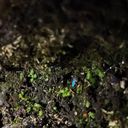
vary by . Orfelia fultoni larvae inhabit moist stream banks and river banks in the Appalachian Mountains. Other species occupy diverse environments including mires, old-growth forests, river gulches, and shadowy forested areas. The shows broad ecological given its distribution.
Distribution
distribution with records from Europe (including Fennoscandia, Germany, Finland), Asia (Russia, China, Japan), and North America (Appalachian Mountains, Eastern United States). Specific distribution varies considerably among .
Behavior
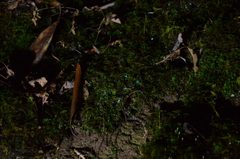
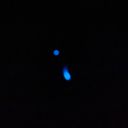
Orfelia fultoni larvae construct webs along stream banks and produce blue from translucent areas surrounding specialized black bodies to lure prey. Bioluminescence arises from and body parts with weaker emission throughout the body. The bioluminescent system requires molecular oxygen and no additional cofactors.
Ecological Role
Predatory role in some : Orfelia fultoni functions as a that uses to lure prey. Pollination mutualism in Australia: members serve as important of native greenhood orchids (Pterostylis and related genera) through , where male flies are deceived into attempting mating with orchid flowers, effecting pollen transfer.
Human Relevance
Orfelia fultoni has been extensively studied for its novel bioluminescent biochemistry, which has potential applications in bioimaging and . The serves as an indicator of biodiversity in northern , with new continuously discovered in Fennoscandia. Some species have been named to honor public figures, increasing public engagement with entomology.
Similar Taxa
- LeiaRelated keroplatid also involved in orchid pollination in Australia; distinguished by morphological characters requiring microscopic examination
- MycetophilaRelated keroplatid sharing similar and orchid pollination mutualisms in Australia; microscopic examination needed for separation
- MycomaRelated keroplatid with convergent orchid pollination role in Australia; genus-level identification requires detailed morphological study
- PhthiniaRelated keroplatid participating in Australian orchid ; distinguished from Orfelia by subtle morphological traits
- KeroplatusRelated bioluminescent keroplatid ; Orfelia fultoni produces distinctly blue emission (~460 nm) compared to other bioluminescent fungus gnats
More Details
Bioluminescent biochemistry
Orfelia fultoni produces blue through a unique system involving a 220 kDa trimeric luciferase (~70 kDa monomers), a substrate binding fraction (SBF) stored in black bodies, and a polar luciferin named keroplatin. The SBF releases luciferin in the presence of mild reductants. This system is chemically distinct from other insect luciferin-luciferase systems.
Taxonomic complexity
The Orfelia contains with disjunct distributions, such as Orfelia boreoalpina known only from Törmäoja in Finnish Lapland and the German Alps. The Fennoscandian region represents a biodiversity hotspot for the genus, with numerous undescribed species awaiting formal description.
Sources and further reading
- BugGuide
- Wikipedia
- GBIF taxonomy match
- iNaturalist taxon
- NCBI Taxonomy
- Catalogue of Life
- fungus gnat | Blog
- Diptera | Blog - Part 2
- biodiversity | Blog - Part 44
- Author Correction: A new brilliantly blue-emitting luciferin-luciferase system from Orfelia fultoni and Keroplatinae (Diptera).
- A new brilliantly blue-emitting luciferin-luciferase system from Orfelia fultoni and Keroplatinae (Diptera).