
Diplolepis bicolor
(Harris, 1841)
spiny rose gall wasp, spiny bud gall wasp
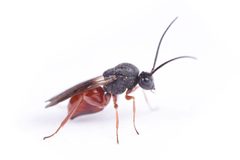
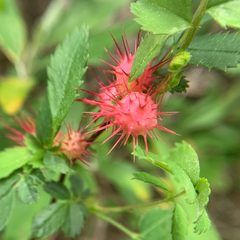
Diplolepis bicolor is a cynipid gall wasp that induces bud galls on wild roses (Rosa spp.) across North America. The produces distinctive spiny galls measuring 10–12 mm in diameter on rose buds. It exhibits the typical cynipid with alternating sexual and parthenogenetic . The galls superficially resemble those of Diplolepis polita but can be distinguished by their location on buds rather than leaves.
Pronunciation
How to pronounce Diplolepis bicolor: /dɪˌploʊˈliːpɪs ˈbaɪkəlɒr/
These audio files are automatically generated. While they are not always 100% accurate, they are a good starting point.
Identification
Distinguished from Diplolepis polita by gall position: D. bicolor forms bud galls while D. polita forms leaf galls. The spiny, spherical 10–12 mm bud galls on wild roses are diagnostic. Examination of gall structure and plant tissue location confirms identification; require microscopic examination for definitive identification.
Images
Appearance
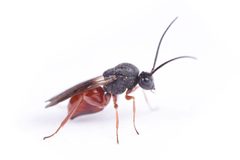
The is small, typical of cynipid gall wasps. The induced galls are 10–12 mm in diameter, spherical, and covered with spine-like projections. Galls form on rose buds and are hard and woody when mature. Coloration of galls varies but is generally greenish to reddish when fresh, becoming brown with age.
Habitat
Associated with wild roses (Rosa spp.) in a variety of including prairies, woodlands, forest edges, and riparian areas. The requires living rose tissue for gall induction. Found in both natural and semi-natural habitats where native or naturalized roses occur.
Distribution
Throughout North America. Documented in Canada from Alberta, British Columbia, Manitoba, and New Brunswick; present across the United States. Range corresponds with distribution of wild rose .
Seasonality
Sexual emerges in spring; parthenogenetic (agamic) generation emerges in late autumn or winter. Gall formation occurs during active rose growth periods.
Diet
Larvae feed internally within rose bud galls, inducing and consuming gall tissue. do not feed; their mouthparts are reduced.
Host Associations
- Rosa - gall Wild roses; specific not documented in sources
Life Cycle
Alternating : sexual generation produces male and female that mate in spring; fertilized females induce galls from which parthenogenetic females emerge in late autumn or winter. These agamic females reproduce asexually to produce the next sexual generation. Larvae develop within galls, feeding on gall tissue.
Ecological Role
Gall formation modifies rose bud development, creating and food resources for and . The galls support of associated insects including parasitic and inquiline that exploit gall resources without killing the gall former.
Human Relevance
Minor economic significance; galls cause cosmetic damage to wild roses but rarely kill plants. Occasionally observed on ornamental roses. Subject of ecological and taxonomic study due to complex and gall-forming .
Similar Taxa
- Diplolepis politaProduces superficially similar spiny galls, but on rose leaves rather than buds; galls are leaf galls rather than bud galls
- Diplolepis rosaeAlso forms galls on roses, but produces mossy, clustered galls rather than single spiny bud galls
More Details
Taxonomic Note
placement has varied between Cynipidae and Diplolepididae; current sources recognize Diplolepididae as the valid family for rose gall wasps.
Research History
The complex of cynipid gall wasps, including D. bicolor, was studied extensively by Alfred C. Kinsey early in his career before his better-known work on human sexuality.
Sources and further reading
- BugGuide
- Wikipedia
- GBIF taxonomy match
- iNaturalist taxon
- NCBI Taxonomy
- Grasshoppers of Colorado
- Ants and Moths: Think Noon and Night! | Bug Squad
- Encyrtid Holdings | Entomology Research Museum
- Grasshoppers of Colorado
- Oversized, double-concave diffuser for MT-24EX twin flash | Beetles In The Bush
- Bug Eric: Wasp Wednesday: Gall Wasps