
Galeruca
Geoffroy, 1762
Species Guides
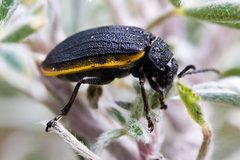
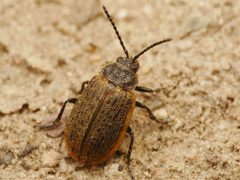
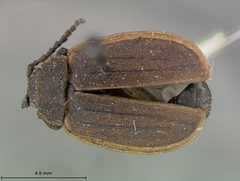
3Galeruca is a of leaf beetles in the Galerucinae, distributed across the Palaearctic and Nearctic realms. The genus contains numerous divided into seven subgenera, with significant diversity in the western Palaearctic. Several species are economically important: G. daurica is a major pest of Allium species in Inner Mongolian grasslands, while G. tanaceti has been extensively studied for its oviposition and interactions with . The genus exhibits varied associations, with some species specialized on particular plant and others showing broader feeding habits.
Pronunciation
How to pronounce Galeruca: //ɡaˈle.ru.ka//
These audio files are automatically generated. While they are not always 100% accurate, they are a good starting point.
Images
Habitat
vary by . G. daurica occurs in grassland , particularly arid and semi-arid zones of Inner Mongolia. G. tanaceti inhabits herbaceous vegetation where it oviposits on non- grasses. G. xanthomelaena has been recorded on urban street trees. Species generally occupy terrestrial environments with host plant availability.
Distribution
Palaearctic and Nearctic realms. Specific records include: Turkey (10 ), Inner Mongolia and northern China (G. daurica), Mongolia, Russia (Siberia), Korea, Xinjiang and Gansu Province in China (G. daurica), Flushing, Long Island, New York (G. xanthomelaena, historical record), Denmark, Norway (GBIF records).
Diet
Varies by . G. daurica is oligophagous, feeding on Allium mongolicum, A. polyrhizum, and A. ramosum. G. xanthomelaena larvae feed on English elm (Ulmus) leaves, skeletonizing them. G. tanaceti is described as a leaf beetle. G. rufa feeds on Convolvulus arvensis (field bindweed). plant specificity ranges from narrow oligophagy to broader generalist feeding.
Host Associations
- Allium mongolicum - primary Favorite of G. daurica
- Allium polyrhizum - of G. daurica
- Allium ramosum - of G. daurica
- Ulmus (English elm) - of G. xanthomelaena larvae
- Convolvulus arvensis - of G. rufa
Life Cycle
G. daurica has one per year, as under the topsoil layer; larvae emerge in April. G. xanthomelaena is double-brooded; eggs laid in clusters along leaf , larvae pupate in bark crevices rather than on leaf surfaces. G. tanaceti females deposit egg clutches on non- plants such as grasses.
Behavior
G. tanaceti females preferentially oviposit on non- plants (grasses) rather than host plants, with oviposition site selection influenced by vegetation stem height and ; taller stems and higher stem densities correlate with increased clutch presence. G. xanthomelaena larvae exhibit distinctive , crawling down tree trunks to seek bark crevices rather than pupating on leaves. G. daurica shows sex-specific differences in olfactory response, with females playing more important roles in host plant searching.
Ecological Role
Herbivores; some are significant defoliators. G. daurica is a pest with status causing major economic losses to pasture in Inner Mongolian grasslands since 2009. G. xanthomelaena can severely defoliate ornamental elm trees. G. tanaceti serves as for specialized Oomyzus galerucivorus, with vegetation structure mediating this parasitoid-herbivore interaction. G. rufa has been investigated as a potential agent for field bindweed.
Human Relevance
Several are agricultural or ornamental pests requiring management. G. daurica in Inner Mongolia necessitate chemical control, with diamide used and resistance mutations (G4911E in ryanodine receptor) documented. Climate change projections indicate potential northward range shifts and contraction for G. daurica. G. rufa has been evaluated as a agent for field bindweed (Convolvulus arvensis).
Sources and further reading
- BugGuide
- Wikipedia
- GBIF taxonomy match
- iNaturalist taxon
- NCBI Taxonomy
- Catalogue of Life
- GALERUCA XANTHOMELAENA, Schrank
- Comparative Transcriptome Analysis of Galeruca daurica Reveals Cold Tolerance Mechanisms
- Functional Characterization of Olfactory Proteins Involved in Chemoreception of Galeruca daurica
- Expression Profiling and Functional Analysis of Candidate Odorant Receptors in Galeruca daurica
- Galeruca rufa [Col.: Chrysomelidae] seasonal life history and the effect of its defoliation on its host plant,Convolvulus arvensis [Convolvulaceae]
- Host Specificity and Biology of Galeruca rufa 1 , a Potential Biological Control Agent for Field Bindweed
- Predicting the Potential Distribution of Galeruca daurica in Inner Mongolia Under Current and Future Climate Scenarios Using the MaxEnt Model
- Predicting the Potential Distribution of <em>Galeruca daurica</em> in Inner Mongolia Under Current and Future Climate Scenarios Using the MaxEnt Model
- MicroRNA miR‐2765‐3p regulates reproductive diapause by targeting FoxO in Galeruca daurica
- Identification of odorant-binding protein genes inGaleruca daurica(Coleoptera: Chrysomelidae) and analysis of their expression profiles
- Effect of vegetation density, height, and connectivity on the oviposition pattern of the leaf beetle Galeruca tanaceti
- Oviposition at low temperatures - late season negatively affects the leaf beetle Galeruca tanaceti (Coleoptera: Galerucinae) but not its specialised egg parasitoid Oomyzus galerucivorus (Hymenoptera: Eulophidae)
- Detection of ryanodine receptor G4911E and I4754M mutation sites and analysis of binding modes of diamide insecticides with RyR on Galeruca daurica (Coleoptera: Chrysomelidae)
- Correction: Functional characterization of olfactory proteins involved in chemoreception of Galeruca daurica.