
Lestes
Leach, 1815
Pond Spreadwings, Spreadwings
Species Guides
17- Lestes alacer(Plateau Spreadwing)
- Lestes australis(Southern Spreadwing)
- Lestes congener(Spotted Spreadwing)
- Lestes disjunctus(Northern Spreadwing)
- Lestes dryas(emerald spreadwing)
- Lestes eurinus(Amber-winged Spreadwing)
- Lestes forcipatus(Sweetflag Spreadwing)
- Lestes forficula(Rainpool Spreadwing)
- Lestes inaequalis(Elegant Spreadwing)
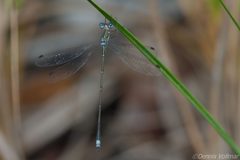
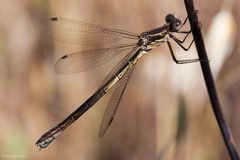
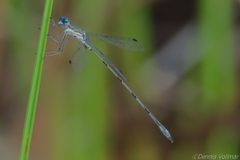
Lestes is a of in the Lestidae, commonly known as pond spreadwings. Members of this genus are distinguished from most other damselflies by their characteristic resting posture: they hold their wings spread at approximately 45 degrees to the body rather than folded together above the . The genus name derives from the Greek word λῃστής (lēistēs), meaning thief. Lestes are found across diverse and are among the most widely observed damselflies in temperate regions.
Pronunciation
How to pronounce Lestes: /ˈlɛstiːz/
These audio files are automatically generated. While they are not always 100% accurate, they are a good starting point.
Identification
Lestes are immediately recognizable by their spreadwing resting posture, with wings held at roughly 45 degrees from the body axis rather than parallel to the . This distinguishes them from most other damselfly (Coenagrionidae, Platycnemididae, etc.) which fold wings together above the body when at rest. The Lestes can be separated from the related genus Chalcolestes by subtle differences in wing venation and thoracic patterning, though field identification to often requires examination of abdominal appendages.
Images
Habitat
in this inhabit a variety of freshwater environments including ponds, lakes, slow-moving streams, and marshes. Some species occupy temporary or seasonal wetlands. The Scarce Emerald Damselfly (Lestes dryas) has been documented in ditch systems where maintenance of open water is critical for its persistence.
Distribution
The has a wide geographic distribution with extant across North America, Europe, Asia, and Africa. The fossil record includes numerous extinct species from Eurasia.
Similar Taxa
- ChalcolestesAlso in Lestidae with similar spreadwing posture; distinguished by wing venation details and thoracic markings
- Coenagrionidae (pond damselflies)Different ; hold wings parallel to body at rest rather than spread at 45 degrees
More Details
Etymology
The name Lestes comes from the Greek word λῃστής (lēistēs), meaning thief. The 'Pond Spreadwings' refers to both their aquatic preference and their distinctive wing posture.
Fossil Record
The has an extensive fossil record with at least 18 described extinct , including Lestes aquisextana, L. arvernus, L. brisaci, L. ceresti, L. conexus, L. datangensis, L. dianacompteae, L. forsterii, L. irenea, L. leucosia, L. ligea, L. lutzi, L. peisinoe, L. plicata, L. regina, L. sieblosiformis, L. statzi, L. vicina, and L. zalesskyi.